Agri Infrastructure and Cold Chains_ The Hidden Engine of Farm Growth
Agriculture growth is often measured in yields, acreage, and output. But the real transformation in modern farming begins after the crop leaves the field. The invisible system of warehouses, pack houses, grading lines, reefer trucks, ripening chambers, and cold storages is what truly determines whether farmers earn profits or face distress selling. This is why agri infrastructure and cold chains are the hidden engine of farm growth.
In India and across emerging agricultural economies, production has improved significantly. However, post-harvest losses, poor logistics, and weak storage networks continue to reduce farmer income. A strong cold chain does not simply preserve produce—it creates time, market flexibility, quality assurance, export readiness, and value addition.
Why Agri Infrastructure Matters More Than Ever
Farm growth is no longer just about “growing more.” It is about selling smarter.
When a farmer harvests tomatoes, mangoes, milk, fish, or black pepper, the value of that produce depends on how long it can remain fresh and how far it can travel without damage.
Without infrastructure:
- Produce must be sold immediately
- Farmers depend on local traders
- Prices crash during peak harvest
- Quality deteriorates fast
- Export opportunities disappear
With infrastructure:
- Produce can be stored safely
- Sales can be timed for better prices
- Access to distant urban markets improves
- Processing and branding become possible
- Farmer bargaining power increases
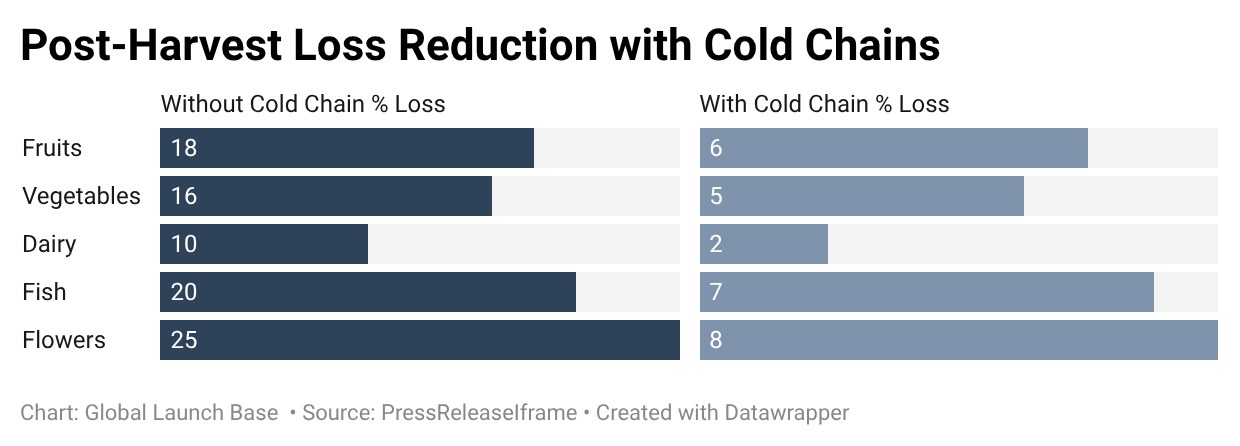
India still loses a major share of perishables due to supply-chain inefficiencies. Government estimates note horticulture losses around 15 million tonnes annually, making post-harvest systems a major growth priority.
Cold Chains: The Backbone of High-Value Agriculture
A cold chain is a temperature-controlled supply system from farm gate to consumer.
It includes:
- Pre-cooling units at farm level
- Pack houses for sorting and grading
- Cold storage warehouses
- Reefer trucks
- Distribution hubs
- Ripening chambers
- Retail refrigeration
- Export logistics
This system is especially critical for:
- Fruits
- Vegetables
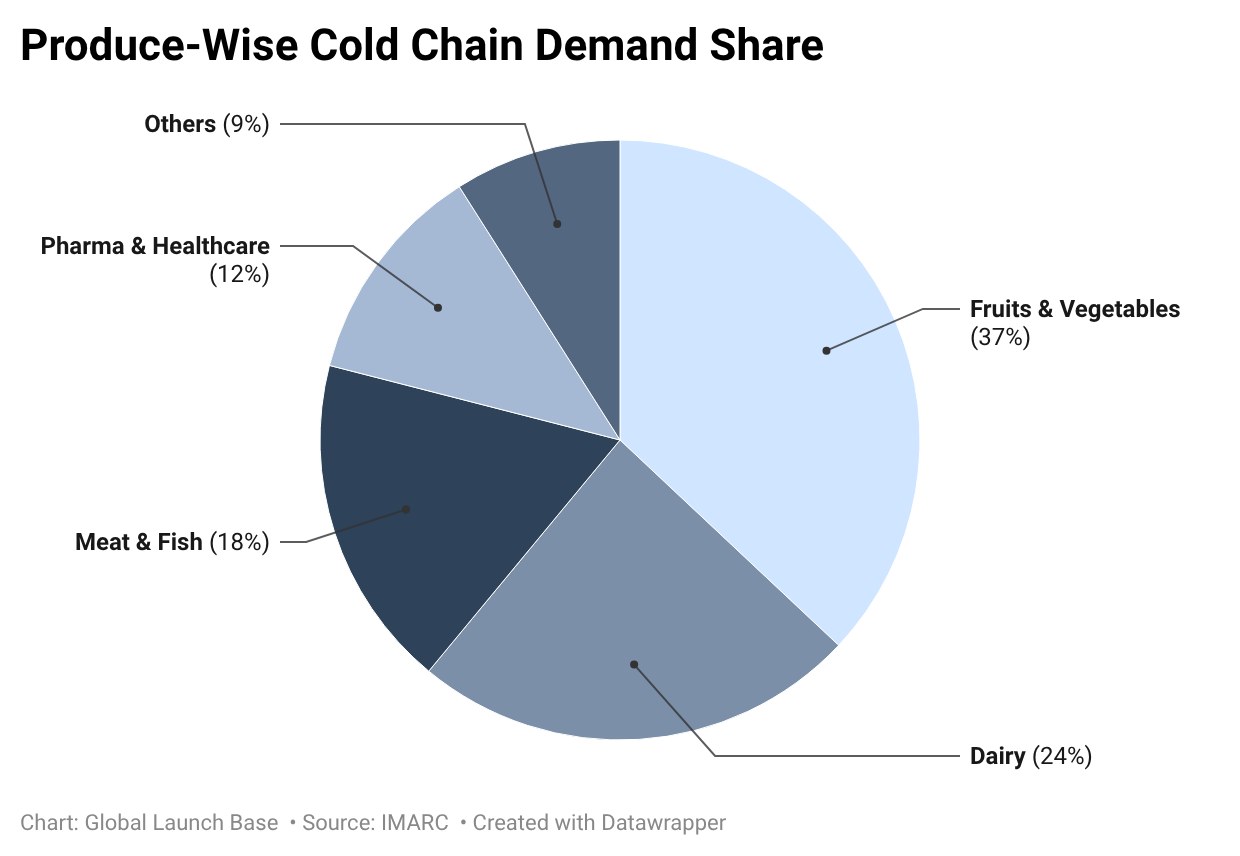
- Dairy
- Meat
- Poultry
- Fisheries
- Floriculture
- Spices
- Seed storage
The Ministry of Food Processing Industries has continued expanding integrated cold chain projects under PMKSY, specifically to reduce wastage and improve farmer returns. Hundreds of projects are already operational.
How Cold Chains Directly Increase Farmer Income
1) Better Price Realization
Cold storage gives farmers the power to wait.
Instead of selling onions, potatoes, mangoes, or vegetables during harvest glut, they can store and release produce when prices improve.
This directly:
- Reduces distress sales
- Improves seasonal arbitrage
- Increases profit margins
- Protects against local mandi crashes
2) Market Expansion
Cold chains allow produce from rural belts to reach:
- Metro cities
- Hotels and retailers
- Food processors
- E-commerce grocery platforms
- Export buyers
A farmer in Shivamogga, Sirsi, or Prayagraj can sell to Bengaluru, Mumbai, Delhi, or even Gulf markets if the cold logistics system is strong.
3) Reduced Spoilage
For perishables, even one day of delay can destroy value.
Cold chains reduce:
- Moisture loss
- Fungal attack
- Softening
- Color loss
- Weight shrinkage
- Bacterial growth
This is especially valuable in your agri-focused areas like:
- black pepper
- arecanut-based intercrops
- honey
- fruits
- vegetables
The Hidden Link Between Infrastructure and Crop Diversification
Many farmers hesitate to shift from traditional crops to:
- fruits
- vegetables
- medicinal plants
- flowers
- dairy
- fisheries
The reason is market risk after harvest.
When cold chains are available, farmers confidently move toward:
- higher-value horticulture
- perishables
- export crops
- organic produce
- processed food inputs
This means infrastructure becomes a trigger for diversification and rural entrepreneurship.
Role of Warehousing Beyond Cold Storage
Not every crop needs refrigeration.
Dry warehouses are equally important for:
- arecanut
- black pepper
- pulses
- grains
- seeds
- timber products
- spices
Scientific warehousing helps:
- moisture control
- pest reduction
- grading
- traceability
- collateral financing
- warehouse receipt loans
This converts produce into a financial asset instead of a forced immediate sale.
Under India’s Agriculture Infrastructure Fund, over 1.13 lakh projects have been sanctioned, including 2,454 cold storage projects, showing how infrastructure is becoming central to farm-led growth.
Cold Chains and Export Growth
Global buyers do not just buy crops—they buy:
- quality consistency
- temperature compliance
- shelf life assurance
- traceability
- food safety standards
Without cold chains:
- grape exports fail
- mango shelf life reduces
- vegetables lose firmness
- dairy quality drops
- seafood cannot survive long-distance logistics
This is why cold chain systems are directly linked to:
- agri exports
- farmer producer companies
- value-added brands
- GI-tag produce
- processed food startups
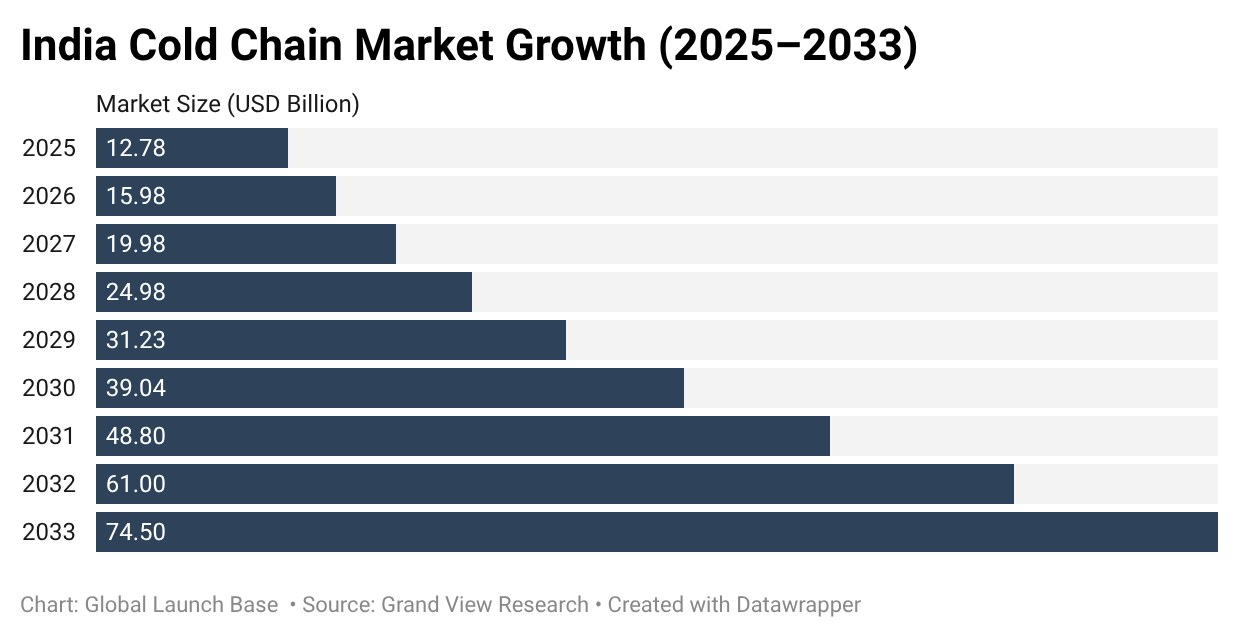
India’s cold chain market is projected to keep expanding strongly, driven by horticulture, dairy, seafood, and food retail demand.
Technology Is Making Cold Chains Smarter
The future of cold chains is digital + physical infrastructure.
Emerging technologies include:
- IoT temperature sensors
- remote humidity monitoring
- solar-powered cold rooms
- AI demand forecasting
- route optimization
- blockchain traceability
- farm-level QR grading
- predictive maintenance
This is especially useful for FPOs, agritech startups, and rural entrepreneurs.
For example:
- a pepper grower can track storage moisture
- a mango exporter can monitor reefer temperature in transit
- a dairy collection center can auto-alert chilling failures
Why This Is the “Hidden Engine” of Farm Growth
Farm growth is often wrongly credited only to:
- better seeds
- irrigation
- fertilizers
- mechanization
But the real profit engine starts after harvest.
A strong agri infrastructure ecosystem:
- converts yield into income
- converts crops into brands
- converts villages into market nodes
- converts farmers into entrepreneurs
In simple terms:
Production creates output. Infrastructure creates wealth.
That is why cold chains and rural logistics are not support systems—they are core growth multipliers for the farm economy.
Conclusion
The next leap in agriculture will not come only from increasing production. It will come from protecting value after harvest.
Cold chains, warehouses, pack houses, reefer logistics, and digital traceability are becoming the true engines of:
- farmer income growth
- export competitiveness
- reduced food waste
- rural employment
- agribusiness innovation
For countries like India, the future of agriculture lies in building infrastructure that lets every harvested crop travel farther, stay fresher, and earn more.
That is the hidden engine of farm growth—and the farms, FPOs, and agribusinesses that invest in it early will lead the next rural transformation.