Agri-Tech Meets Cultural Heritage_ Designing Solutions That Respect Local Traditions
In today’s rapidly advancing agricultural landscape, the integration of technology is transforming how we grow, harvest, and distribute food. From precision farming and AI-driven weather predictions to drone-based crop monitoring, agri-tech is reshaping rural economies across the world. However, in this race toward modernization, one essential aspect often gets overlooked: the cultural heritage and traditional wisdom embedded within local farming practices.
When agri-tech meets cultural heritage, the outcome is not just innovation—it is sustainability rooted in respect for people, communities, and history.
The Value of Local Traditions in Agriculture
For centuries, farmers across regions have developed practices tailored to their unique climates, soils, and cultural needs. These include seed preservation, natural pest control methods, mixed cropping systems, and rituals that maintain harmony between humans and nature. Such traditions carry deep ecological and social wisdom, which often align with modern sustainability principles.
Ignoring these practices risks alienating farming communities and eroding identities that have survived generations. Instead, agri-tech solutions should complement and elevate these traditions.
Challenges in Bridging Agri-Tech with Heritage
- Perceived Threat of Modernization – Farmers may view technology as replacing rather than enhancing their traditional methods.
- Language and Accessibility Barriers – Many solutions are built in English or urban-centric frameworks, making them less relevant in rural contexts.
- Cultural Disconnect – Technologies designed without local consultation often overlook festivals, rituals, or community-based farming models that guide agricultural decisions.
Designing Respectful Agri-Tech Solutions
To ensure technology adoption without undermining traditions, design strategies must include cultural awareness:
- Co-Creation with Communities: Farmers should not just be end-users but co-designers of technology. Workshops, focus groups, and pilot programs can help shape tools that align with their needs.
- Localization of Interfaces: Apps and platforms should support regional languages, familiar symbols, and culturally relevant design.
- Blending Tradition with Modern Science: For example, drones can map soil health while local knowledge can guide what crops to intercrop for resilience.
- Seasonal and Ritual Sensitivity: Tools can be adapted to respect cultural calendars, integrating reminders that align with traditional planting and harvesting cycles.
- Value Preservation: Encouraging practices such as seed saving and organic pest control can be integrated with tech-driven insights for higher efficiency.
Key Global Statistics in Agri-Tech / Precision Agriculture
Metric | Data / Value | Implication for Tradition / Local Farming |
|---|---|---|
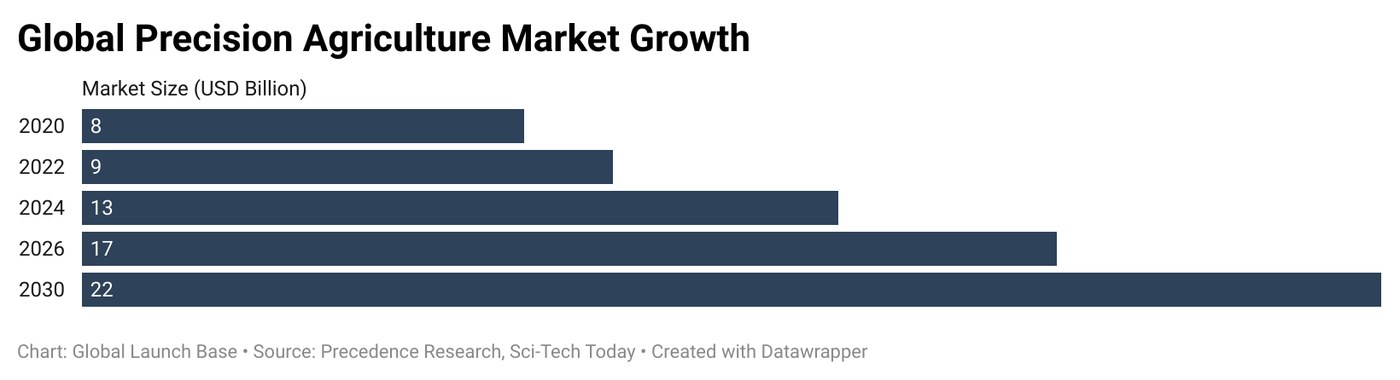
Global Market Size | Precision agriculture market valued at USD 9-13 billion in 2024; projected to reach USD 20-30 billion by ~2030-34. Sci-Tech Today+2MarketsandMarkets+2 | Large investment indicates growing potential; but small-holder farmers may be left behind if tech is too expensive. |
Growth Rate (CAGR) | ~9-15% per year depending on region & source. Sci-Tech Today+2MarketsandMarkets+2 | Steady growth suggests momentum; also pressure / opportunity to adapt traditional methods sooner rather than later. |
Adoption Among Farmers | ~68% of farmers globally have adopted some form of precision farming technology. Sci-Tech Today+1 | High adoption suggests many are open to blending tech + tradition—but the nature of adoption (which tools, in what context) matters. |
Impact on Yields / Inputs | Farmers using precision farming report yield improvements (many sources: 75% report higher yields). Fertilizer use drops by 20-30%, pesticide use by ~15%. Water savings can be substantial. WifiTalents+3Sci-Tech Today+3Stats Market Research+3 | These are strong advantages; traditional methods often emphasize low chemicals and ecological balance, so tech that reduces external inputs could support those values. |
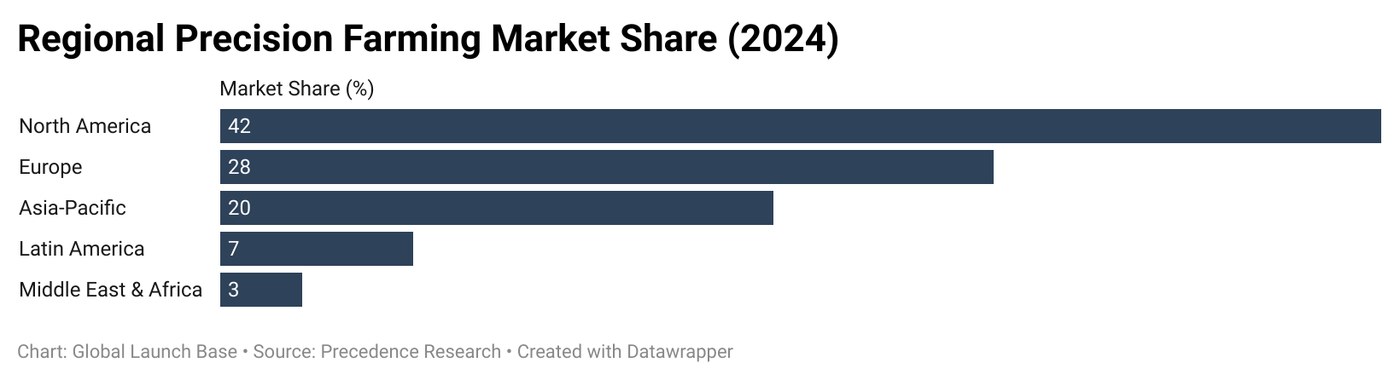
Regional Differences | Asia-Pacific is one of the fastest growing regions (CAGR ~13-15.5%) in precision farming markets. Precedence Research+1 North America holds ~40-45% of current market share. Sci-Tech Today+1 | Regions with strong traditional farming (e.g. many parts of Asia) are seeing rapid growth—this means there’s opportunity to embed local wisdom in tech deployment. |
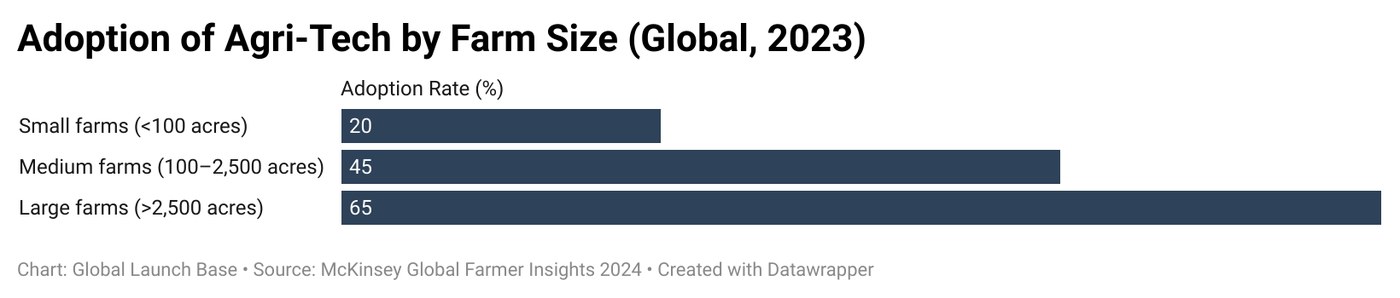
Farm Size & Tech Adoption | Larger farms are much more likely to adopt agri-tech. For example, in the US, big farms (2,500+ acres) are ~45% more likely to adopt than small farms (<100 acres). McKinsey & Company | Traditional small-scale farmers may struggle to justify costs or access of sophisticated tools; solutions need to be scaled / modular. |
Specific Technologies in Use | In Denmark: 37% of farmers use precision farming tech (up from 23% in 2018); but precision tech is applied to ~76% of agricultural land. Technologies include RTK-GPS steering (66% of land), individual nozzle control (57%), satellite/drone imagery (~26%), crop sensors (~5%) etc. WIPO | Shows that even when only a moderate fraction of farmers adopt, large land area may be covered; but the more advanced sensors are still less common. For tradition-rich, small farms, lightweight, lower-cost tools may be more feasibl |
Real-World Examples
- India’s Traditional Irrigation Meets IoT: In parts of Karnataka, IoT-based water sensors are being used to optimize irrigation while respecting centuries-old tank and canal systems.
- Africa’s Indigenous Seed Banks and Blockchain: Blockchain solutions help preserve and trade indigenous seeds, ensuring that local varieties remain valuable while boosting transparency.
- Japan’s Rice Cultivation Heritage with Robotics: Autonomous machines are designed to work around the cultural methods of rice terrace farming, not replace them.
Facts & Data Points Relevant to Tradition / Heritage Practices
New Crop Varieties in India:
Banaras Hindu University (BHU) recently released three new crop varieties in Uttar Pradesh (2 rice, 1 mustard):
• Malaviya Manila Sinchit Dhan-1 — matures in 115–120 days, yield 55-60 quintals per hectare. The Times of India
• Malviya Dhan 105 Sub-1 — flood resistant, yields ~42-46 quintals/ha. The Times of India
• Malviya Nidhi mustard — matures in 125-130 days; yield ~20 quintals/ha, with high oil content (~39.4%). The Times of India
Implication: These improved varieties reflect combining scientific breeding with local constraints (floods, growing season). Farmers with traditions of local seed saving may perceive such varieties positively if seed access, flavor, local adaptation are preserved.
Weather / AI Tools & Reach:
An initiative (“AIM for Scale”) aims to reach 60 million farmers in India by 2025 with better AI-powered weather forecasting etc., especially smallholder farmers. Reuters
Denmark Precision Use Examples: As above, large parts of land use precision tech; for example, ~66% of agricultural land uses RTK-GPS steering; 57% uses precision nozzle control; approx. 26% uses satellite/drone imagery. WIPO
Gaps & Challenges (Numbers Showing Limitations)
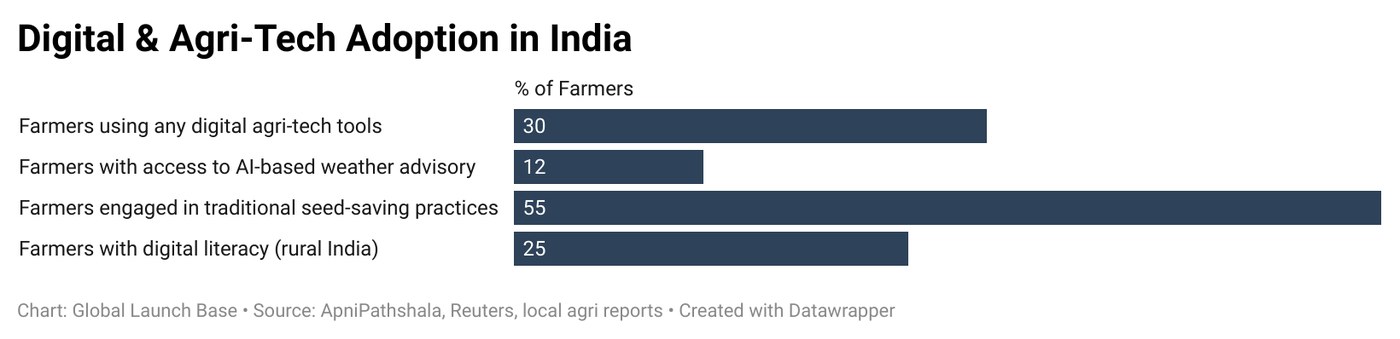
In many developing countries, digital / agri-tech adoption is much lower among small farms. For example, in India, as of 2023, only ~30% of farmers had embraced any form of digital technology. Apni Pathshala
The digital literacy rate in rural India was measured at about 25%. Apni Pathshala
How These Numbers Can Be Framed in Your Article
Use the high reported yield increases (70-80% of adopters) and input savings (20-30% less fertilizer, etc.) to show the technical promise.
Counterbalance with facts about adoption gaps: many traditional farmers may lack access (both financial, infrastructural) or literacy/skills to use advanced tools.
The large market growth suggests that investments are being made – you can argue that some of this investment should go toward preserving local/traditional practices, not just scaling high-tech industrial solutions.
Highlight examples where modern breeding (new varieties) work within local agroecological and cultural contexts (flood resistance; crop seasons etc.) as a way to respect cultural heritage.
Why This Approach Matters
Agri-tech that respects heritage ensures higher adoption, trust, and impact. Farmers see technology not as a threat but as an ally to protect traditions while boosting productivity. For policymakers and innovators, this balance strengthens rural communities, enhances food security, and creates culturally aligned pathways for innovation.
Conclusion
The future of agriculture lies not in choosing between tradition and technology, but in harmonizing both. By designing solutions that respect cultural heritage, agri-tech can drive progress while preserving the wisdom of generations. After all, the roots of farming run deep, and only by honoring those roots can we cultivate a truly sustainable future.