Biochar as a Bridge Between Rural Innovation and Global Climate Goals
Introduction
Biochar is emerging as more than just a soil enhancer — it’s becoming a symbol of how rural innovation can align with global climate action. By converting agricultural waste into a carbon-rich material that improves soil health, retains moisture, and locks away atmospheric carbon, biochar connects the everyday practices of farmers to the world’s most urgent sustainability targets. From rural villages experimenting with low-cost kilns to international initiatives promoting carbon credits, biochar represents a practical bridge between local livelihoods and planetary well-being.
The Science Behind Biochar
Biochar is produced through pyrolysis, a process that heats organic matter (such as crop residue, husks, or animal waste) in a low-oxygen environment. This process locks carbon into a stable form that can remain in the soil for centuries. Unlike compost, which releases carbon dioxide back into the atmosphere, biochar sequesters carbon, making it one of the most effective natural climate solutions.
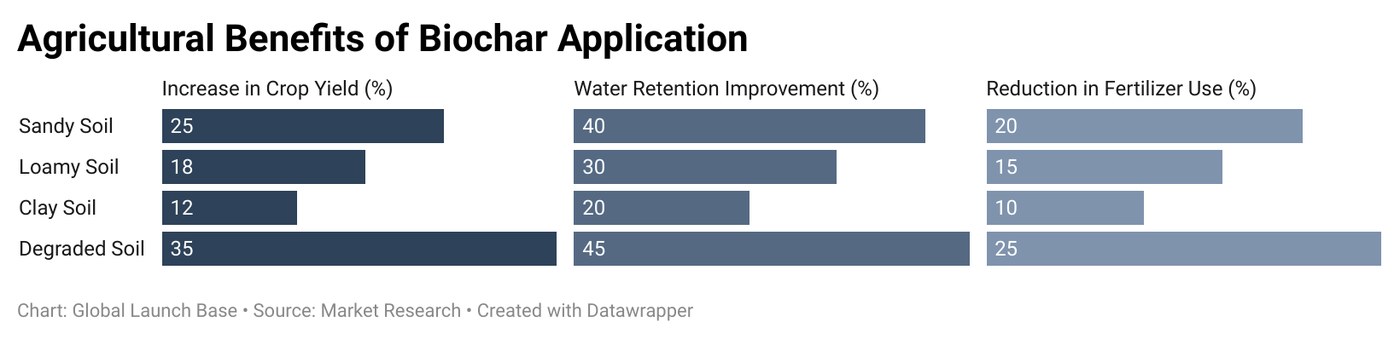
Beyond reducing emissions, biochar improves soil fertility, water retention, and microbial activity — all essential for sustainable farming. For new and small-scale farmers, especially those working on nutrient-poor or degraded lands, biochar offers a low-cost, long-term soil improvement solution that boosts productivity without reliance on chemicals.
Transforming Waste into Value
One of the most powerful aspects of biochar lies in its ability to turn agricultural and organic waste into economic opportunity. Rural regions often struggle with waste management — from piles of areca husks, rice straw, or coconut shells that are commonly burned or discarded.
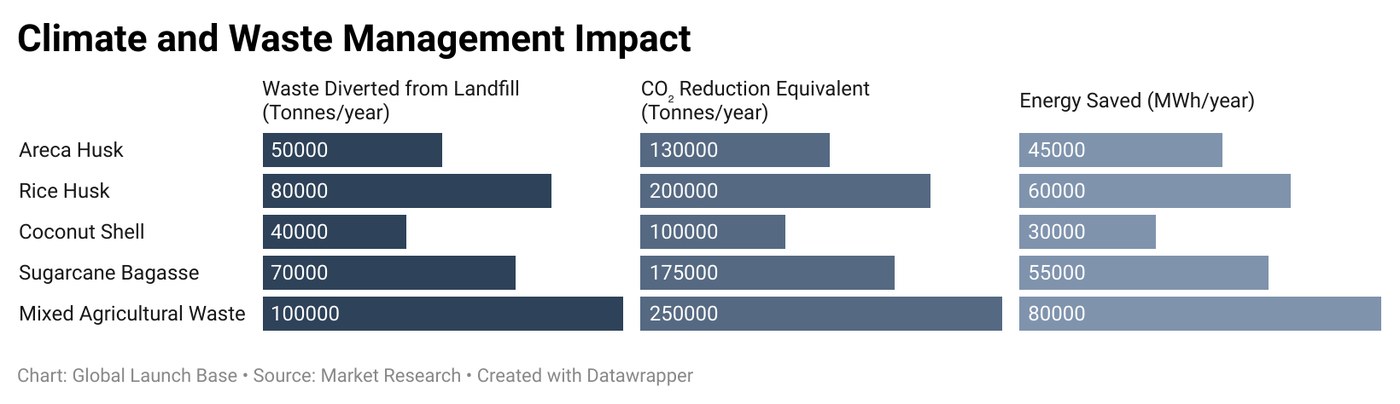
Biochar provides a clean, circular alternative by converting these residues into a resource that:
- Reduces open-field burning and air pollution.
- Cuts methane emissions from decomposing waste.
- Generates an income stream through sales of biochar and carbon credits.
In this way, biochar turns what was once considered “farm waste” into an instrument for rural upliftment and climate resilience.
Empowering Rural and New Farmers
For many new-generation farmers, entering agriculture means facing challenges like high input costs, soil degradation, and limited awareness of sustainable techniques. Biochar offers a practical solution that requires minimal investment and makes farming more regenerative.
Through community biochar units, Farmer Producer Organizations (FPOs) and rural cooperatives can support young farmers with shared access to kilns, training, and technical know-how. This not only improves yield but also builds confidence and skill sets among rural youth, promoting green entrepreneurship and reversing migration from villages to cities.
In states like Karnataka and Kerala, pilot projects are already showing how locally available waste — such as areca husk, coconut shells, or forest biomass — can be transformed into biochar, creating livelihood opportunities while improving soil productivity for new and marginal farmers.
Connecting to Global Climate Goals
At the global level, biochar directly supports the United Nations Sustainable Development Goals (SDGs) — particularly SDG 13 (Climate Action), SDG 2 (Zero Hunger), SDG 12 (Responsible Consumption and Production), and SDG 8 (Decent Work and Economic Growth).
It also contributes to the Paris Agreement by acting as a scalable method for carbon sequestration.
Biochar-based carbon projects certified by standards like Verra and Puro.earth are helping farmers and communities earn revenue from carbon credits. This mechanism transforms rural innovation into a recognized part of the global climate solution, allowing developing regions to participate in the green economy on fair terms.
Market and Investment Opportunities
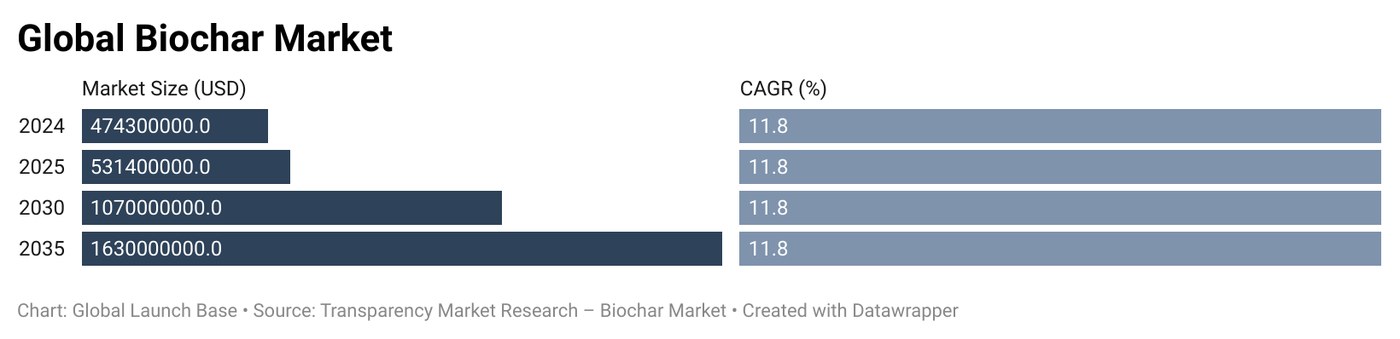
The global biochar market is expected to reach USD 5 billion by 2030, driven by its use in agriculture, waste management, and carbon removal. Governments and private investors are now supporting rural startups that integrate biochar production with organic farming, composting, and renewable energy systems.
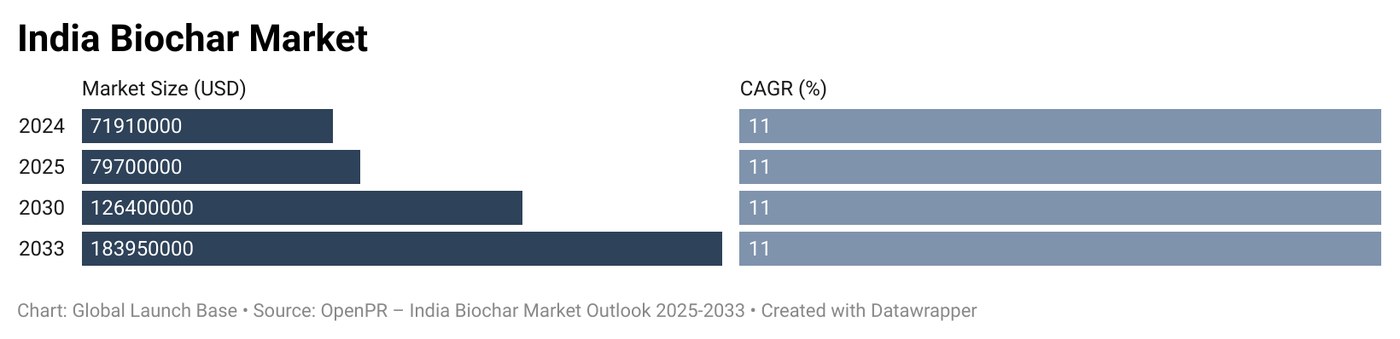
For India and other developing nations, this opens new opportunities for climate-focused rural enterprises. Village-level biochar units can serve as micro-industries — employing locals, processing waste, and selling both agricultural inputs and carbon credits, ensuring inclusive growth for new and traditional farmers alike.
Challenges and the Road Ahead
While biochar offers immense promise, it faces several challenges:
- Limited awareness and technical knowledge among small farmers.
- Financing barriers for rural startups and cooperatives.
- Need for quality standards to ensure consistency across biochar products.
These gaps can be addressed through training programs, research partnerships, and government incentives that promote biochar as part of national rural development and climate strategies.
Facts & Figures
- In India: The country produces more than 600 million tonnes of agricultural residue and about 60 million tonnes of municipal solid waste annually. ClearIAS+2Vision IAS+2
- If India uses around 30-50% of that surplus waste for biochar, it could yield roughly 15-26 million tonnes of biochar per year. ClearIAS+1
- That level of biochar production in India could remove approximately 0.1 gigatonnes (100 million tonnes) of CO₂-equivalent annually. ClearIAS+1
- A study estimates that converting India’s 156 Mt of surplus crop residues could yield about 34.5 Tg (teragrams) of biochar, and sequester about 7.5 Tg of carbon in the soil (≈ 27.5 Tg CO₂ eq) and reduce 405 Tg CO₂ eq via avoided burning. Biochar Today+1
- Globally: The potential production of biochar is estimated at about 510 million metric tonnes of carbon per year, with about 360 million tonnes of that carbon remaining sequestered after 100 years. ScienceDaily
- Market size:
- Global biochar market estimated at USD 763.48 million in 2024, projected to grow to about USD 2.097 billion by 2032 (CAGR ~13.6%) according to one source. Fortune Business Insights
- Another source estimates USD 1.72 billion revenue in 2024, reaching USD 4.53 billion by 2030 (CAGR ~18%) for the global biochar segment. Grand View Research
- In India, decentralized biochar production is estimated to create up to ~520,000 rural jobs in the processing and biomass-collection value chain. Insights IAS
Conclusion
Biochar stands at the intersection of waste management, rural upliftment, and climate innovation. It empowers farmers — especially new entrants — to transform agricultural waste into valuable products, enrich soils, and reduce carbon emissions. As nations move toward greener economies, biochar proves that sustainable change can begin at the grassroots — in the farms, villages, and communities that nurture the planet every day.