Carbon Credits vs Regenerative Agriculture: What Farmers Need to Know
Introduction
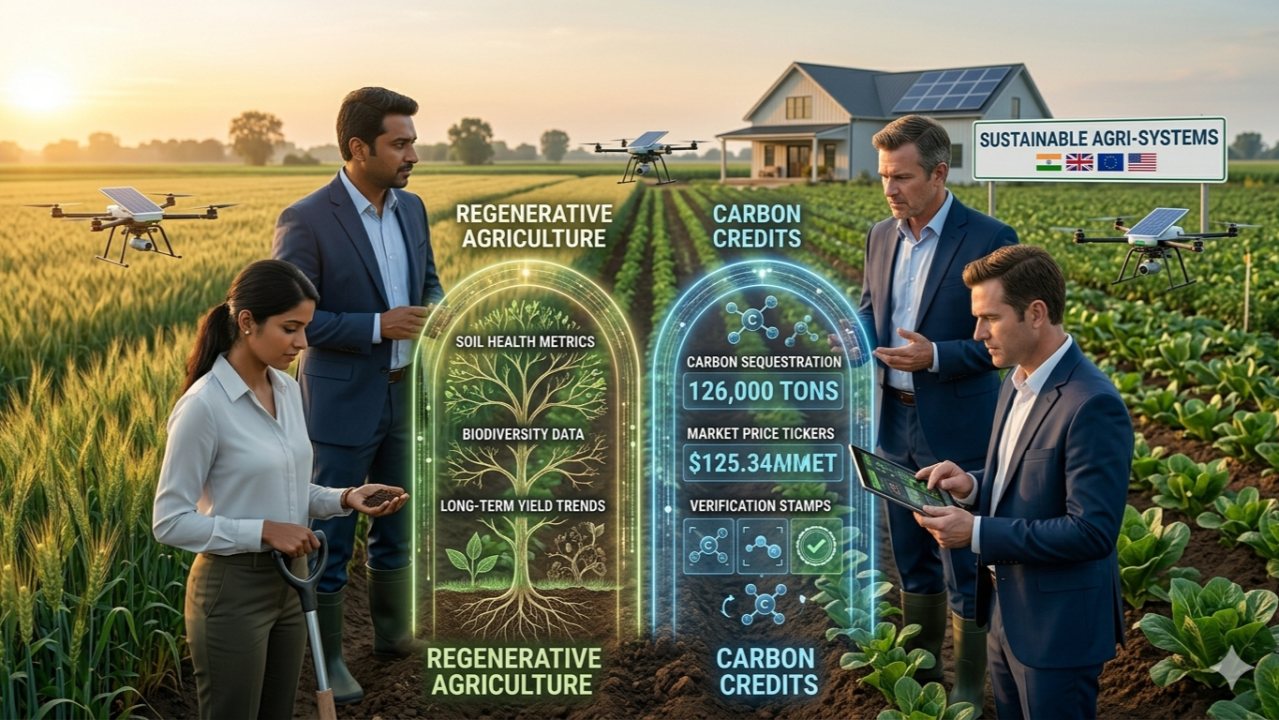
As climate change continues to impact agriculture, farmers are increasingly being introduced to concepts such as carbon credits and regenerative agriculture. Both approaches aim to improve environmental sustainability while creating economic opportunities for farmers. However, they are often confused with one another.
While carbon credit programs focus on measuring and monetizing carbon sequestration, regenerative agriculture emphasizes restoring soil health, biodiversity, and ecosystem resilience. Understanding the differences between these approaches can help farmers make informed decisions about their farms, finances, and long-term sustainability goals.
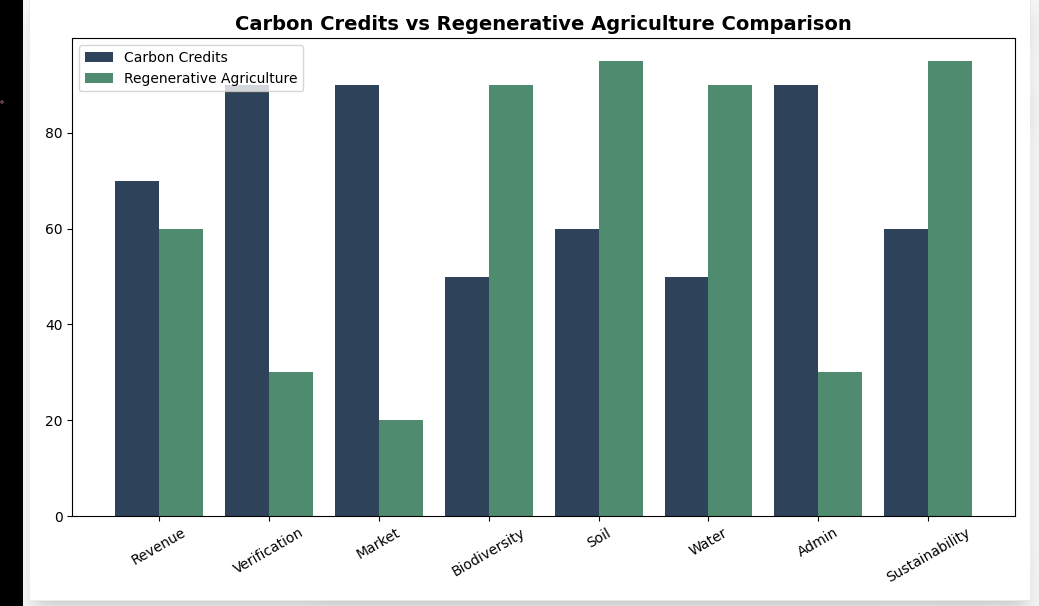
Chart Prepared By: Global Launch Base - Source: FAO, World Economic Forum
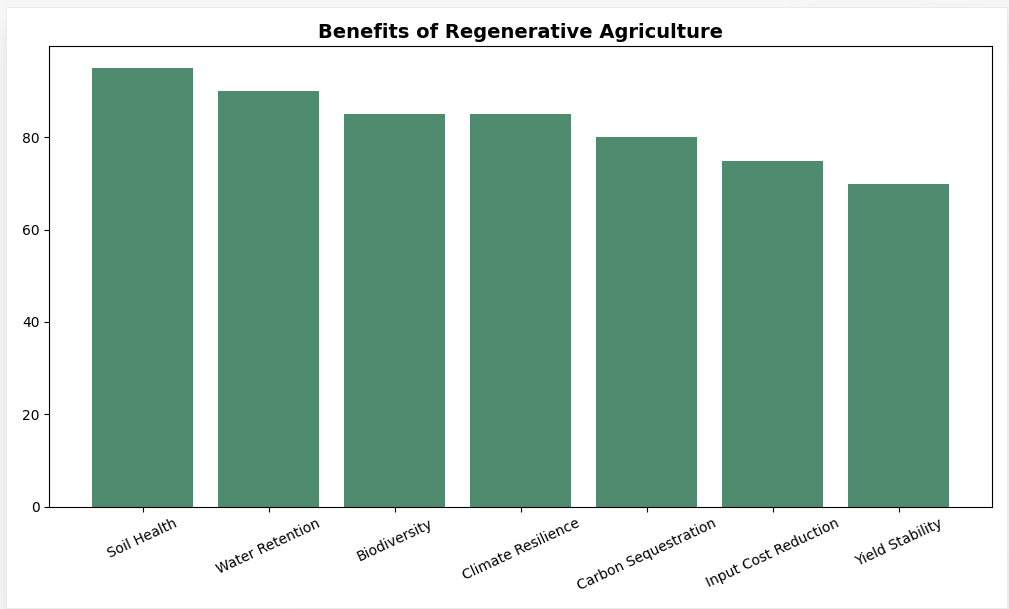
Chart Prepared By: Global Launch Base - Source: FAO, World Economic Forum
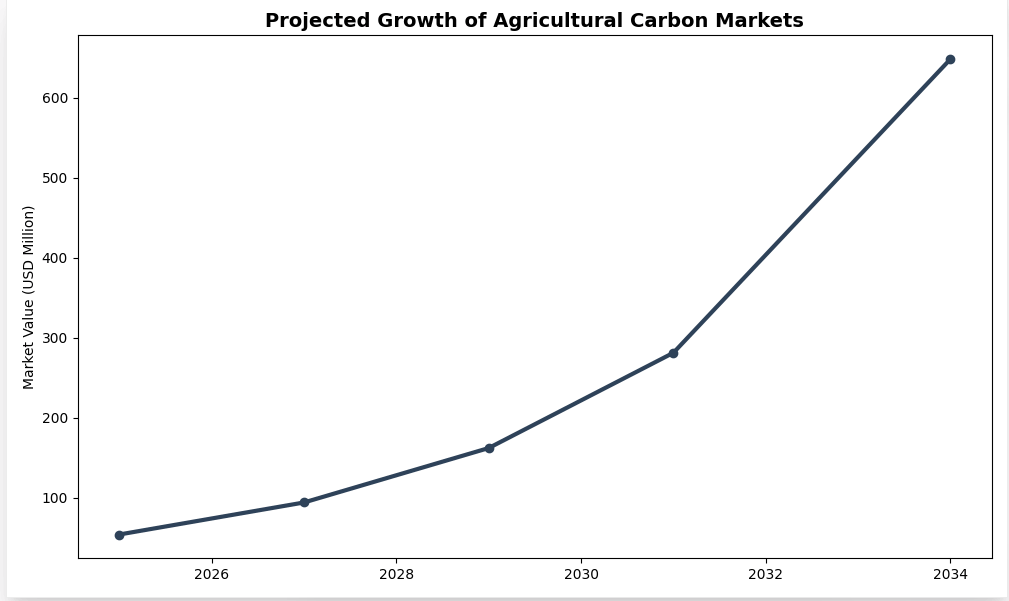
Chart Prepared By: Global Launch Base - Source: FAO, World Economic Forum
What Are Carbon Credits?
Carbon credits are tradable certificates that represent the reduction, removal, or avoidance of one metric ton of carbon dioxide (CO₂) or its equivalent from the atmosphere.
Farmers can generate carbon credits by adopting practices that increase carbon storage in soils or reduce greenhouse gas emissions. These credits can then be sold to companies seeking to offset their carbon footprint.
Common Practices That Generate Carbon Credits
- Cover cropping
- Reduced or no-till farming
- Agroforestry
- Biochar application
- Improved grazing management
- Efficient fertilizer use
- Methane reduction projects
How Carbon Credit Programs Work
- Farmers adopt approved carbon-sequestering practices.
- Data is collected and verified.
- Carbon sequestration is measured.
- Credits are issued by certification bodies.
- Credits are sold in voluntary or compliance carbon markets.
Potential Benefits
- Additional farm income
- Encouragement of sustainable farming practices
- Access to environmental funding opportunities
- Improved soil health over time
Challenges
- Complex monitoring and verification requirements
- Long-term contractual commitments
- Variable carbon market prices
- High transaction costs for small farmers
- Uncertainty in future regulations
What Is Regenerative Agriculture?
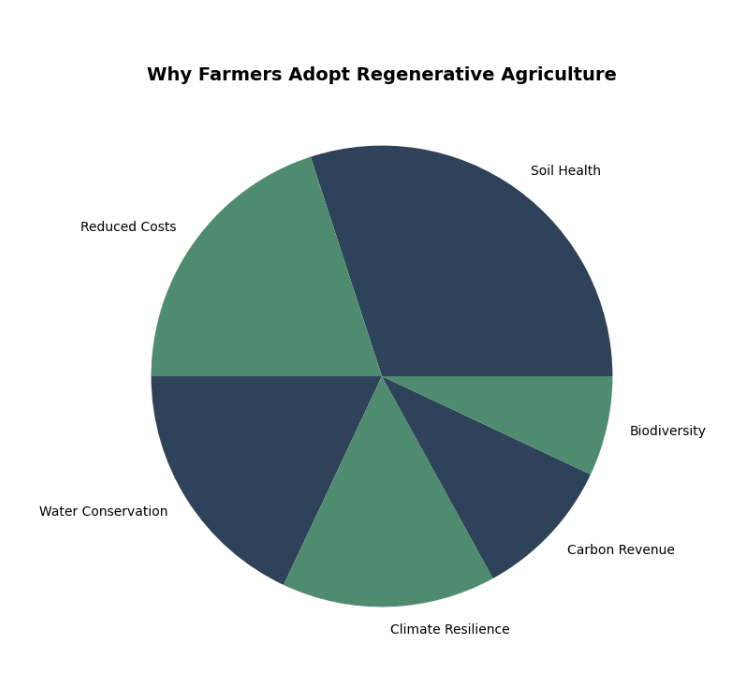
Chart Prepared By: Global Launch Base - Source: FAO, World Economic Forum
Regenerative agriculture is a farming approach focused on restoring and improving natural ecosystems while maintaining profitable agricultural production.
Rather than focusing solely on carbon storage, regenerative agriculture aims to rebuild soil health, improve water retention, increase biodiversity, and strengthen farm resilience.
Core Principles of Regenerative Agriculture
1. Minimize Soil Disturbance
Reducing excessive tillage helps preserve soil structure and microbial life.
2. Keep Soil Covered
Cover crops and mulches protect soil from erosion and moisture loss.
3. Increase Biodiversity
Growing multiple crops and integrating trees and livestock enhances ecosystem health.
4. Maintain Living Roots
Continuous root activity supports soil microorganisms and nutrient cycling.
5. Integrate Livestock
Managed grazing can improve soil fertility and stimulate plant growth.
Common Regenerative Practices
- Cover cropping
- Crop rotation
- Agroforestry
- Silvopasture
- Compost application
- Biochar use
- Rotational grazing
- Integrated farming systems
Carbon Credits vs Regenerative Agriculture: Key Differences
| Factor | Carbon Credits | Regenerative Agriculture |
|---|---|---|
| Primary Goal | Generate measurable carbon reductions | Improve overall ecosystem health |
| Revenue Source | Sale of carbon credits | Increased productivity and reduced input costs |
| Measurement | Requires carbon monitoring and verification | Focuses on farm outcomes and soil improvement |
| Certification | Often mandatory | Not always required |
| Time Horizon | Contract-based | Long-term farm management approach |
| Complexity | High administrative requirements | Flexible implementation |
| Main Benefit | Additional income | Improved resilience and productivity |
| Risk | Market and policy changes | Lower dependency on external markets |
Can Farmers Combine Both Approaches?
Yes.
In fact, many experts view regenerative agriculture as the foundation for successful carbon credit participation.
Practices such as cover cropping, agroforestry, rotational grazing, and biochar application can improve soil health while simultaneously generating measurable carbon sequestration.
As a result, farmers may benefit from:
- Higher soil fertility
- Better water retention
- Increased biodiversity
- Reduced input costs
- Potential carbon credit revenue
This integrated approach allows farmers to build resilient agricultural systems while exploring emerging environmental markets.
Opportunities for Indian Farmers
India has significant potential to benefit from both regenerative agriculture and carbon markets.
Key opportunities include:
Agroforestry Systems
Trees integrated with crops can sequester carbon while providing additional income through timber, fruits, spices, and medicinal products.
Biochar Production
Agricultural residues such as arecanut husk, coconut shells, and crop waste can be converted into biochar, improving soil health and potentially generating carbon credits.
Farmer Producer Organizations (FPOs)
Smallholder farmers can collaborate through FPOs to reduce verification costs and participate in larger carbon projects.
Natural Farming Initiatives
Government-supported natural farming programs align closely with regenerative agriculture principles and may provide future pathways into carbon markets.
What Should Farmers Consider Before Joining a Carbon Program?
Before enrolling in any carbon credit project, farmers should evaluate:
- Contract duration
- Payment structure
- Data collection requirements
- Verification costs
- Ownership of generated credits
- Exit clauses
- Impact on future land use decisions
Seeking legal and technical advice is recommended before signing long-term agreements.
The Future of Sustainable Farming
The future of agriculture is likely to involve a combination of regenerative farming practices, ecosystem restoration, and climate-focused financial incentives.
Carbon markets are expected to grow as governments and businesses pursue climate goals. At the same time, regenerative agriculture is gaining recognition as a practical approach to improving farm productivity, resilience, and environmental sustainability.
Farmers who prioritize soil health, biodiversity, and efficient resource management may be best positioned to benefit from both emerging opportunities.
Conclusion
Carbon credits and regenerative agriculture are not competing concepts—they can complement one another. Carbon credits provide a potential income stream for climate-positive farming practices, while regenerative agriculture offers a broader framework for building healthier and more resilient farming systems.
For farmers, the most sustainable path may be to focus first on regenerative practices that improve soil health and farm productivity. Carbon credits can then serve as an additional incentive, rewarding the environmental benefits already being created on the farm.
As agriculture moves toward a more climate-conscious future, understanding both approaches will be essential for farmers seeking long-term profitability and sustainability.