Computer Vision in Crop Health Monitoring
In an era where climate uncertainty, rising input costs, and shrinking farm margins are redefining agriculture, technology-driven precision is no longer optional—it is strategic. Among emerging innovations, computer vision stands out as a transformative force in crop health monitoring. By enabling real-time, data-backed decision-making, computer vision is positioning itself as the next big leap in modern agriculture.
For agri-entrepreneurs, FPOs, and rural innovation hubs, this is not just a technological upgrade—it is a competitive advantage.
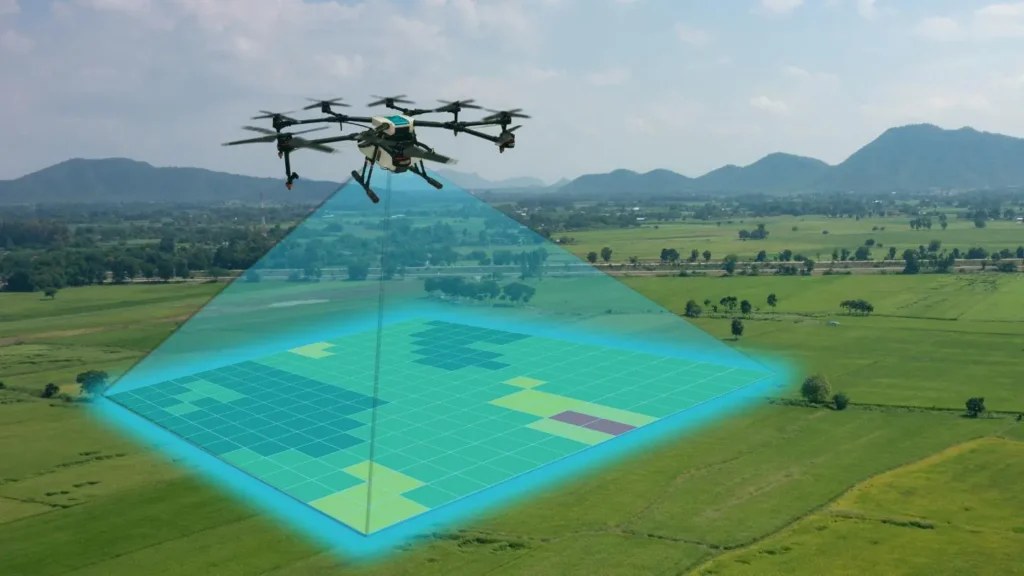
What is Computer Vision in Agriculture?
Computer vision uses AI-powered image recognition to analyze visual data from:
- Drones
- Satellite imagery
- Smartphones
- Field cameras
- Tractor-mounted sensors
Using machine learning algorithms, these systems detect patterns in crop color, leaf structure, canopy density, and soil conditions—often before the human eye can notice abnormalities.
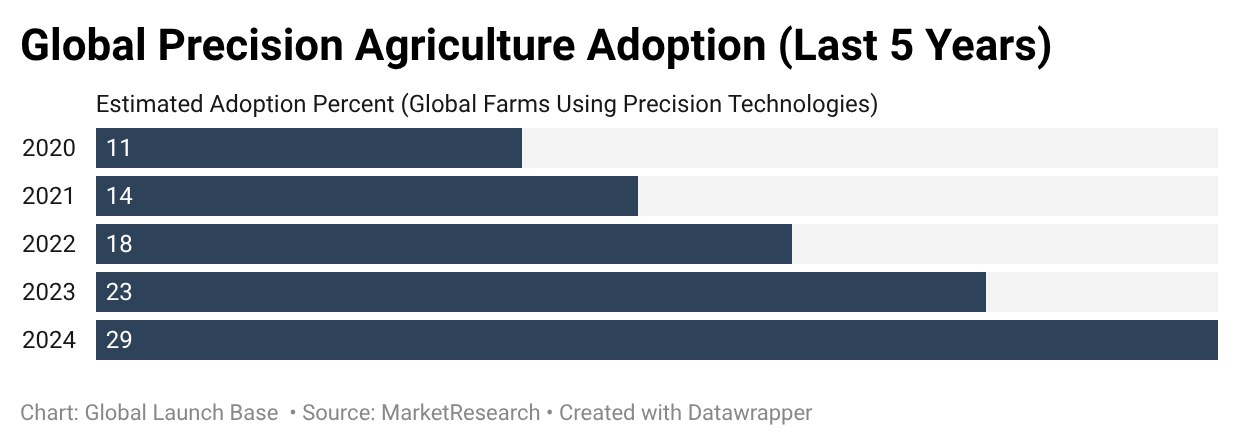
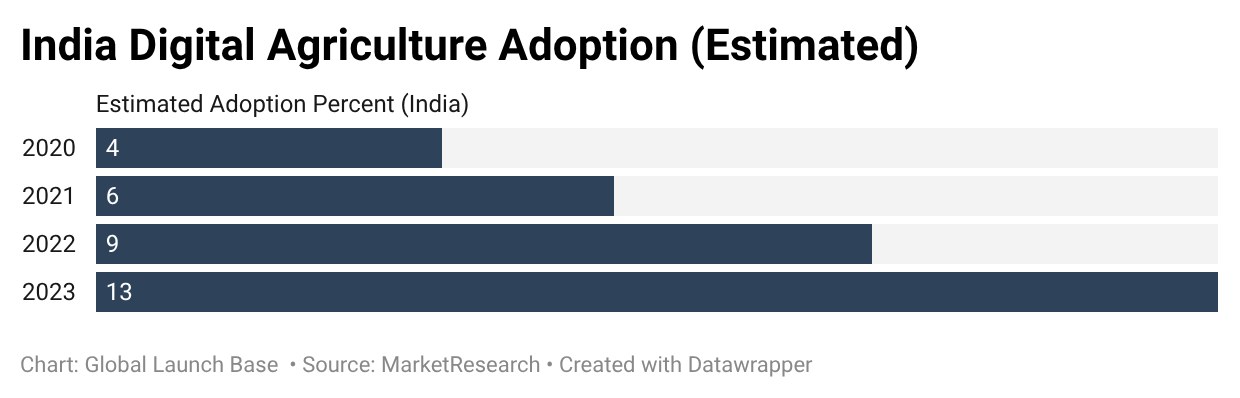
The result? Early detection of stress, disease, and nutrient deficiencies.
Why Traditional Crop Monitoring Falls Short
Conventional crop monitoring depends heavily on:
- Manual field inspections
- Farmer experience
- Delayed lab testing
- Reactive pest control
This approach is:
- Time-consuming
- Labor-intensive
- Often reactive rather than preventive
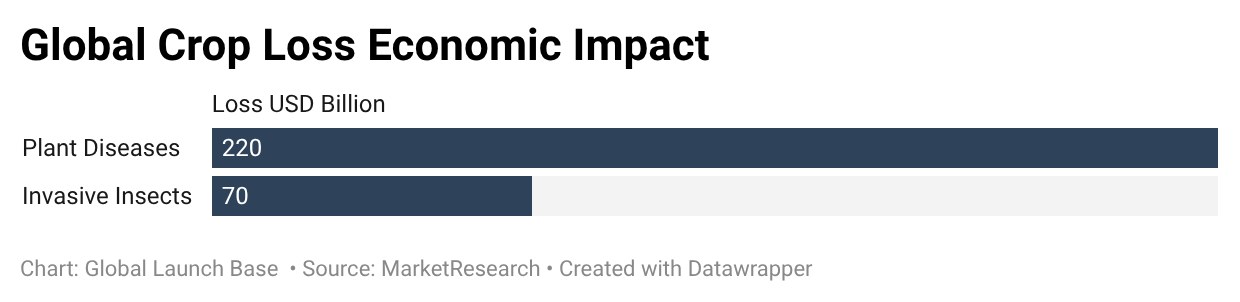
In high-value crops like black pepper, arecanut, mango, or horticulture plantations, delayed detection can mean significant financial loss.
Computer vision shifts the model from reactive to predictive agriculture.
Key Applications in Crop Health Monitoring
1. Early Disease Detection
AI models can identify early signs of fungal infections, blight, leaf spot, or pest attacks through subtle changes in leaf color and texture.
Example:
Systems can detect powdery mildew or nutrient stress days before visible damage spreads.
2. Nutrient Deficiency Analysis
By analyzing leaf discoloration patterns:
- Yellowing → Nitrogen deficiency
- Purpling → Phosphorus deficiency
- Edge burn → Potassium imbalance
Farmers can apply targeted fertilizers instead of blanket spraying.
3. Water Stress Monitoring
Computer vision combined with thermal imaging identifies water stress by analyzing canopy temperature differences. This is critical for drought-prone regions.
4. Weed Identification & Smart Spraying
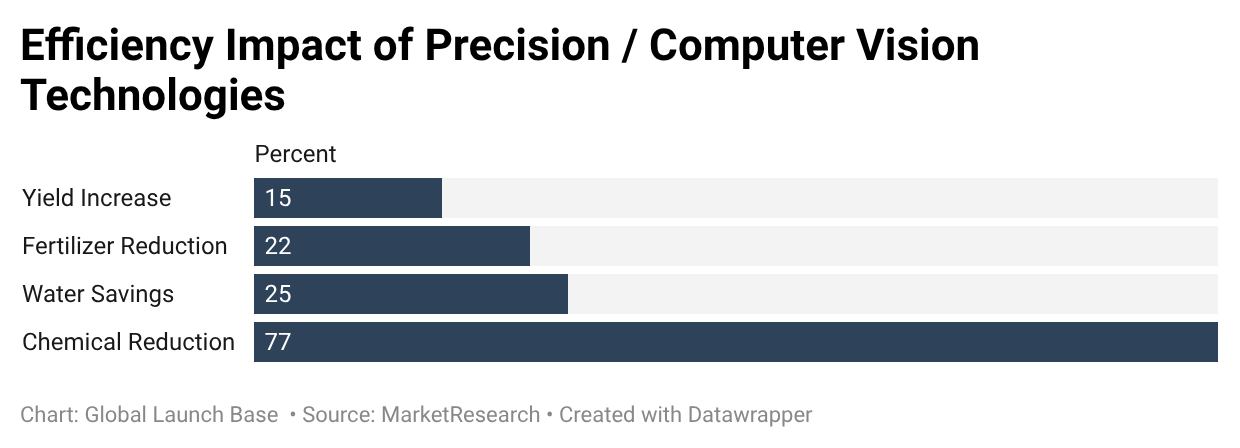
AI-powered cameras mounted on tractors can differentiate crops from weeds and trigger precision spraying, reducing herbicide use by up to 70–90%.
5. Yield Prediction & Biomass Estimation
Image-based canopy analysis enables:
- Crop growth tracking
- Biomass estimation
- Harvest planning
- Market forecasting
For agribusinesses, this supports better supply chain coordination and pricing strategy.
Technologies Driving the Shift
Several global innovators are accelerating adoption:
- John Deere – AI-enabled See & Spray technology
- Blue River Technology – Computer vision for selective spraying
- Taranis – High-resolution crop intelligence platform
- Prospera Technologies – AI-driven greenhouse monitoring
In India, startups are integrating computer vision with drone services, creating scalable models for medium and small farmers.
Business Impact: Why This Matters
1. Reduced Input Costs
Precision spraying and targeted fertilizer use reduce:
- Chemical cost
- Labor cost
- Environmental damage
2. Higher Yield & Quality
Early intervention prevents yield loss and improves produce quality—critical for export-oriented farming.
3. ESG & Sustainability Advantage
Reduced chemical use improves sustainability metrics—important for:
- Export certifications
- Green credit programs
- Carbon credit participation
4. Data-Driven Farm Management
Computer vision generates field-level data that supports:
- Farm digitization
- Insurance claims
- Agri-financing
- Investor reporting
For rural innovation hubs and agri-launch platforms, this creates a structured, scalable farming model.
Challenge: From Prototype to Field Validation
Many AI-driven agriculture solutions are:
- Tested in controlled environments
- Built on limited datasets
- Optimized for uniform farming conditions
However, real agricultural ecosystems are:
- Diverse in crop varieties
- Fragmented in landholding sizes
- Climatically unpredictable
- Highly cost-sensitive
For computer vision solutions to scale globally, real-field validation under rural conditions is critical.
Without this step, products struggle with adoption, accuracy, and farmer trust.
The Strategic Advantage for Agri-Tech Innovators
Companies building AI, drone, or imaging-based agricultural systems gain significant advantages when they:
- Test solutions in real open-field conditions
- Integrate farmer feedback early
- Validate performance across diverse crop systems
- Build localized AI training datasets
- Demonstrate measurable ROI
This approach reduces market-entry risk and strengthens investor confidence.
Why Emerging Agricultural Markets Matter
Emerging agricultural economies present:
- Large cultivation areas
- Diverse cropping systems
- Rapid digitization
- Government-backed agri-innovation initiatives
- Growing sustainability and export compliance needs
These environments are ideal for refining computer vision models at scale.
For international startups, they offer both validation and expansion opportunities.
The Road Ahead: From Monitoring to Automation
The future of crop intelligence will integrate:
- AI-powered autonomous equipment
- Real-time pest prediction models
- Integrated weather and crop analytics
- Digital farm twins
Computer vision will become the visual brain of precision agriculture.
Conclusion: Validate. Adapt. Scale.
Computer vision in crop health monitoring is not a trend — it is a structural shift toward intelligent, resilient agriculture.
The farms that adopt it early will lead.
The innovators who validate it properly will scale faster.
The next big leap in agriculture has already begun.