Could Tree Farming Become India's Next Green Investment Boom?
Introduction
India is witnessing a significant shift in the way investors, farmers, and businesses view agriculture. Traditionally, investments in agriculture focused on food crops, horticulture, and livestock. However, rising concerns about climate change, carbon emissions, land degradation, and sustainable income generation are creating opportunities for an entirely new asset class—tree farming.
As global demand for carbon credits, sustainable timber, renewable materials, and ecosystem restoration grows, tree farming is emerging as a potentially lucrative and environmentally beneficial investment. Governments, corporations, and financial institutions are increasingly supporting afforestation and agroforestry initiatives, positioning tree farming as one of the most promising green investment opportunities in India.
The question is no longer whether tree farming can generate environmental benefits, but whether it can become India's next green investment boom.
Understanding Tree Farming
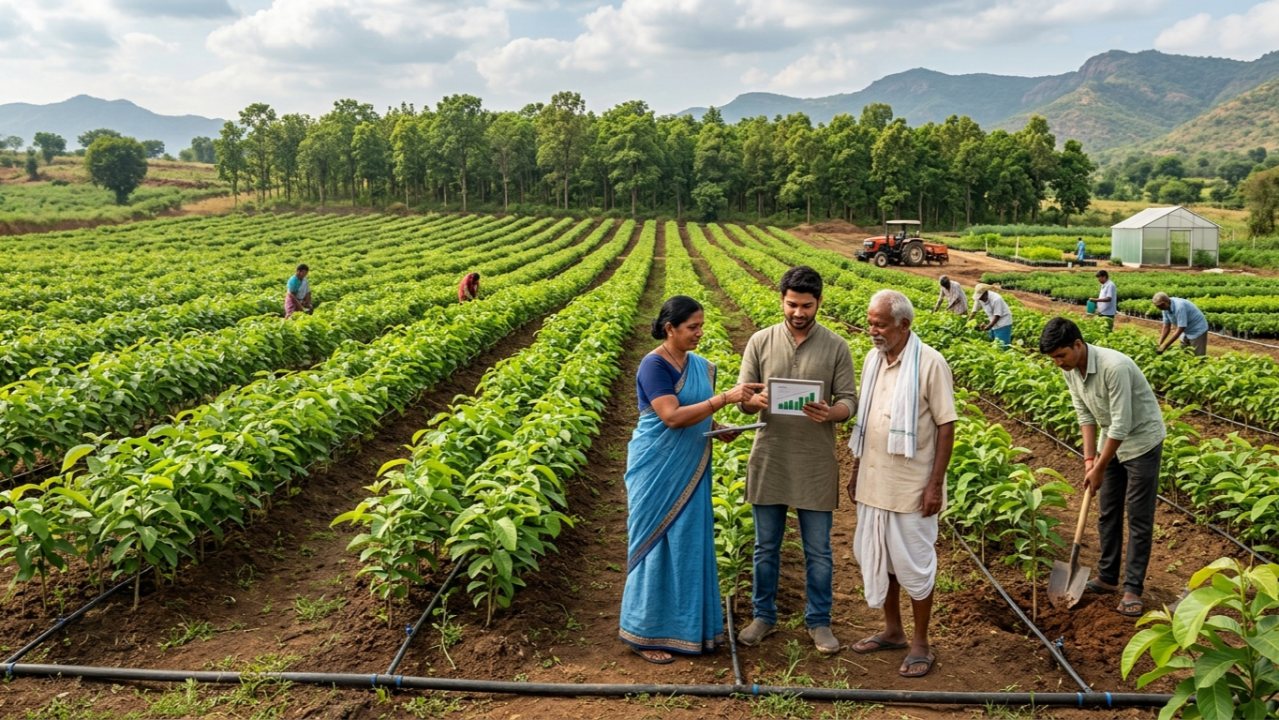
Tree farming refers to the cultivation and management of trees for commercial, environmental, or social purposes. Unlike natural forests, tree farms are deliberately planted and managed to produce economic returns while providing ecological benefits.
Tree farming includes:
- Timber plantations
- Agroforestry systems
- Bamboo cultivation
- Carbon farming projects
- Fruit and nut plantations
- Native species restoration projects
- Bioenergy plantations
Popular commercial tree species in India include:
- Teak
- Sandalwood
- Melia dubia
- Bamboo
- Eucalyptus
- Mahogany
- Silver Oak
- Red Sanders
- Poplar
- Subabul
Why Tree Farming Is Gaining Attention
1. Growing Demand for Timber
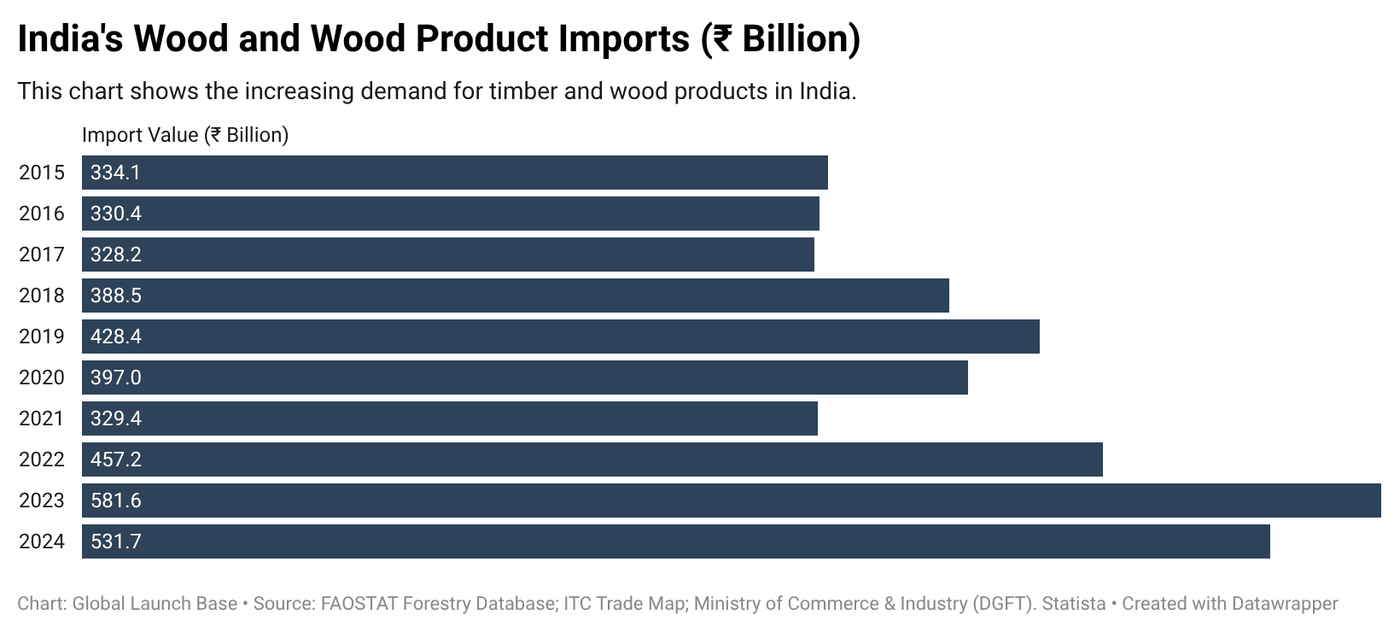
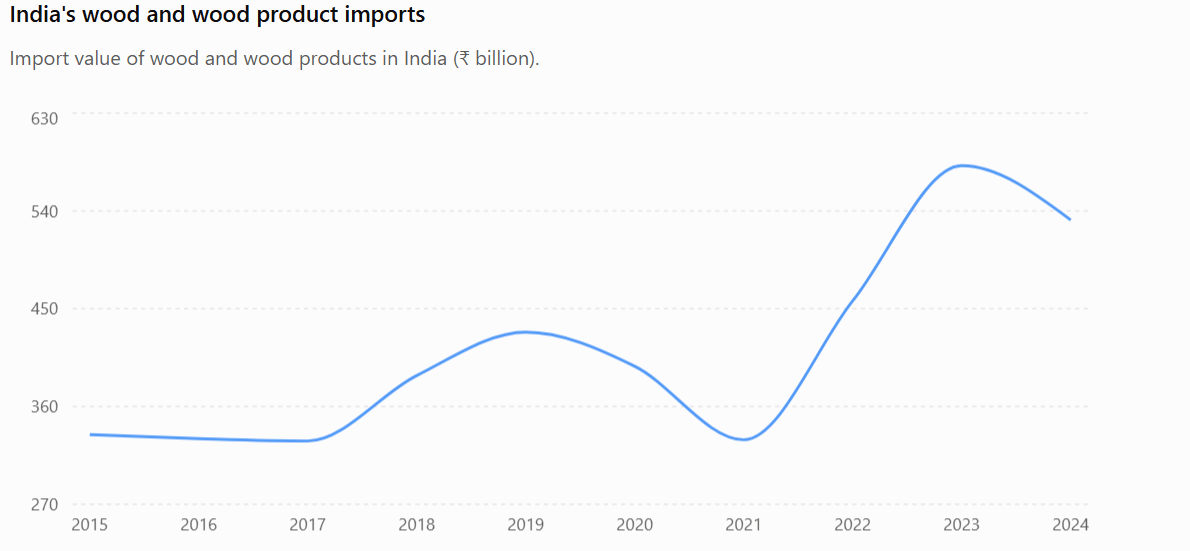
India is among the world's largest importers of timber and wood products.
| Indicator | Value |
|---|---|
| Annual Timber Demand | 85 million cubic meters |
| Domestic Production | 45 million cubic meters |
| Supply Gap | 40 million cubic meters |
| Annual Timber Imports | $2–3 billion |
The widening demand-supply gap creates enormous opportunities for domestic tree plantations.
2. Carbon Credit Opportunities
The global voluntary carbon market is expected to grow rapidly over the next decade.
Companies across sectors are committing to:
- Net Zero targets
- ESG compliance
- Carbon neutrality initiatives
Tree plantations absorb atmospheric carbon dioxide and can generate carbon credits that are sold in international markets.
A mature agroforestry project can sequester:
5–15 tonnes of CO₂ per hectare annually, depending on species and management practices.
3. Rising Corporate Demand for Sustainability
Large companies increasingly seek:
- Sustainable sourcing
- Carbon offsets
- Biodiversity projects
- Green supply chains
Several corporations are investing in:
- Tree plantations
- Community forestry projects
- Carbon farming partnerships
This creates new revenue opportunities for farmers and investors.
India's Green Economy Creates Perfect Conditions
India has committed to ambitious climate goals.
National Targets
| Goal | Target |
|---|---|
| Net Zero | 2070 |
| Additional Carbon Sink | 2.5–3 billion tonnes CO₂ equivalent |
| Renewable Energy Capacity | 500 GW by 2030 |
| Land Restoration | 26 million hectares |
Meeting these targets requires large-scale tree plantation and restoration efforts.
Why Investors Are Looking at Tree Farming
1. Long-Term Asset Appreciation
Trees appreciate naturally as they grow.
Unlike many agricultural crops:
- Biomass increases every year.
- Timber prices generally rise over time.
- Mature plantations become valuable assets.
2. Portfolio Diversification
Tree farming has relatively low correlation with:
- Equity markets
- Real estate cycles
- Commodity volatility
Institutional investors worldwide increasingly include forestry assets in their portfolios.
3. Multiple Revenue Streams
Modern tree farming can generate income from:
Timber Sales
- Teak
- Sandalwood
- Melia dubia
Non-Timber Forest Products
- Honey
- Medicinal plants
- Fruits
- Spices
Carbon Credits
- Voluntary carbon markets
- Corporate sustainability projects
Ecotourism
- Nature retreats
- Educational tourism
- Conservation tourism
Biodiversity Credits
An emerging global market likely to gain momentum over the next decade.
Agroforestry: A Major Growth Opportunity
India has become one of the global leaders in agroforestry adoption.
Agroforestry combines:
- Trees
- Crops
- Livestock
Benefits include:
- Higher farm resilience
- Additional income streams
- Better soil health
- Reduced climate risks
- Improved biodiversity
Economic Potential of Agroforestry
| Parameter | Traditional Farming | Agroforestry |
|---|---|---|
| Income Stability | Low | High |
| Climate Resilience | Moderate | High |
| Carbon Sequestration | Low | High |
| Soil Improvement | Moderate | High |
| Diversification | Limited | Strong |
India's Carbon Market Could Transform Tree Farming
India is developing its own carbon credit ecosystem through initiatives such as:
- Carbon Credit Trading Scheme
- Green Credit Programme
- State-level plantation incentives
As carbon markets mature, tree farming could evolve into a new form of climate investment.
Government Policies Supporting Tree Farming
National Agroforestry Policy
India became the first country to adopt a dedicated agroforestry policy.
Objectives:
- Increase tree cover
- Improve farmer incomes
- Reduce pressure on natural forests
- Promote sustainable land management
Green Credit Programme
The program encourages:
- Afforestation projects
- Ecosystem restoration
- Corporate participation in tree planting initiatives
Compensatory Afforestation Programs
Large funds are available for:
- Forest restoration
- Plantation activities
- Community forestry projects
Tree Farming and Rural Employment
Tree-based industries create jobs in:
- Nursery development
- Plantation management
- Drone mapping
- Carbon accounting
- Timber processing
- Logistics
- Ecotourism
Experts estimate that expanding agroforestry and tree-based enterprises could create millions of green jobs across rural India.
Technology Is Making Tree Farming More Attractive
Digital Technologies
- Drone mapping
- Satellite monitoring
- Precision irrigation
- GIS systems
- Carbon measurement tools
- AI-based plantation management
These technologies improve:
- Survival rates
- Productivity
- Investor confidence
- Project transparency
Emerging Business Models
Farmer Producer Organizations (FPOs)
FPOs can aggregate:
- Small farmers
- Plantation projects
- Carbon credits
- Timber marketing
Corporate-Farmer Partnerships
Companies can:
- Finance plantations
- Purchase carbon credits
- Secure sustainable raw materials
Tree Investment Platforms
New startups are creating:
- Fractional ownership models
- Digital forestry investments
- Carbon investment platforms
Challenges That Need Attention
Long Gestation Period
Many tree species require:
- 5–20 years to mature.
Regulatory Complexity
Tree felling and transportation rules vary across states.
Lack of Awareness
Many farmers remain unaware of:
- Commercial tree opportunities
- Carbon markets
- Agroforestry practices.
Financing Constraints
Banks still treat tree plantations differently from conventional agriculture.
High-Potential Tree Species for Investment
| Species | Maturity Period | Main Use |
|---|---|---|
| Teak | 15–20 Years | Premium Timber |
| Melia dubia | 6–8 Years | Plywood |
| Bamboo | 3–5 Years | Furniture, Biomass |
| Sandalwood | 12–15 Years | Perfume, Medicine |
| Silver Oak | 10–15 Years | Timber, Agroforestry |
| Poplar | 6–8 Years | Paper Industry |
Investment Opportunities Across the Value Chain
| Segment | Opportunity |
|---|---|
| Nurseries | High |
| Plantation Services | High |
| Drone Monitoring | High |
| Carbon Accounting | Very High |
| Timber Processing | High |
| Carbon Trading | Very High |
| Biodiversity Credits | Emerging |
| Ecotourism | Moderate |
Why the Timing Is Right
Several global trends are converging:
- Climate action commitments.
- ESG investment growth.
- Carbon market expansion.
- Timber shortages.
- Corporate sustainability targets.
- Demand for natural climate solutions.
- Government support for green projects.
Together, these factors are creating conditions similar to those that fueled the renewable energy boom.
The Road Ahead
If supported by:
- Stable policies,
- Better financing,
- Carbon market development,
- Digital monitoring technologies,
- Farmer awareness programs,
India could become one of the world's leading destinations for tree-based investments.
Tree farming has the potential to transform degraded land into productive assets, generate sustainable rural livelihoods, and contribute significantly to India's climate goals.
Conclusion
The next decade may witness a fundamental shift in how land is valued in India. Trees are no longer viewed solely as environmental assets—they are increasingly becoming economic assets capable of generating timber income, carbon revenues, biodiversity benefits, and long-term wealth.
As investors search for sustainable opportunities that combine profitability with environmental impact, tree farming stands at the intersection of agriculture, climate action, and green finance.
The renewable energy sector once represented India's green investment revolution. The coming decade could see tree farming emerge as India's next green investment boom, turning millions of hectares into productive green assets while helping the nation achieve both economic growth and environmental sustainability.