Embedding Climate Resilience into International Launch Strategies
Introduction
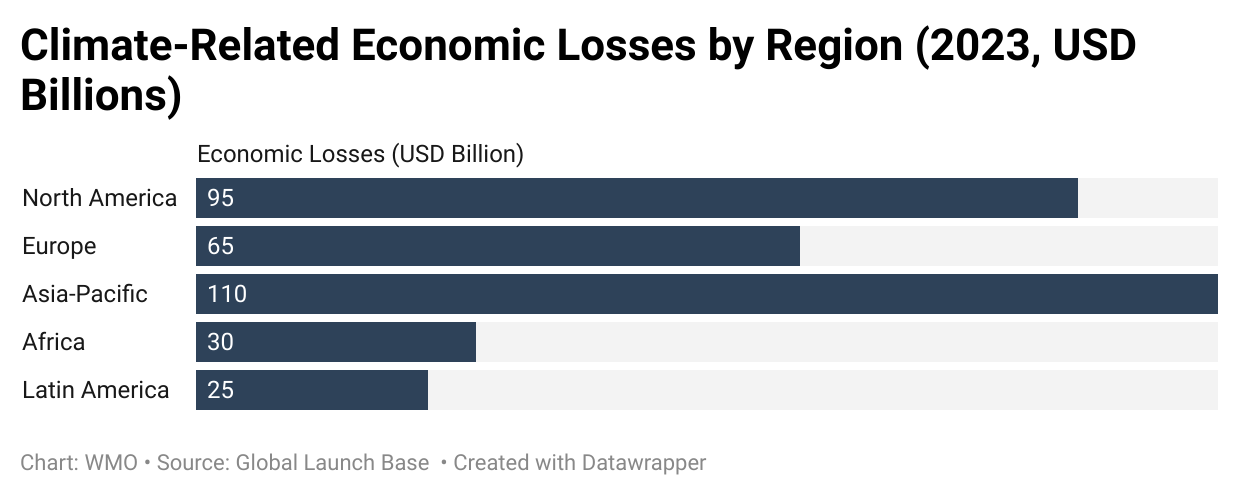
Expanding into international markets is often viewed through the lens of consumer demand, cultural fit, and regulatory compliance. However, one crucial factor is increasingly shaping global strategies—climate resilience. Climate change is no longer a distant challenge; it is a present reality affecting supply chains, infrastructure, customer behavior, and government policies worldwide.
From floods in South Asia disrupting logistics to heatwaves straining energy grids in Europe, climate risks are now business risks. Embedding climate resilience into international launch strategies ensures that companies are not just entering new markets, but doing so in a way that is sustainable, adaptable, and future-proof.
Why Climate Resilience Matters in Global Expansion
Climate resilience goes beyond environmental responsibility; it is about securing business continuity and unlocking new opportunities.
- Operational Risks
- Extreme weather disrupts supply chains, crop cycles, and manufacturing hubs.
- Water scarcity or energy shortages can halt operations in vulnerable regions.
- Extreme weather disrupts supply chains, crop cycles, and manufacturing hubs.
- Financial Risks
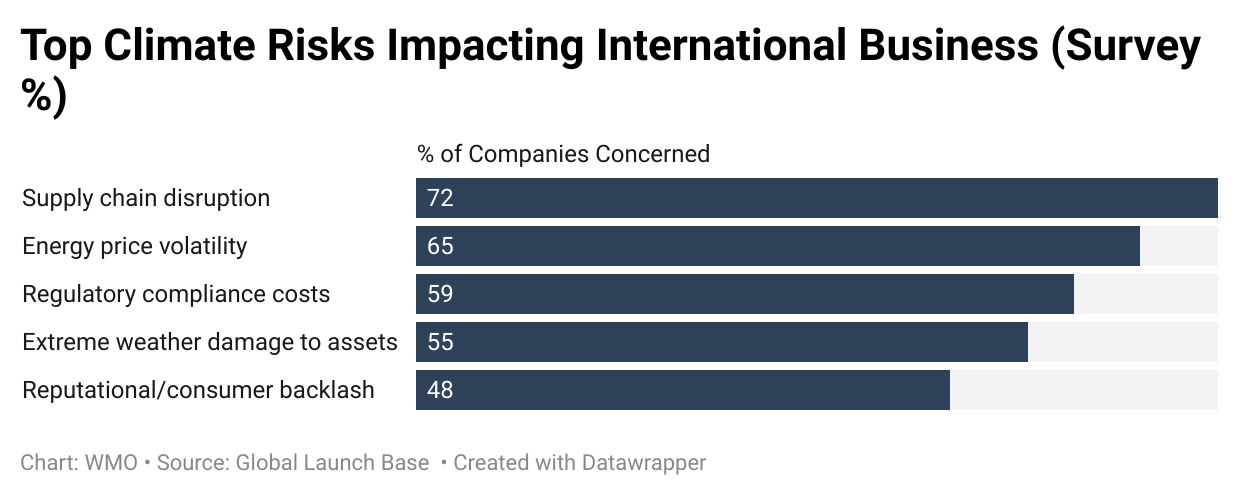
- Carbon taxes, insurance premiums, and compliance costs are increasing.
- Investors are prioritizing ESG (Environmental, Social, Governance) metrics when funding global companies.
- Carbon taxes, insurance premiums, and compliance costs are increasing.
- Reputational Risks
- Consumers and regulators expect sustainable practices.
- Companies failing to integrate climate strategies risk backlash and market exclusion.
- Consumers and regulators expect sustainable practices.
- Opportunity Risks
- The green economy is growing—renewables, climate-tech, and circular products are becoming mainstream.
- Markets are rewarding brands that help communities adapt to climate shocks.
- The green economy is growing—renewables, climate-tech, and circular products are becoming mainstream.
Core Elements of a Climate-Resilient Launch Strategy
- Market Readiness & Risk Mapping
- Conduct climate vulnerability assessments in target countries.
- Use climate analytics, GIS mapping, and scenario planning to identify risks (flood-prone cities, heatwave zones, drought areas).
- Align with local and global climate policies (Paris Agreement, EU Green Deal, India’s Green Credit Programme).
- Conduct climate vulnerability assessments in target countries.
- Resilient Supply Chains
- Diversify sourcing to reduce dependency on a single geography.
- Integrate renewable energy, green logistics, and circular packaging.
- Develop contingency plans, including regional warehousing and buffer inventory.
- Diversify sourcing to reduce dependency on a single geography.
- Product & Service Adaptation
- Adapt offerings to suit local climate realities:
- Heat-resistant materials for construction.
- Water-efficient agri-tech for drought-prone areas.
- Solar-powered cold storage for perishable supply chains.
- Heat-resistant materials for construction.
- Embed resilience as a value proposition, not just a compliance requirement.
- Adapt offerings to suit local climate realities:
- Local Partnerships & Ecosystem Engagement
- Collaborate with universities, farmer producer organizations (FPOs), NGOs, and government agencies.
- Invest in community resilience: water conservation, reforestation, disaster preparedness.
- Co-create solutions with local stakeholders, ensuring cultural and climate fit.
- Regulatory Alignment & ESG Compliance
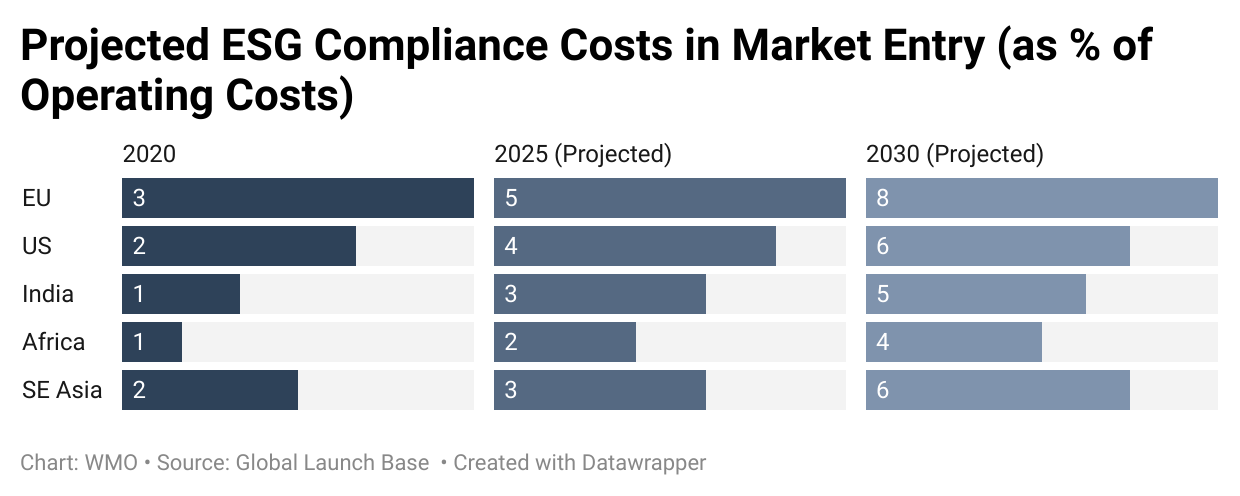
- Prepare for mandatory carbon reporting and sustainability disclosures.
- Access incentives—green bonds, climate finance, renewable subsidies—offered by host countries.
- Position market entry as a climate-positive initiative, not just business expansion.
- Prepare for mandatory carbon reporting and sustainability disclosures.
Global Examples of Climate-Resilient Expansion
- IKEA
Embeds circular economy principles in every new market, focusing on renewable energy, sustainable sourcing, and affordable eco-friendly products. - Unilever
Works with smallholder farmers across Asia and Africa to build climate-resilient supply chains in palm oil, tea, and spices. - Tesla
Designs its global launch strategies around renewable infrastructure adoption, ensuring alignment with local EV and energy storage policies.
Action Framework for International Launch Teams
Step | Focus Area | Tools & Methods | Example |
|---|---|---|---|
1 | Climate Risk Mapping | GIS, climate analytics, IPCC reports | Heatwave mapping in Southern Europe |
2 | Supply Chain Resilience | Multi-sourcing, local warehousing | Dual sourcing in SE Asia |
3 | Product Localization | Climate-specific product design | Solar cold storage in Sub-Saharan Africa |
4 | Regulatory & ESG Compliance | Carbon reporting, green incentives | EU Green Deal alignment |
5 | Community Integration | CSR, capacity building, FPO partnerships | Agroforestry in India |
Conclusion
Embedding climate resilience is not an optional feature of global expansion—it is a strategic necessity. Companies that fail to prepare for climate risks face disruptions, reputational damage, and regulatory hurdles. On the other hand, businesses that embed resilience into their launch strategies gain long-term competitiveness, access to new green markets, and stronger relationships with stakeholders.
In short, climate resilience is not just about protecting against risk—it’s about unlocking future growth.