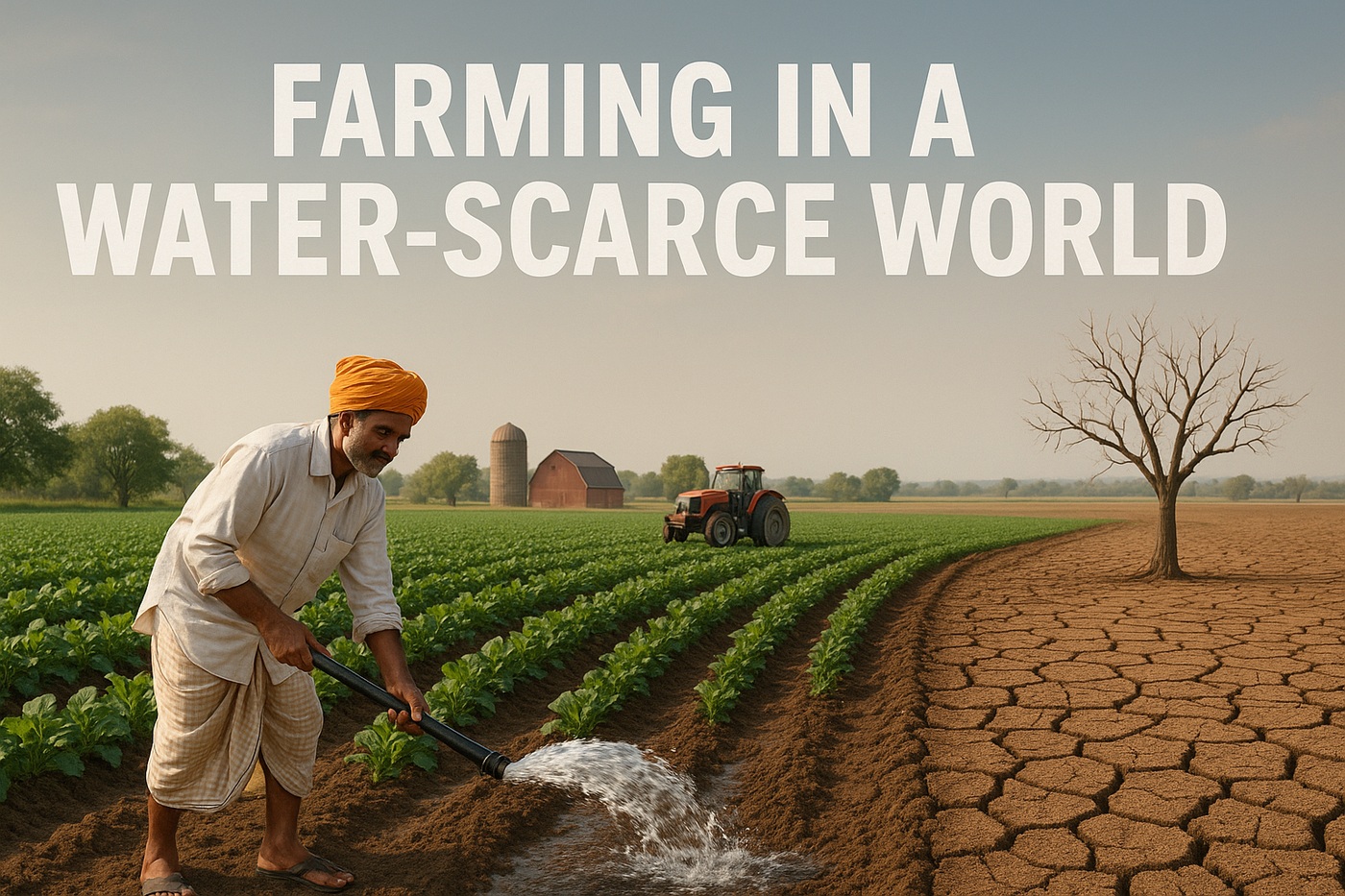
Farming in a Water-Scarce World
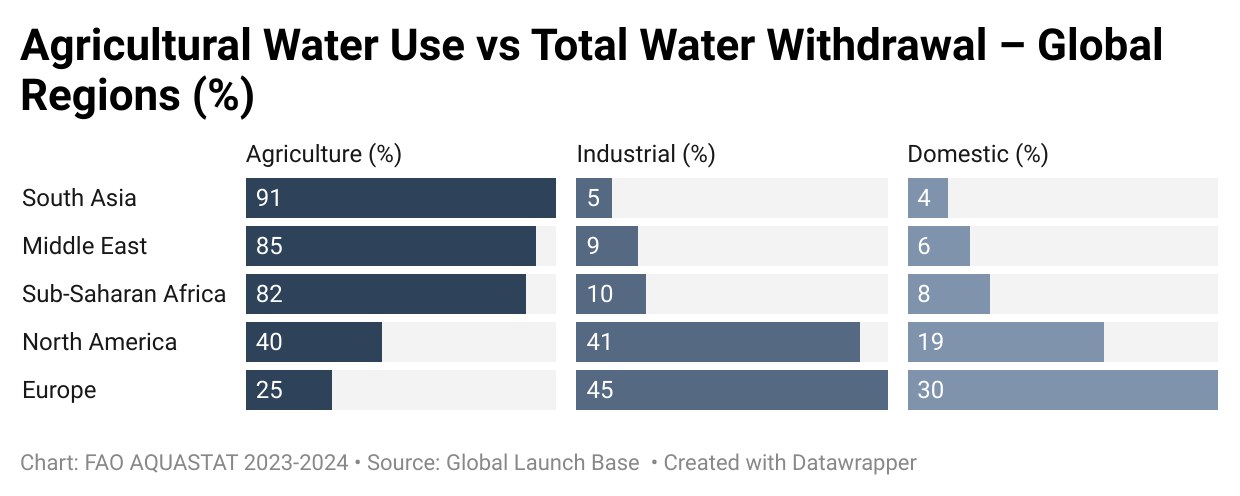
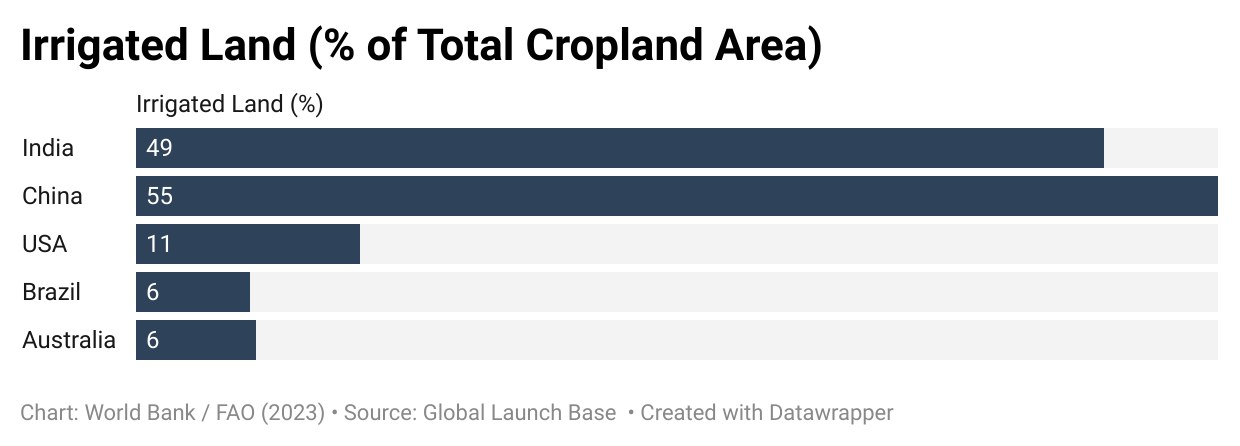
Water scarcity is no longer a looming threat — it is a present-day reality. According to the United Nations, over 2.3 billion people live in water-stressed countries, and agriculture, which consumes 70% of global freshwater, is the most affected sector. As a farm researcher working closely with farmers, institutions, and agri-tech companies, I've witnessed firsthand the increasing pressure on agricultural productivity due to diminishing water resources.
This article explores the science, statistics, and practical solutions that can drive sustainable farming in a water-scarce world.
The Scale of the Problem
- By 2050, global food production must increase by 60% to feed a projected 9.7 billion people.
- Simultaneously, water availability per capita has declined by over 20% in the past two decades (FAO, 2022).
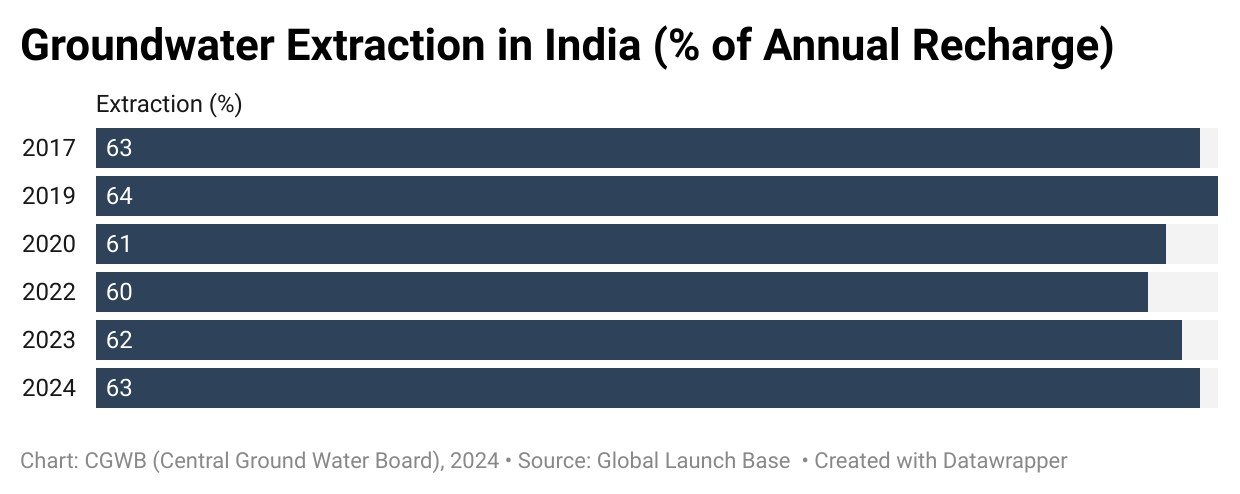
- In India, nearly 54% of the land is under water stress, with over 60% of irrigation dependent on groundwater (Central Ground Water Board, 2023).
- Groundwater depletion is alarming in states like Punjab and Haryana, where the water table is dropping by 1 meter per year.
Irrigation Efficiency: Need for a Paradigm Shift
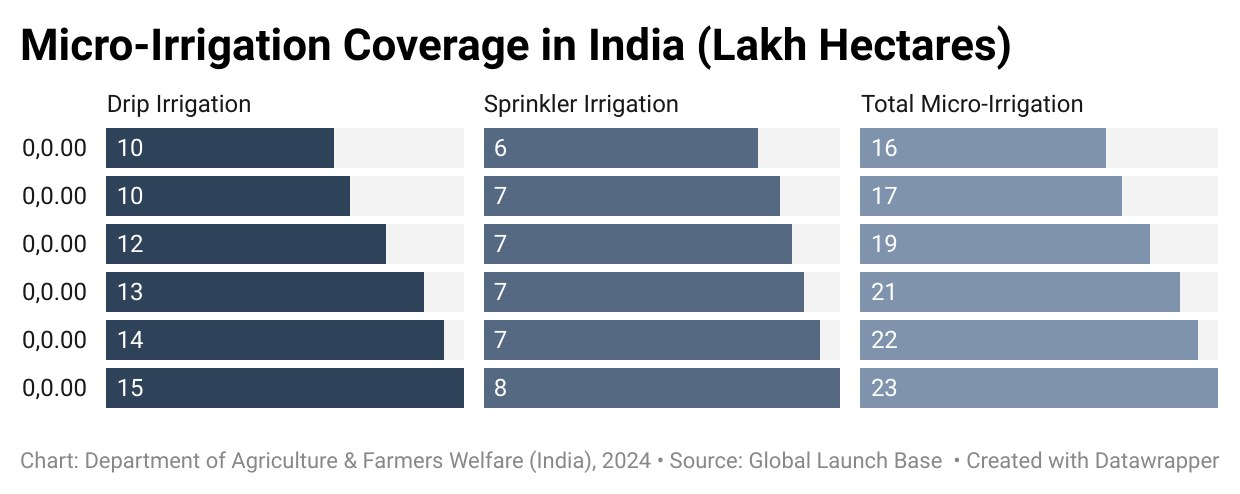
Traditional flood irrigation wastes up to 40–60% of water due to evaporation and runoff. Modern irrigation methods show promising efficiency:
Irrigation Method | Water Use Efficiency | Adoption Rate in India (2024) |
|---|---|---|
Flood Irrigation | 30–40% | ~80% (majority use) |
Drip Irrigation | 80–90% | 14.2 million ha (approx. 5.5%) |
Sprinkler Irrigation | 60–70% | ~7.3 million ha (approx. 2.9%) |
(Source: Ministry of Agriculture & Farmers Welfare)
Government schemes like PMKSY – Per Drop More Crop have provided subsidies up to 55%–75% for micro-irrigation systems, but adoption is still limited due to lack of awareness and upfront costs.
Borewell Restoration and Recharging Techniques
In India, over 30 million borewells have been dug, many of which are drying up due to over-extraction. Borewell recharging and restoration are now critical tools for sustainable farming, especially in groundwater-dependent regions.
1. Borewell Recharging: How It Works
Borewell recharging involves directing rainwater runoff into a filtering chamber and then allowing it to percolate back into the borewell or nearby aquifer.
Common Techniques:
Technique | Description |
|---|---|
Recharge Pit with Filter | A 4–6 ft deep pit filled with gravel, sand, and charcoal to filter runoff. |
Injection Well | Direct injection of clean rainwater into deep aquifers via PVC piping. |
Percolation Trench | Long shallow trenches that collect and slowly percolate runoff into soil. |
Recharge Shaft | Vertical shaft dug near the borewell to allow fast percolation to lower strata. |
Roof Rainwater Harvesting to Borewell | Captures rooftop runoff and channels it through filters to borewell. |
A recharge pit of just 3x3x3 feet can percolate up to 18,000 liters/year of water in semi-arid conditions.
2. Restoration of Defunct Borewells
Many borewells go defunct not because of aquifer depletion alone, but due to clogging, siltation, or collapse of casing pipes.
Restoration Practices:
- Air Jetting / Compressor Cleaning – Blasting air into the borewell to remove silt and debris.
- Chemical Flushing – Using mild acids to remove mineral encrustation on bore walls.
- Re-casing or Re-lining – Replacing collapsed sections with new PVC/steel casing.
- Deepening – Extending the bore depth to tap lower aquifers (after geological survey).
- Camera Inspection – Using borewell inspection cameras to locate blockages or casing failures.
In Karnataka’s Kolar district, farmers restored over 1,500 borewells using air jetting and recharge pits with over 60% success rate (IWMI Report, 2022).
Crop Diversification: Matching Crops with Water Availability
One of the most practical approaches is shifting from high-water-consuming crops to more drought-resilient alternatives.
Crop | Water Requirement (litres/kg yield) |
|---|---|
Rice | 3,000–5,000 |
Sugarcane | 1,500–2,000 |
Pearl Millet | 1,200 |
Sorghum | 900 |
Chickpea | 800 |
Case in point: In Maharashtra’s Marathwada region, farmers who switched from sugarcane to pulses saw a 40% reduction in water usage and 20–25% increase in income due to better market prices and low input costs.
Innovative Technologies Making an Impact
- Soil Moisture Sensors: Farmers using IoT-based soil sensors in Tamil Nadu reduced irrigation cycles by 30%, while maintaining the same yield.
- Remote Sensing & Satellite Monitoring: Used by platforms like CropIn and SatSure, these technologies help monitor evapotranspiration, crop stress, and water requirements in real time.
- Hydrogel Technology: A water-retaining polymer mixed in soil, proven to retain 80–100 times its weight in water. Trials in Gujarat show yield increases of 10–15% in dryland cotton.
- Drought-Tolerant Seeds: Research from ICAR and ICRISAT has introduced maize, millet, and pulse varieties that require 20–40% less water.
Wastewater Recycling & Rainwater Harvesting
- Only 30% of wastewater is treated and reused in agriculture.
- Projects in Israel and parts of Rajasthan are recycling treated greywater for horticulture.
- Farm ponds and check dams built under MGNREGA have increased soil moisture retention by 35–50% in semi-arid regions.
Policy and Institutional Support
- National Water Policy (2012) recommends water pricing, micro-irrigation promotion, and participatory water management.
- FPOs (Farmer Producer Organizations) and NGOs are critical in educating and financing water-smart farming practices.
- Digital platforms like KhetiBuddy and AgNext provide advisory services to optimize irrigation schedules using AI.
Future Directions: What We Must Focus On
- Data-Driven Decision Making: Water budgeting per district and real-time dashboards using GIS can help identify high-stress zones and allocate resources efficiently.
- Urban-Rural Water Nexus: Urban wastewater can be redirected for peri-urban farming, closing the loop between consumption and reuse.
- Crop Insurance Integration with Water Use: Incentivizing farmers who use water-efficient crops through premium discounts or subsidies.
Conclusion
Farming in a water-scarce world requires more than just rain prayers — it demands innovation, education, and integration. As researchers, our role is to turn evidence into action, data into decisions, and insights into income for the farmer.
Unless water becomes central to every agri-policy, farming will remain vulnerable. But with the right strategies — from sensor-based irrigation to climate-resilient crops — we can ensure productivity even in the face of scarcity.