From Global Strategy to Local Reality_ Overcoming Expansion Barriers in Emerging Markets
Overcoming Expansion Barriers in Emerging Markets
Expanding into emerging markets is a compelling opportunity for global businesses. These regions offer growing consumer bases, rising middle-class demand, and untapped potential across multiple sectors. However, the journey from a carefully crafted global strategy to successful local execution is rarely straightforward. Companies often face a unique mix of cultural, regulatory, and operational challenges that require adaptability and innovation.
Understanding the Opportunity
Emerging markets such as India, Brazil, Southeast Asia, and parts of Africa are characterized by high growth rates, youthful demographics, and rapid digital adoption. For global brands, these dynamics signal long-term growth prospects. Yet, the same factors that make these markets attractive also make them complex. Informal economies, fragmented supply chains, and varying consumer behavior can complicate standard business models.
India: The Emerging Market Powerhouse
India stands out as one of the world’s most promising yet challenging emerging markets. With its rapidly expanding economy, young population, and digital revolution, India has become a key destination for global businesses looking to localize operations and scale sustainably. However, its diverse consumer base, complex regulations, and infrastructural disparities make the transition from strategy to execution a true test of adaptability.
Economic Momentum
Year | GDP (US$ Trillion, Nominal) | GDP Growth (%) | Global Rank (GDP Size) |
|---|---|---|---|
2023 | 3.73 | 7.2 | 5 |
2024 | 3.94 | 6.8 | 5 |
2025 (Projected) | 4.17 | 6.2 | 5 |
India contributes ~16% of global GDP growth (IMF, 2025).
Services account for 53% of GDP, manufacturing 17%, and agriculture 18%.
Expanding Consumer Base
Year | Middle-Class Households (Million) | Consumer Spending (US$ Trillion) |
|---|---|---|
2024 | 150 | 1.8 |
2027 | 210 | 2.9 |
2034 (Projected) | 350 | 5.4 |
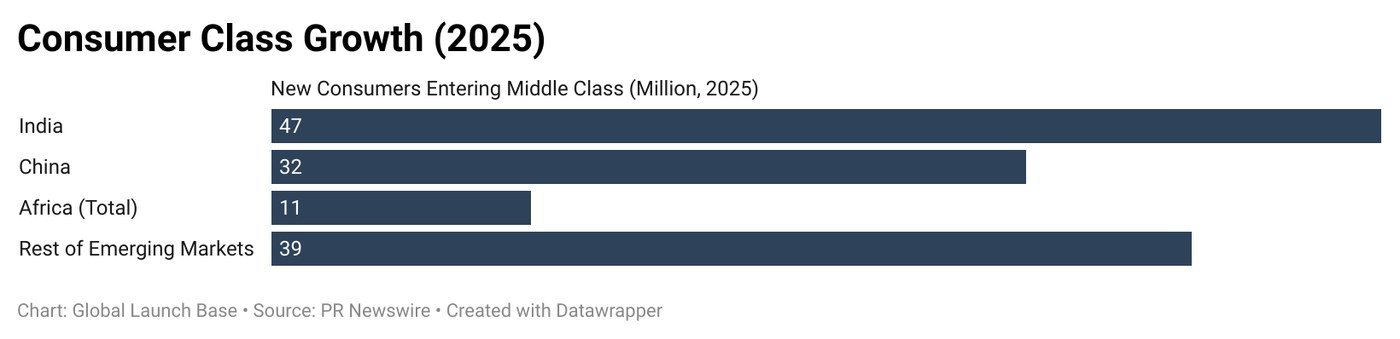
Around 47 million Indians are expected to enter the consumer class in 2025 alone — the largest globally.
By 2030, India will account for 17% of global middle-class consumption growth. (IMF, 2025).
The Local Reality
India’s market rewards patience and partnership. Companies that thrive—such as Unilever, Suzuki, and Samsung—do so by combining global expertise with Indian insights: decentralized decision-making, regional customization, and digital-first consumer engagement.
The country’s next growth wave lies in rural digitization, clean energy, and agri-tech, areas where global firms can play a transformative role if they align with India’s evolving policy framework and consumer aspirations.
India: A Dynamic but Complex Market
India stands at the heart of emerging market expansion, with GDP growth projected at 6.7% for FY2025 (IMF). The country’s large and youthful population, rising digital adoption, and government-led programs such as ‘Make in India’ and ‘Digital India’ make it a strategic hub for global companies. Yet, challenges like regulatory complexity, infrastructure bottlenecks, and fragmented distribution networks continue to slow down foreign entrants.
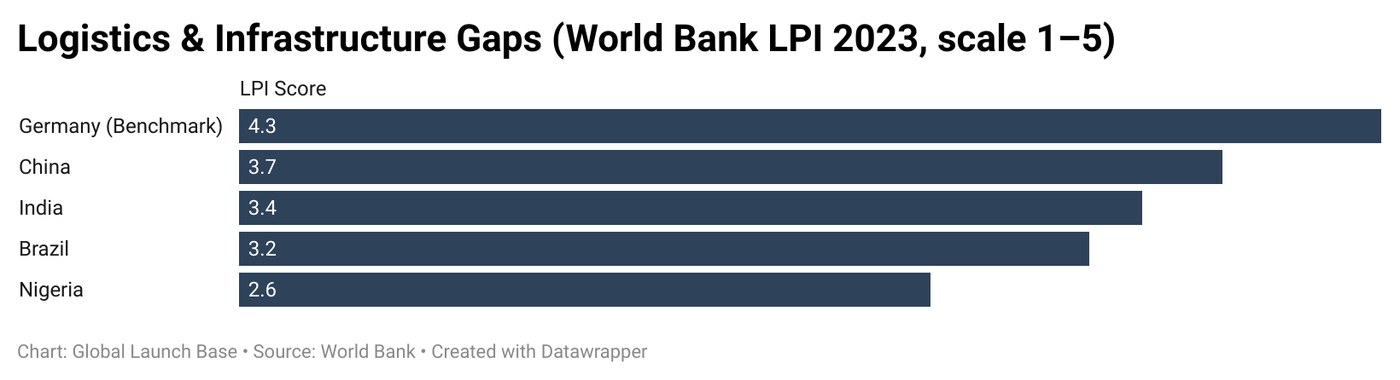
The logistics performance index for India (3.4) still trails developed economies, and cross-border trade costs remain higher than the global average at $270 per export container. However, the country is making rapid progress — with FDI inflows growing from $49 billion in 2022 to $75 billion in 2024, signaling investor confidence.
This is where initiatives like Aré Guḍi can help. Positioned as a launch base and innovation hub, Aré Guḍi connects international startups and investors to on-ground opportunities in Indian agriculture, sustainability, and rural innovation. By offering local networks, pilot opportunities, and field-level insights, Aré Guḍi bridges the gap between global strategy and local reality — enabling businesses to scale sustainably in India’s complex yet high-potential ecosystem.
Key Barriers to Expansion
1. Regulatory and Compliance Challenges
Regulations in emerging markets are often less predictable and vary significantly by region. Frequent policy changes, licensing hurdles, and complex taxation systems can slow down entry and expansion. Companies that rely solely on global compliance frameworks risk falling into regulatory traps without localized expertise.
2. Cultural and Consumer Behavior Differences
Global strategies often assume standardization, but local markets are influenced by cultural nuances, language, and purchasing behavior. For example, pricing strategies that work in developed economies may not align with local income levels or spending habits. Building consumer trust requires localization of products, communication, and branding.
3. Infrastructure and Supply Chain Limitations
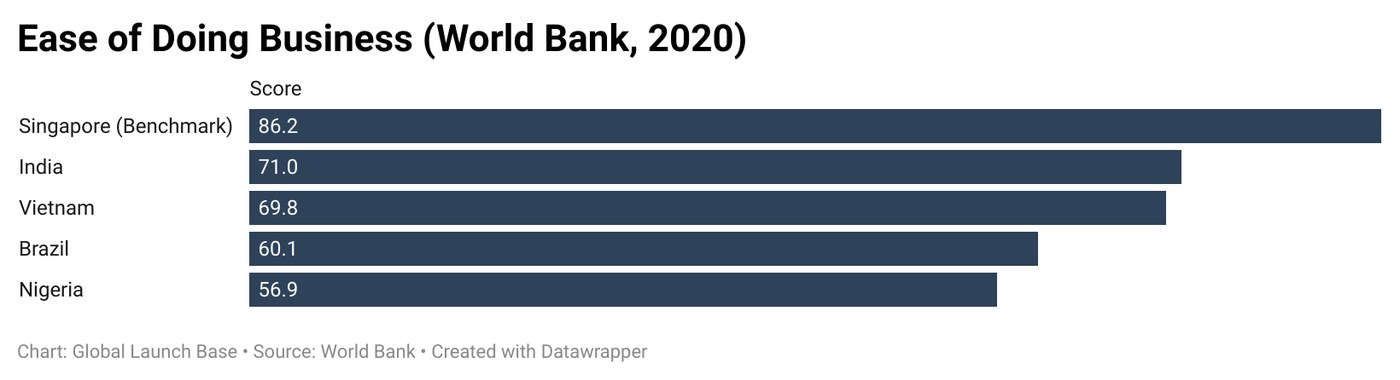
Unreliable transport networks, logistics gaps, and inconsistent digital infrastructure can disrupt operations. Businesses that fail to adapt their supply chains to local realities risk delays, higher costs, and inefficiencies.
4. Talent and Workforce Adaptation
Global businesses often struggle to recruit and retain skilled talent in emerging markets. Training, cultural integration, and leadership development are essential to bridge the gap between global processes and local execution.
5. Competition from Local Players
Local businesses often understand consumer needs better, adapt faster, and operate with leaner cost structures. Foreign entrants may underestimate the agility and market knowledge of these competitors.
Key Economic Growth & Forecasts
Metric | Value / Forecast | Source / Notes |
|---|---|---|
Global GDP Growth (2025) | ~ 2.8% | The IMF projects global GDP growth of about 2.8% in 2025. mint |
Emerging Markets & Developing Economies Growth | ~ 3.7% in 2025, rising to ~ 3.9% in 2026 | Under IMF’s reference forecast. IMF+1 |
India’s GDP Growth | ~ 6.2% in 2025, relatively stable; revised to ~6.7% in some forecasts (FY26) due to reforms. IMF+2The Economic Times+2 | |
China’s Growth Forecast | ~ 4.0% in 2025 and 2026 (down from earlier estimates) | Reflects impact of trade policy uncertainty and slowing external demand. IMF+1 |
Middle Class & Consumption Potential
Fact | Value / Projection | Implication |
|---|---|---|
Middle-class households in EMs (2024) | About 354 million households | This is the baseline for growth projections. Oxford Economics |
Projected number of middle-class households in EMs by 2034 | ~ 687 million | Nearly doubling over a decade. Oxford Economics |
Share of global middle-class spending increase from EMs | ~ 80% of incremental global middle-class spending by 2030 coming from Asian EMs | Huge opportunity for firms that localize well. westernsouthern.com |
Long-Term Global Shifts
Projection | What It Means |
|---|---|
By 2050, Emerging 7 (E7) GDP share vs G7 | E7 could account for nearly 50% of world GDP (PPP basis), up from ~35% now |
India and China roles | India projected to be the 2nd-largest economy by 2050, China still first in PPP terms. PwC+1 |
Strategies for Overcoming Barriers
Local Partnerships and Alliances
Forming joint ventures or partnerships with local companies helps navigate regulatory frameworks, cultural nuances, and distribution channels. These collaborations provide valuable on-ground insights.
Adaptive Business Models
Global companies must modify pricing, product design, and service delivery to match local conditions. Flexibility is more valuable than rigidly adhering to a global blueprint.
Leveraging Technology
Digital tools can help overcome infrastructure challenges. Mobile-based payment systems, e-commerce platforms, and AI-driven supply chain solutions can reduce inefficiencies and widen market reach.
Building Trust Through Localization
Brands that invest in local talent, community development, and culturally relevant marketing campaigns build stronger connections with customers. Localized storytelling and inclusive hiring practices foster long-term brand loyalty.
Continuous Market Learning
Rather than treating market entry as a one-time project, successful companies continuously monitor local trends, consumer feedback, and regulatory changes. A learning-oriented approach allows businesses to pivot quickly when conditions shift.
Conclusion
Global expansion into emerging markets is less about applying a universal strategy and more about balancing global vision with local reality. Companies that succeed are those that approach these markets with humility, adaptability, and a willingness to learn from local ecosystems. By overcoming barriers through partnerships, localization, and innovation, businesses can unlock sustainable growth while creating meaningful impact in some of the world’s fastest-growing economies.