Future-Proofing Agriculture Against Climate and Geopolitical Risks
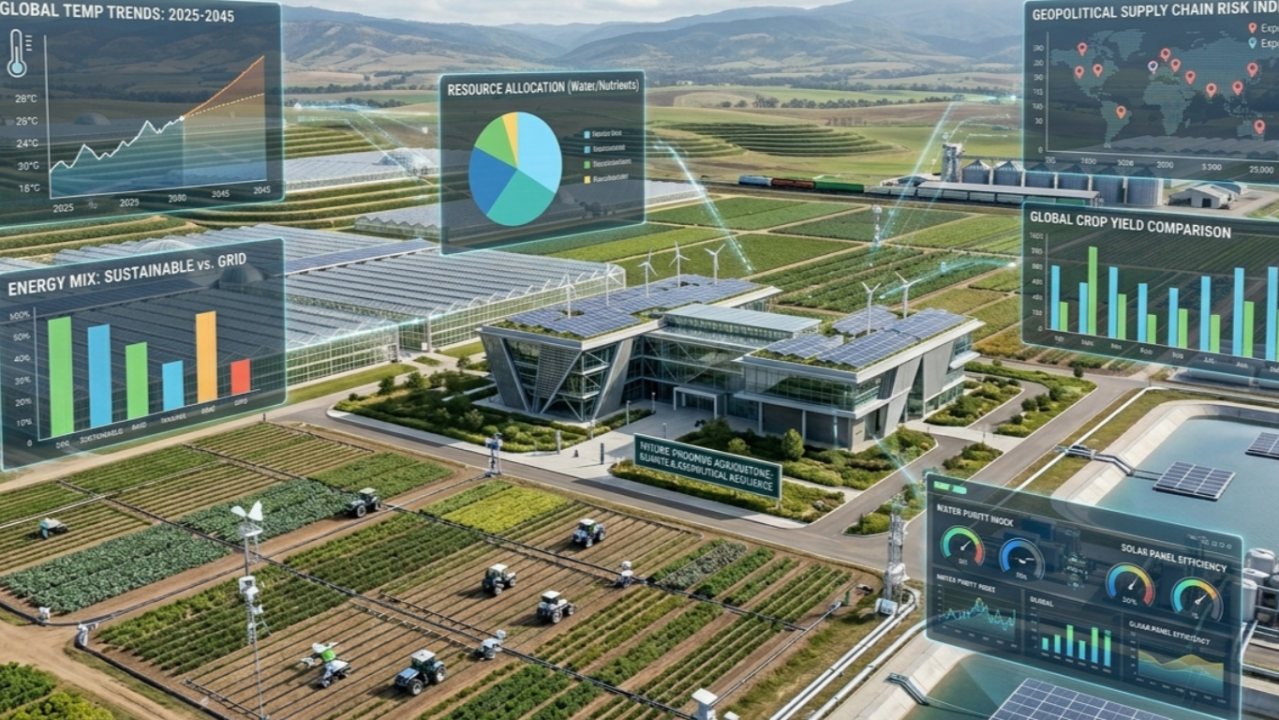
Agriculture has always been influenced by environmental conditions, but the nature and scale of today's challenges are unprecedented. Climate change is causing more frequent droughts, floods, heatwaves, irregular rainfall patterns, and the emergence of new pests and diseases. At the same time, geopolitical conflicts, trade wars, export restrictions, energy crises, and disruptions in global logistics are creating uncertainty in the availability and cost of agricultural inputs.
The global food system has become highly interconnected. A drought in one country can increase global food prices, a conflict can disrupt fertilizer supply, and trade restrictions can create shortages thousands of kilometers away. These interconnected risks highlight the urgent need to transform agriculture from a system focused only on productivity into one built on resilience, adaptability, and sustainability.
Future-proofing agriculture means developing farming systems capable of withstanding environmental shocks, maintaining stable production, protecting farmer livelihoods, and ensuring long-term food security. This transformation will require the integration of advanced technologies, climate-smart farming practices, diversified supply chains, policy reforms, and stronger cooperation between governments, research institutions, startups, and agricultural businesses.
1. Understanding the Growing Risks Facing Agriculture
1.1 Climate Change and Environmental Risks
Climate change remains the largest long-term threat to global agriculture. According to scientific projections, increasing temperatures and changing weather patterns will significantly affect crop productivity, water availability, and the geographical suitability of many crops.
Key Climate Challenges
| Climate Risk | Impact on Agriculture |
|---|---|
| Rising temperatures | Heat stress reduces crop growth, lowers yields, and affects livestock health |
| Unpredictable rainfall | Creates uncertainty in sowing and harvesting schedules |
| Extended droughts | Reduces water availability and increases irrigation dependency |
| Floods and cyclones | Destroy crops, damage infrastructure, and degrade soil quality |
| Soil degradation | Reduces fertility and lowers long-term productivity |
| New pests and diseases | Expands pest ranges and increases crop protection costs |
| Declining biodiversity | Reduces ecosystem stability and natural pest control |
Building Climate Resilience
Climate-Resilient Crops
Plant breeding and biotechnology are helping develop crop varieties that can survive extreme conditions such as heat, drought, flooding, and salinity.
Examples include:
- Drought-tolerant maize and rice varieties.
- Salt-resistant crops suitable for coastal regions.
- Heat-resistant vegetable and fruit varieties.
- Disease-resistant varieties that reduce pesticide dependence.
Precision Agriculture and Artificial Intelligence
Digital technologies allow farmers to make more accurate decisions based on real-time data.
Applications include:
- AI-based weather forecasting and risk prediction.
- Drone-based crop monitoring.
- Satellite imagery for detecting crop stress.
- IoT sensors for measuring soil moisture, temperature, and nutrient levels.
- Automated irrigation systems that reduce water consumption.
Water Security and Efficient Irrigation
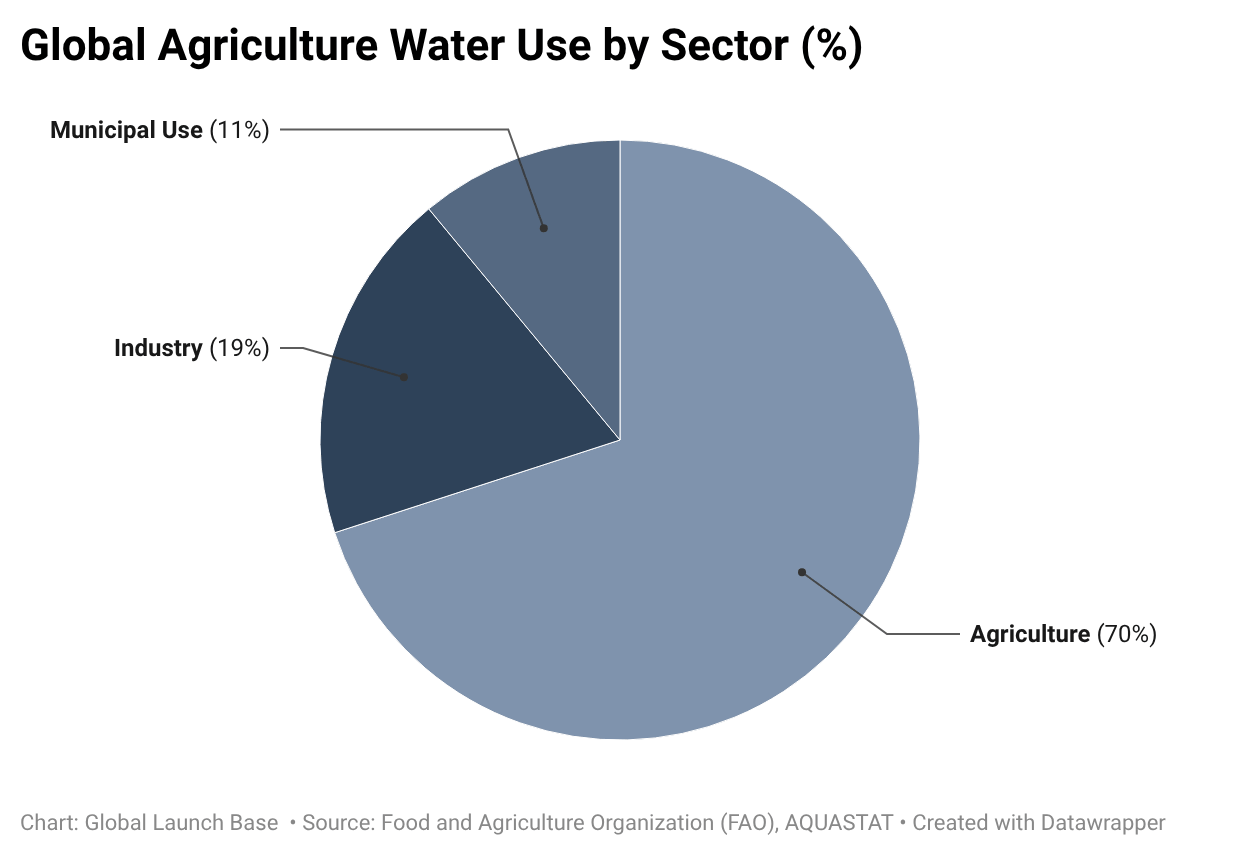
Water scarcity is becoming one of agriculture's greatest challenges. Future farms must produce more food using fewer water resources.
Key solutions include:
- Drip and micro-irrigation systems.
- Rainwater harvesting and farm ponds.
- Smart irrigation based on soil moisture sensors.
- Treated wastewater reuse where appropriate.
- Selection of less water-intensive crops.
2. Geopolitical Risks Reshaping Global Agriculture
Agriculture is no longer only influenced by weather and local conditions. International politics, trade relationships, and global conflicts have become major factors affecting food production and prices.
2.1 Supply Chain Vulnerability
Modern agriculture depends on a global network for:
- Fertilizers and raw materials.
- Agricultural machinery and spare parts.
- Seeds and genetics.
- Crop protection chemicals.
- Animal feed ingredients.
- Energy and fuel.
Disruptions caused by wars, sanctions, transportation bottlenecks, or shipping delays can increase production costs and reduce farm profitability.
Strategies to Improve Supply Chain Resilience
- Developing local fertilizer and seed production.
- Supporting domestic agricultural manufacturing.
- Creating regional supply networks.
- Maintaining strategic reserves of critical inputs.
- Using digital platforms for supply chain transparency.
2.2 Trade Restrictions and Food Nationalism
During periods of crisis, countries often prioritize domestic food security by restricting exports of grains, oils, fertilizers, or other essential commodities.
These restrictions can lead to:
- Increased global food prices.
- Reduced availability of essential commodities.
- Market volatility.
- Financial uncertainty for farmers and food companies.
Future Strategy: Diversified Markets
Agricultural businesses should avoid dependence on a single buyer or country by:
- Expanding export destinations.
- Building relationships with multiple suppliers.
- Developing regional food systems.
- Investing in local food processing capabilities.
3. The Role of Technology in Creating Resilient Agriculture
Technology will become one of the strongest tools for reducing agricultural risks.
Digital Farming Platforms
Modern farm management systems combine data from weather stations, satellites, drones, machinery, and sensors to provide actionable insights.
Benefits include:
- Better planning of planting and harvesting.
- Reduced use of water and fertilizers.
- Early detection of diseases and pest outbreaks.
- Improved yield forecasting.
- Lower operational costs.
Artificial Intelligence and Predictive Analytics
AI can analyze large volumes of agricultural data to predict future risks.
Applications include:
- Forecasting extreme weather events.
- Predicting disease outbreaks.
- Optimizing fertilizer recommendations.
- Identifying the best planting dates.
- Forecasting market demand and prices.
Robotics and Automation
Labor shortages are increasing in many agricultural regions. Automation can improve efficiency and reduce dependence on manual labor.
Examples include:
- Autonomous tractors.
- Robotic weed control.
- Automated harvesting machines.
- Precision spraying robots.
- Automated dairy systems.
4. Diversification: A Key Strategy for Risk Reduction
A farming system that depends on one crop, one market, or one income source is highly vulnerable.
Future farms will increasingly adopt diversification strategies.
Crop Diversification
Growing multiple crops reduces the impact of climate events or market failures affecting a single commodity.
Examples:
- Combining cereals with legumes.
- Integrating horticulture with traditional crops.
- Using climate-adapted varieties.
Agroforestry
Combining trees with agriculture provides:
- Additional income from timber, fruits, spices, and medicinal plants.
- Better carbon storage.
- Improved soil fertility.
- Increased biodiversity.
- Protection against extreme weather.
Value Addition and Processing
Instead of selling only raw produce, farmers can develop:
- Processed foods.
- Ready-to-eat products.
- Natural ingredients.
- Organic products.
- Specialty agricultural products.
This reduces dependence on volatile commodity markets.
5. Strengthening Local and Regional Food Systems
Future food security will depend on balancing global trade with stronger local production systems.
Important approaches include:
- Promoting local seed systems.
- Encouraging regional food processing.
- Supporting farmer cooperatives and producer organizations.
- Creating efficient storage and cold chain infrastructure.
- Improving direct market access through digital platforms.
6. Carbon Farming and the Green Economy
Climate challenges are also creating new business opportunities.
Farmers can benefit from:
- Carbon credit programs.
- Sustainable agriculture certifications.
- Regenerative farming incentives.
- Renewable energy generation through solar and bioenergy.
The transition to low-carbon agriculture may create new income streams while improving environmental sustainability.
7. The Importance of Collaboration and Innovation Ecosystems
No single stakeholder can solve agricultural challenges alone.
Future-proof agriculture requires collaboration among:
| Stakeholder | Role |
|---|---|
| Farmers | Adoption of resilient practices and technologies |
| Startups | Development of innovative agricultural solutions |
| Research institutions | Development of improved crops and technologies |
| Governments | Policies, subsidies, and infrastructure investment |
| Private companies | Investment, supply chains, and market access |
| Financial institutions | Climate insurance and sustainable financing |
Agricultural innovation ecosystems involving startups, universities, technology providers, and farmers will play a major role in accelerating the transition toward resilient food systems.
8. Future Trends That Will Define Resilient Agriculture
The next generation of agriculture will be shaped by:
- AI-driven autonomous farms.
- Climate-resilient seed technologies.
- Vertical and controlled environment farming.
- Alternative proteins and new food systems.
- Digital marketplaces.
- Blockchain-based supply chain traceability.
- Gene editing and advanced breeding technologies.
- Renewable energy-powered farms.
- Circular agriculture and waste-to-value systems.
Conclusion
The future of agriculture will be determined not only by how much food the world can produce, but by how effectively food systems can adapt to uncertainty. Climate change, resource scarcity, geopolitical conflicts, and supply chain disruptions have made resilience a strategic necessity.
By embracing climate-smart practices, digital technologies, diversified farming models, local supply chains, and collaborative innovation ecosystems, agriculture can transition from being vulnerable to global shocks to becoming more adaptive, profitable, and sustainable.
For startups, researchers, investors, and agricultural enterprises, the challenge of future-proofing agriculture also represents one of the greatest opportunities of the coming decades. The solutions developed today will shape the resilience and food security of future generations.