Green Growth_ Leveraging Sustainability for International Market Entry
Green Growth: Leveraging Sustainability for International Market Entry
In today’s global economy, sustainability is no longer a “nice-to-have”—it has become a defining factor for international competitiveness. Businesses that integrate green practices are not only reducing their environmental footprint but also gaining a strategic edge in entering and scaling across global markets. This intersection of sustainability and international expansion—what we call green growth—is rapidly shaping the way companies build credibility, attract investment, and connect with environmentally conscious consumers.
Why Sustainability Matters in International Markets
- Consumer Demand
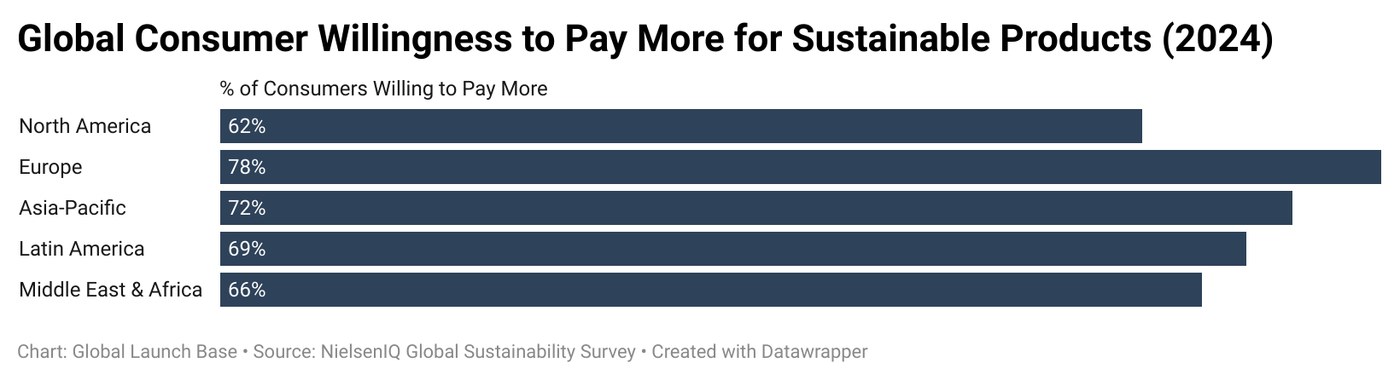
Around the world, customers are shifting their preferences toward eco-friendly and ethically produced goods. A Nielsen study found that more than 70% of consumers are willing to pay a premium for sustainable products. For businesses entering new markets, sustainability can serve as an instant trust-builder and differentiator. - Government Regulations and Trade Policies
Countries in the European Union, North America, and parts of Asia are enforcing stricter sustainability regulations—from carbon footprint disclosures to packaging requirements. Companies with green credentials face fewer entry barriers and can more easily comply with these standards. - Investor Priorities
Sustainability has become a key metric for investors and venture capitalists. ESG (Environmental, Social, and Governance) criteria are now central to investment decisions. Businesses that embed green practices are more attractive to global investors and funding institutions.
Green Strategies for Market Entry
- Eco-Friendly Product Design
Companies can redesign products using renewable materials, recyclable packaging, and energy-efficient processes. This not only reduces environmental harm but also aligns with international sustainability certifications. - Carbon-Neutral Supply Chains
By adopting carbon offsetting, renewable energy use, and digital optimization, firms can build transparent supply chains that appeal to environmentally aware buyers. Blockchain-based traceability is also being increasingly adopted in agriculture and retail to assure customers of ethical sourcing.
Metric | Value | Notes / Implication |
|---|---|---|
Total exports of goods & services | US$ 824.9 billion | In 2024-25 |
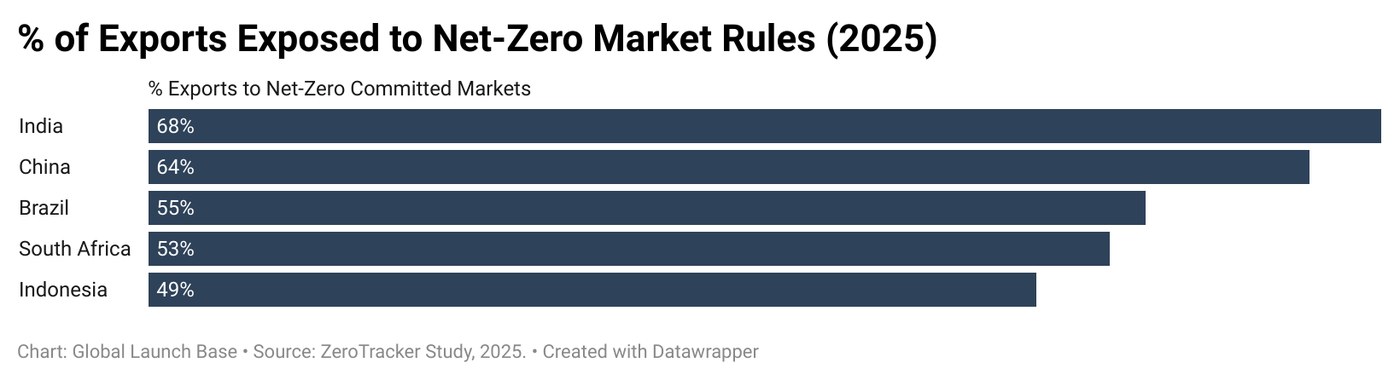
Share of those exports going to net-zero committed countries | ≈ 68% | Markets having net-zero policies / targets |
Export-related jobs in markets with active CBAMs | ≈ 7.5 million | Jobs exposed to current CBAMs |
Additional export-jobs in markets planning CBAMs | ≈ 4.7 million | Future exposure |
- Certifications and Labels
International certifications such as Fair Trade, LEED, FSC, or ISO 14001 serve as entry tickets into global markets. They boost credibility, help businesses comply with foreign regulations, and appeal to eco-conscious buyers. - Partnerships with Local Green Enterprises
Collaborating with local sustainable organizations allows companies to integrate more smoothly into new markets while strengthening their green credentials. For example, food exporters often partner with local eco-certification bodies to align with regional standards. - Leveraging Circular Economy Models
Businesses can enhance acceptance in global markets by adopting circular practices—such as take-back schemes, recycling, or reusing by-products. This signals long-term commitment to reducing waste and supporting the global net-zero agenda.
Case Examples
- Unilever has embedded sustainability in its international expansion strategy, tailoring eco-friendly product lines for diverse markets and reporting measurable progress in cutting emissions and waste.
- Patagonia leveraged its sustainability-driven branding to expand globally, turning environmental activism into a business model that resonates across markets.
- Indian Agribusiness Startups are using climate-smart farming methods to gain entry into European markets that require stringent compliance on pesticide use and carbon footprints.
The Business Benefits of Green Growth
- Faster Market Access: Green compliance simplifies trade approvals and import regulations.
- Enhanced Brand Value: Sustainability-driven companies stand out in crowded markets.
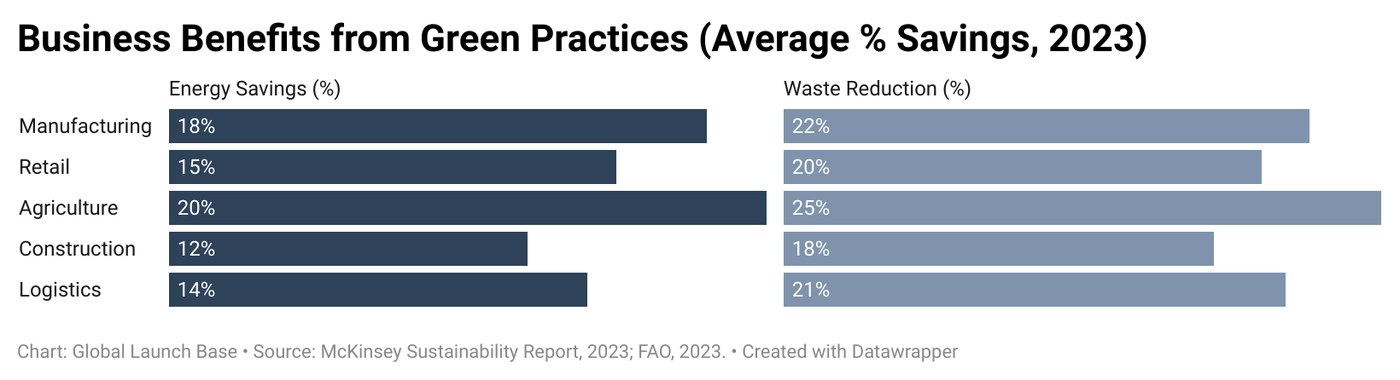
- Cost Efficiency: Long-term adoption of renewable energy and waste reduction lowers operating costs.
- Global Partnerships: Sustainable credentials attract collaborations with global corporations and institutions.
Conclusion
Sustainability is no longer just about corporate responsibility—it is a market entry strategy. By embedding green practices into their core operations, businesses can position themselves as trusted, future-ready players in international markets. The message is clear: those who align with sustainability today are securing their competitive advantage for tomorrow.