India’s ClimateTech Opportunity: Where European Innovation Meets Local Scale
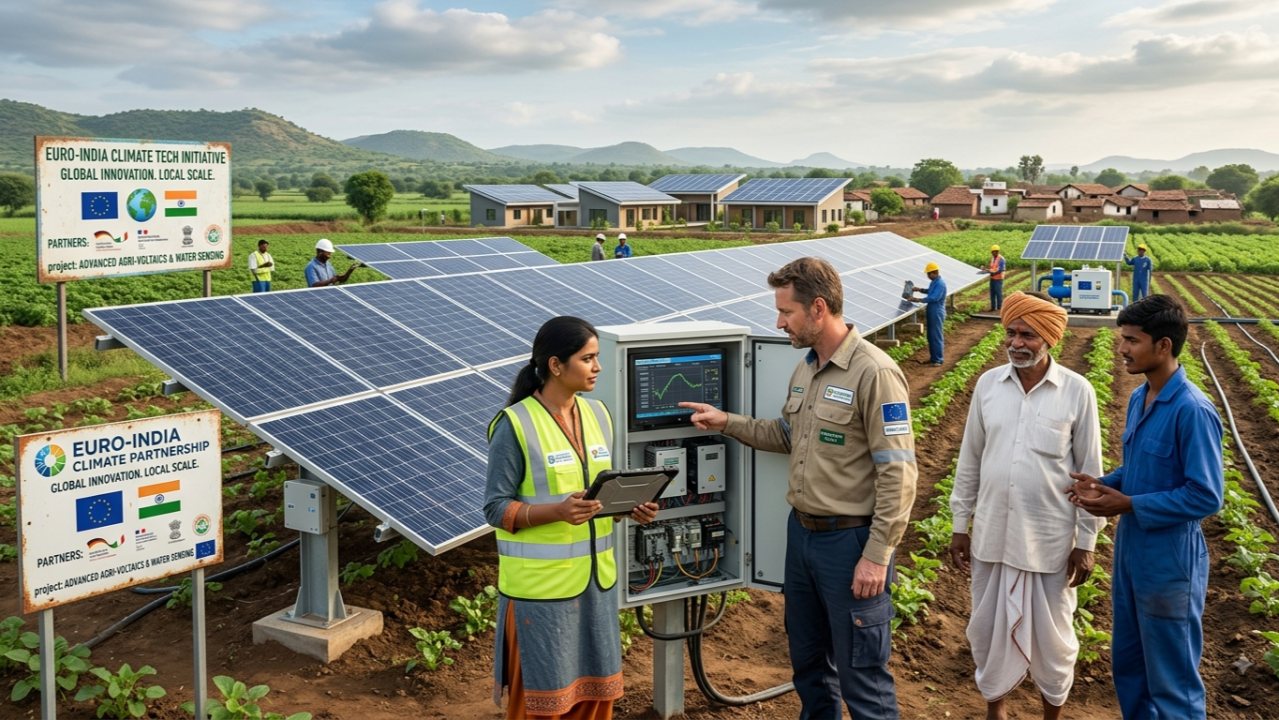
India is emerging as one of the world’s most important markets for ClimateTech. Rapid economic growth, climate vulnerability, expanding infrastructure and a huge agricultural economy are creating demand for technologies that can make growth more resilient and resource-efficient.
For European ClimateTech companies, this creates an unusual opportunity: India offers not only a large market, but also a real-world environment in which technologies can be tested, adapted and scaled.
The challenge is that European solutions cannot simply be copied from one market to another. India’s fragmented supply chains, price sensitivity, regional diversity, infrastructure gaps and complex distribution networks require a different approach.
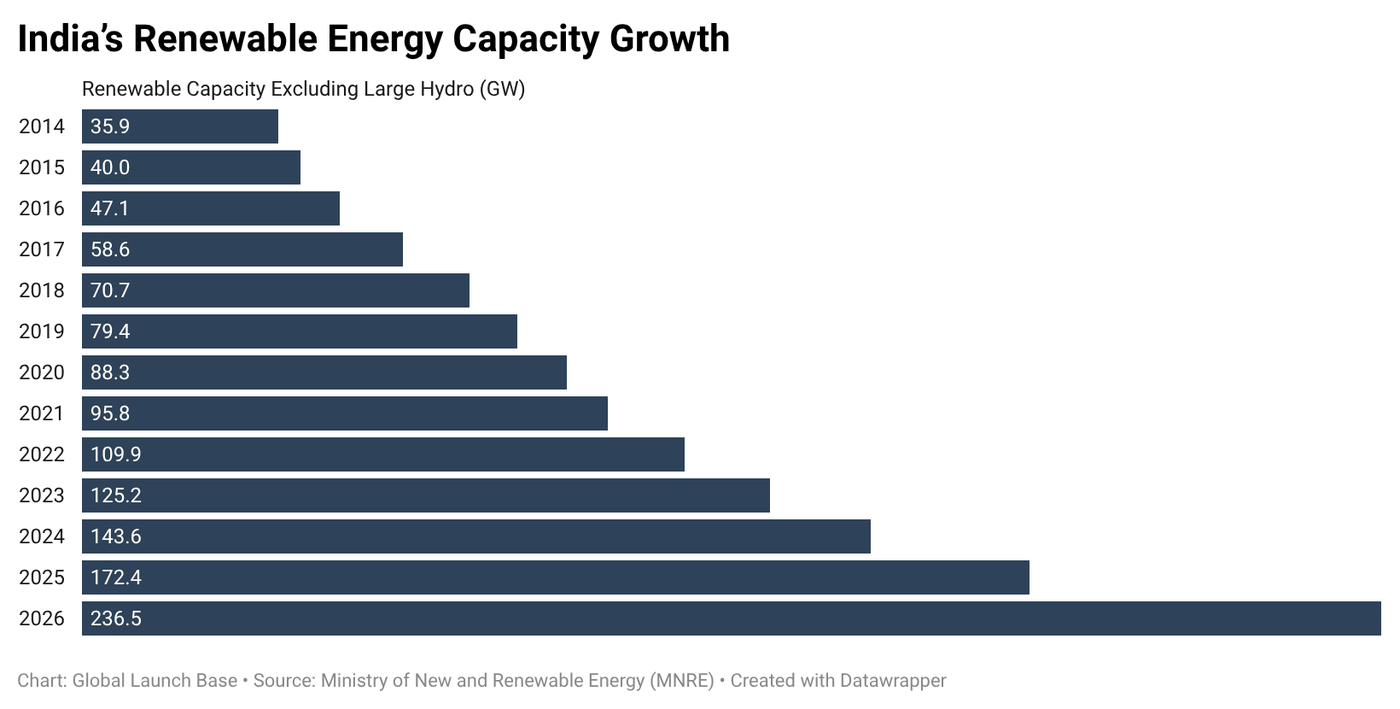
Why India Matters for ClimateTech
India’s climate challenge is closely linked to its development challenge.
The country needs to expand energy access, improve agricultural productivity, strengthen water security, manage growing cities and build infrastructure while reducing emissions.
This creates opportunities across several ClimateTech segments:
| Opportunity Area | Indian Challenge | European Innovation Opportunity |
|---|---|---|
| Renewable Energy | Rapidly growing electricity demand | Solar, storage, grid optimisation |
| Agriculture | Climate variability and fragmented farms | Precision agriculture, advisory, IoT |
| Water | Groundwater depletion and water stress | Monitoring, treatment, reuse technologies |
| Waste | Growing urban and industrial waste | Circular economy and waste-to-value solutions |
| Carbon | Need for measurable emissions reduction | MRV, carbon accounting and removal technologies |
| Mobility | Urbanisation and transport emissions | EV infrastructure, fleet optimisation |
| Buildings | Rising cooling and energy demand | Energy efficiency and smart-building systems |
| Industrial Decarbonisation | Energy-intensive manufacturing | Industrial efficiency and low-carbon technologies |
The scale of these challenges means that even relatively small adoption rates can represent significant commercial opportunities.
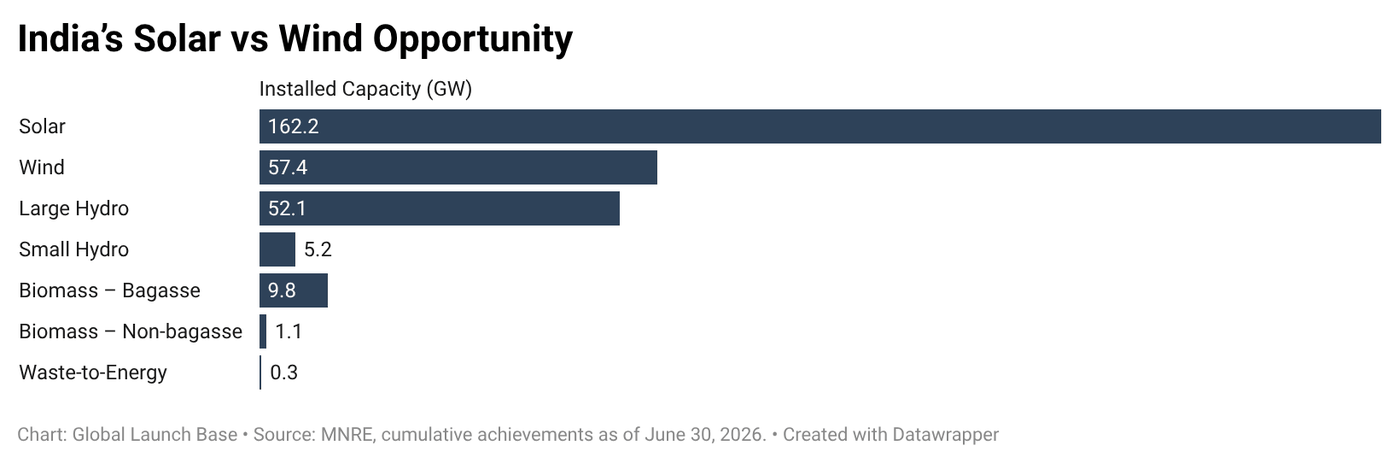
Agriculture Could Be One of the Biggest Entry Points
Agriculture provides a particularly strong intersection between European ClimateTech and Indian market demand.
India has millions of farmers operating across highly diverse climatic and production systems. Technologies related to weather intelligence, irrigation, soil monitoring, pest prediction, crop advisory and resource efficiency can generate both economic and environmental value.
However, the winning model is unlikely to be a technology platform sold directly to individual farmers at a high subscription price.
Instead, European companies can work through Farmer Producer Organisations (FPOs), cooperatives, agribusinesses, financial institutions, insurers, government programmes and local implementation partners.
This creates a more scalable route:
European Technology → Indian Pilot Partner → Farmer Network → Local Validation → Institutional/B2B Distribution → Regional Scale
The same model can apply beyond agriculture to water, waste and energy technologies.
The Pilot-to-Scale Gap
One of the biggest barriers for European ClimateTech companies entering India is not technology.
It is local validation.
A technology that works in Europe may need significant adaptation before it can succeed in India.
Questions that need to be answered include:
- Does the technology work under Indian climatic conditions?
- Can it operate with available infrastructure?
- Is the cost acceptable to the end customer?
- Who actually pays for the solution?
- Can installation and maintenance be handled locally?
- Can the product integrate with existing farming or industrial practices?
- What regulatory approvals are required?
- Can the company demonstrate measurable ROI?
This makes India particularly valuable as a testing and adaptation market.
A well-designed pilot should therefore not simply demonstrate that a technology works. It should generate the evidence required for commercial expansion.
Why European Startups Have an Advantage
Europe has developed strong capabilities in areas such as climate science, environmental monitoring, renewable energy, circular economy, carbon measurement and industrial efficiency.
European ClimateTech startups can bring:
- Advanced R&D
- Strong environmental standards
- Deep technical expertise
- Proven solutions from European markets
- Experience with sustainability reporting
- Access to climate and innovation funding
India, meanwhile, brings:
- Large and diverse markets
- Extensive agricultural networks
- Rapid infrastructure development
- Cost-conscious innovation environments
- Strong entrepreneurial ecosystems
- Large-scale real-world deployment opportunities
The combination can be powerful.
Europe can bring technology and technical expertise. India can provide scale, market diversity and deployment environments.
But “India Entry” Is Not a Single Strategy
India is not one homogeneous market.
Climate, crops, infrastructure, purchasing power, regulations and distribution systems vary dramatically between states.
A ClimateTech company targeting Indian agriculture, for example, may need completely different strategies for Karnataka, Punjab, Maharashtra or Tamil Nadu.
This means companies should avoid launching nationally from day one.
A better approach is to identify a specific use case + geography + customer segment.
For example:
Weather advisory + coffee and pepper growers + Karnataka + FPO distribution
is considerably more actionable than:
Climate intelligence for Indian agriculture.
This narrower approach makes pilot design, customer discovery and ROI measurement much easier.
The Importance of Local Partners
Local partnerships can significantly reduce the complexity of entering the Indian market.
Potential partners include:
FPOs and cooperativesProvide access to organised farmer networks and help validate whether a technology solves a real farmer problem.
Universities and research institutionsCan support field trials, validation and technical credibility.
AgribusinessesCan provide distribution and commercial channels.
Government agenciesCan help connect technologies with public programmes and large-scale development initiatives.
Indian ClimateTech companiesCan provide complementary technology, local expertise or integration capabilities.
Market-entry specialistsCan help European startups understand customers, regulations, partnerships and commercial models.
The strongest European entrants will therefore often operate through an ecosystem rather than a standalone subsidiary.
From Technology Export to Co-Development
The biggest opportunity may not be simply selling European technology in India.
It may be co-developing solutions for emerging markets.
India can act as a development environment where European technologies are adapted for:
- Lower-cost deployment
- Distributed infrastructure
- Mobile-first users
- Smallholder agriculture
- Resource-constrained environments
- Large-scale deployment
A solution adapted successfully for India could subsequently become relevant in other emerging markets across Asia, Africa and Latin America.
This changes the strategic proposition.
India becomes not just a market, but a launchpad for global ClimateTech expansion.
What European ClimateTech Companies Should Do
A practical India entry strategy can be structured around five stages:
1. Validate the Market
Identify the specific problem, customer and willingness to pay before investing heavily in market entry.
2. Find the Right Local Partner
Look beyond distributors. The ideal partner should provide market access, implementation capability and local credibility.
3. Run a Measurable Pilot
Define success metrics before deployment.
For example:
- Cost reduction
- Water saved
- Energy saved
- Yield improvement
- Emissions avoided
- Farmer adoption
- Customer retention
4. Adapt the Business Model
The technology may remain European, but the pricing, distribution and service model often needs to be localised.
5. Build a Scale Path
A successful pilot should have a clear next step: additional villages, additional FPOs, a commercial contract, institutional procurement or expansion into another state.
The Bigger Opportunity
India’s ClimateTech opportunity is not simply about the size of the Indian market.
It is about the combination of need, scale and experimentation.
European companies have the opportunity to bring sophisticated ClimateTech solutions into one of the world's largest and most diverse deployment environments. Indian partners, meanwhile, can help transform those technologies into solutions that work under local economic and operational conditions.
The companies most likely to succeed will not be those that arrive with a finished product and ask India to adapt to it.
They will be the ones that listen locally, pilot intelligently, adapt quickly and build for scale.
For European ClimateTech, India can therefore become more than an expansion destination.
It can become the bridge between European innovation and global climate impact.
Key Takeaway
Europe has ClimateTech innovation. India has scale, complexity and urgent demand. The opportunity lies in connecting the two through local validation, partnerships and scalable business models.