Restoring Tree Species in India
India is home to one of the most diverse and vibrant ecosystems in the world, hosting a rich variety of tree species across its vast landscape. However, the rapid pace of urbanization, deforestation, and climate change has severely impacted the country's forest cover, particularly rare and hard-to-grow tree species. These species, once an integral part of India's ecological fabric, are now endangered or at risk of extinction. Restoring these trees is not just about conserving biodiversity but also addressing critical issues like climate change, water scarcity, and the livelihood of rural communities.
This article delves into the importance of tree restoration in India, highlighting the significance of rare species, the challenges involved, and the broader benefits to both the environment and society.
State/Region | Major Restored Tree Species | Number of Trees Planted (in Lakhs) | Year of Initiation | Total Trees Planted (2015–2023) |
|---|---|---|---|---|
Karnataka | Sandalwood, Teak | 5.2 (2015–2018) | 2015 | 12.5 Lakh (2015–2023) |
Tamil Nadu | Sandalwood, Red Sanders | 3.5 (2017–2020) | 2017 | 7.8 Lakh (2017–2023) |
Assam | Agarwood, Hollong | 2.8 (2018–2021) | 2018 | 6.2 Lakh (2018–2023) |
Andhra Pradesh | Red Sanders, Neem | 4.7 (2016–2019) | 2016 | 9.1 Lakh (2016–2023) |
Kerala | Rosewood, Mahogany | 2.3 (2019–2022) | 2019 | 4.9 Lakh (2019–2023) |
Madhya Pradesh | Sal, Bamboo | 3.2 (2016–2020) | 2016 | 6.5 Lakh (2016–2023) |
Maharashtra | Mango, Mahogany | 3.0 (2017–2021) | 2017 | 6.7 Lakh (2017–2023) |
Odisha | Teak, Bamboo | 2.7 (2015–2018) | 2015 | 5.8 Lakh (2015–2023) |
Tripura | Agarwood, Sal | 1.9 (2019–2022) | 2019 | 4.2 Lakh (2019–2023) |
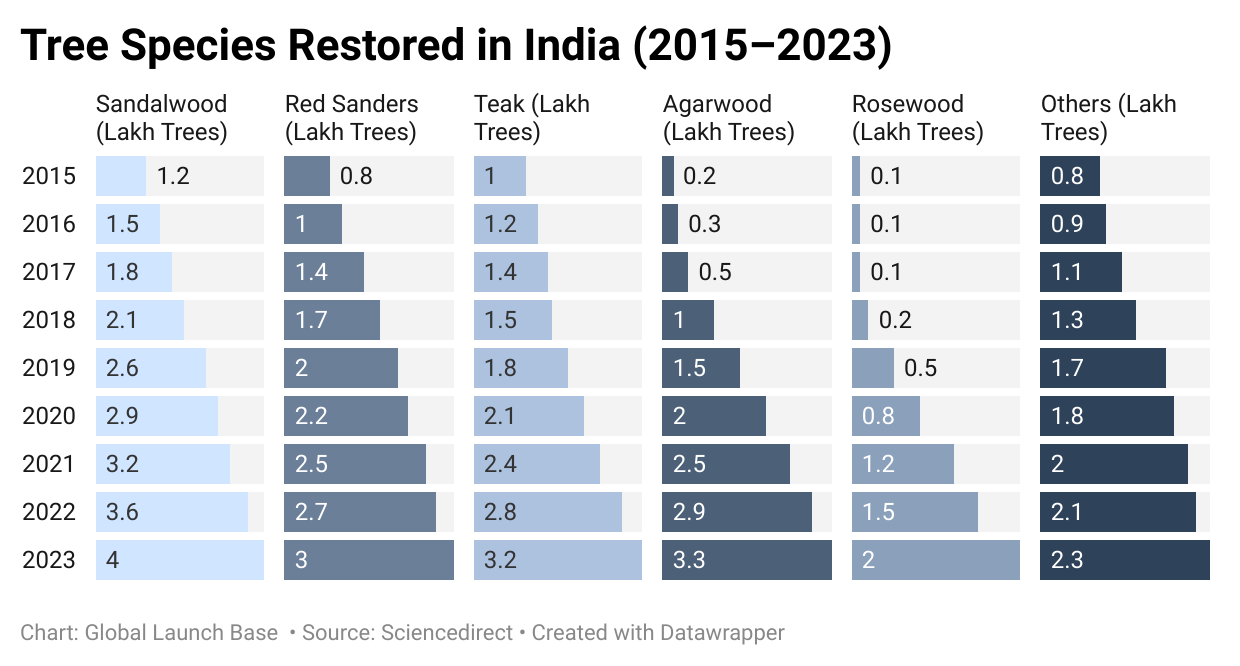
Figure: Tree Species Restored in India (2015–2023)
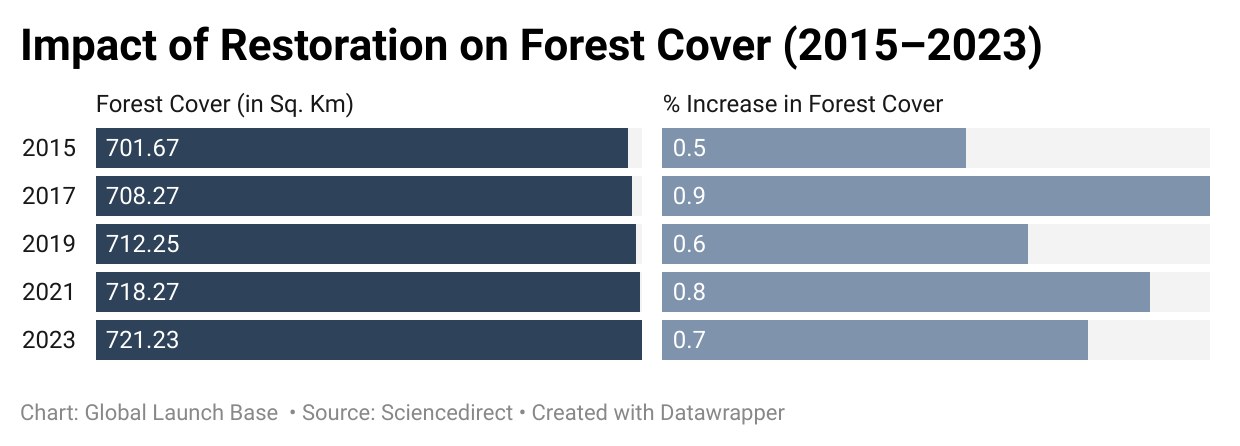
Figure: Impact of Restoration on Forest Cover (2015–2023) (2015–2023)
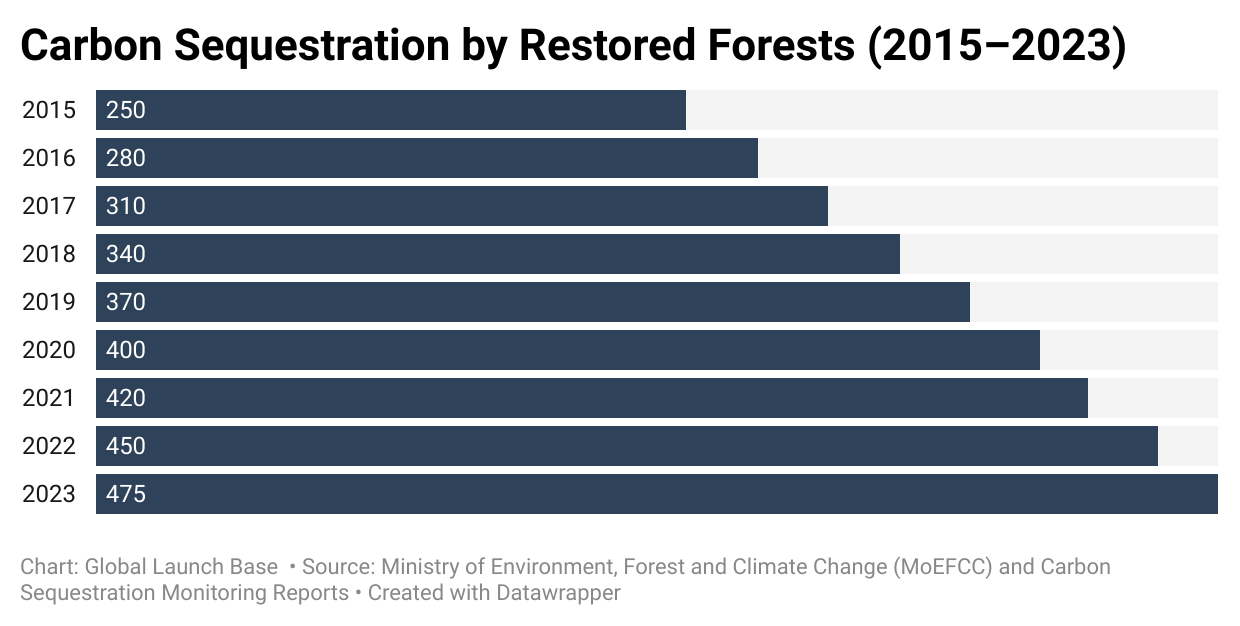
Figure: Carbon Sequestration by Restored Forests (2015–2023)
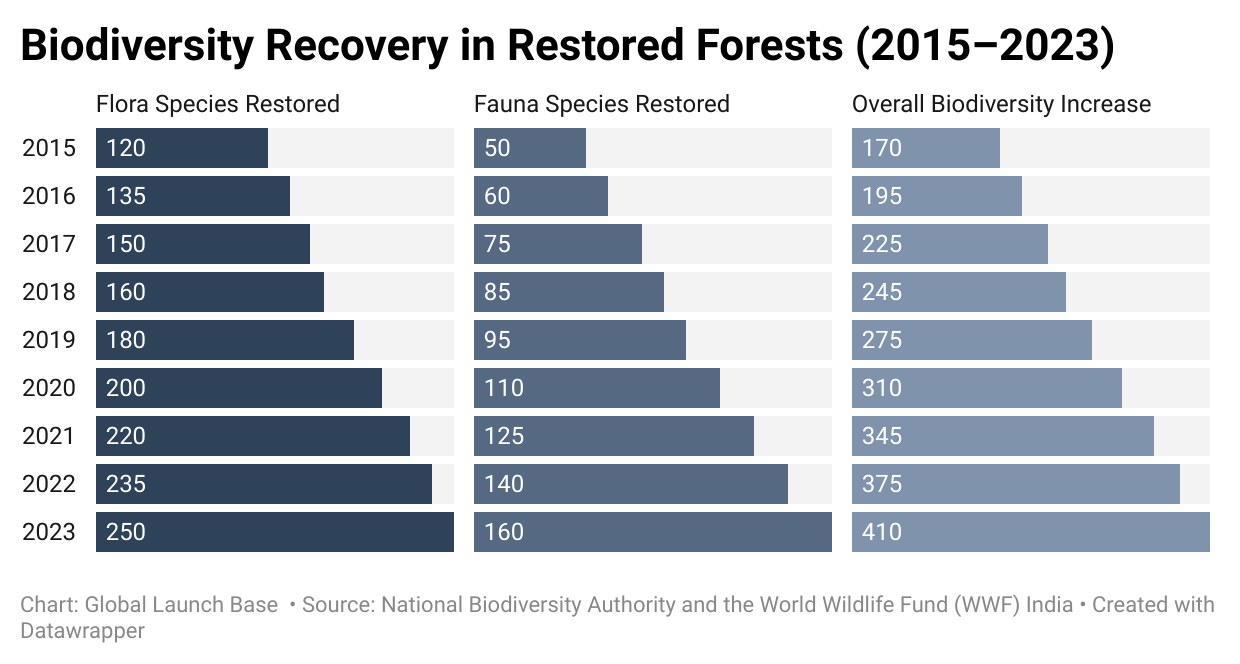
Figure: Biodiversity Recovery in Restored Forests
1. The Urgency of Tree Restoration in India
a. Mitigating Climate Change
Trees are natural carbon sinks, absorbing carbon dioxide from the atmosphere and storing it in their biomass. In a country like India, which is experiencing increasingly erratic weather patterns and extreme climatic events, restoring tree cover can play a significant role in mitigating the effects of climate change. Forest restoration, particularly in biodiversity-rich regions like the Western Ghats and the Himalayas, can significantly boost carbon sequestration.
India’s commitment to combating climate change is reflected in its Nationally Determined Contributions (NDC) under the Paris Agreement, where forest restoration is a key element. By focusing on rare and native tree species, India can increase forest resilience, which is crucial for maintaining long-term carbon storage.
b. Preserving Biodiversity
India is home to several rare tree species, many of which are endemic and play critical roles in their ecosystems. For example, the Sandalwood (Santalum album) and Red Sanders (Pterocarpus santalinus) are highly valued for their wood and are now listed as endangered due to overexploitation. These trees are not only ecologically important but also economically and culturally significant. Restoring such rare species helps maintain the integrity of India’s ecosystems and prevents the extinction of species that rely on these trees for habitat and food.
c. Water Cycle Regulation
Trees, particularly native and deep-rooted species, are essential for regulating the water cycle. They reduce water runoff, prevent soil erosion, and improve groundwater recharge. The loss of trees has led to an increase in desertification and drought in certain parts of India, especially in states like Rajasthan and parts of Karnataka. By restoring tree cover, particularly with water-conserving species such as Banyan (Ficus benghalensis) and Peepal (Ficus religiosa), India can mitigate the impact of water scarcity and enhance agricultural productivity.
d. Economic and Livelihood Benefits
Tree restoration can also provide economic benefits. Many rare trees, such as Agarwood (Aquilaria malaccensis), are used in industries like perfume and incense production. By integrating these trees into agroforestry systems, farmers can supplement their income while contributing to reforestation efforts. Moreover, the rise of ecotourism in India, especially in forested regions, can provide additional revenue streams for rural communities and promote conservation efforts.
2. Rare and Hard-to-Grow Tree Species in India
Several tree species in India are considered rare or difficult to cultivate due to specific ecological requirements or overharvesting. Restoring these species is crucial for preserving the country’s biodiversity.
a. Sandalwood (Santalum album)
Sandalwood, known for its fragrant wood and oil, has been a target of illegal logging for centuries. This tree, native to southern India, requires specific soil conditions and protection from theft to grow successfully. Sandalwood plantations, particularly in Karnataka and Tamil Nadu, are now being revived through government-supported restoration programs. These efforts are vital not only for biodiversity but also for maintaining India’s traditional industries that rely on sandalwood.
b. Red Sanders (Pterocarpus santalinus)
This rare tree, native to the Eastern Ghats, is prized for its distinctive red wood, which is used in high-end furniture, musical instruments, and traditional medicines. Red Sanders has been overexploited for decades, pushing the species towards endangerment. Growing Red Sanders is challenging due to its specific environmental needs, but restoration projects in Andhra Pradesh are showing promise. These efforts include seed banks and controlled plantations to ensure the species' long-term survival.
c. Agarwood (Aquilaria malaccensis)
Agarwood is native to northeastern India and produces a highly fragrant resin used in perfumes and incense. However, due to its economic value, it has been overharvested to the point of endangerment. Agarwood restoration programs focus on sustainable harvesting methods, where trees are cultivated under controlled conditions to produce the valuable resin without harming the ecosystem.
d. Magnolia nilagirica (Nilgiri Magnolia)
The Nilgiri Magnolia, found in the Western Ghats, is a rare tree with beautiful fragrant flowers. This species, along with many other trees in the Western Ghats, is threatened by deforestation and habitat loss. Restoration of this tree is part of broader conservation efforts to preserve the unique biodiversity of the Western Ghats, which is one of the most important biodiversity hotspots in the world.
3. Broader Ecological and Socioeconomic Benefits of Tree Restoration
a. Ecosystem Services
Restoring rare and native tree species offers numerous ecosystem services, including carbon sequestration, air purification, water retention, and soil fertility improvement. Trees like Teak (Tectona grandis) and Mahogany (Swietenia macrophylla) also enhance soil quality by returning nutrients to the soil through their leaf litter.
b. Sustainable Livelihoods and Rural Development
Restoring tree species can be tied to sustainable livelihood opportunities for rural communities. Agroforestry practices, where trees are grown alongside crops, allow farmers to harvest timber, fruits, and medicinal plants, creating additional income streams. For instance, the cultivation of Neem (Azadirachta indica) and Amla (Phyllanthus emblica), both valuable for their medicinal properties, supports local economies while promoting reforestation.
c. Ecotourism and Conservation Education
Reforestation efforts, especially in biodiversity-rich areas like the Western Ghats, can also promote ecotourism. By creating protected areas and nature reserves, India can attract tourists interested in wildlife and plant diversity. This not only boosts the local economy but also raises awareness about the importance of conservation. Educational programs focused on the benefits of tree restoration can foster a culture of sustainability among future generations.
Case Studies in Restoring Rare and Hard-to-Grow Tree Species in India
1. Sandalwood Restoration in Karnataka and Tamil Nadu
Sandalwood (Santalum album), a tree prized for its fragrant wood, has been severely overexploited in southern India. The Karnataka Forest Department, along with the Tamil Nadu Forest Department, has initiated comprehensive restoration programs to revitalize sandalwood plantations.
Key Initiatives:
Sandalwood Cultivation Zones: Designated areas for sandalwood cultivation have been established to ensure controlled growth and management.
Seed Banks: These banks collect and preserve sandalwood seeds to ensure a sustainable supply for future planting.
Anti-Theft Measures: Enhanced protection measures, including surveillance and security personnel, have been implemented to prevent illegal harvesting.
Outcomes:
Increased Plantations: Significant progress has been made in replanting sandalwood trees, with thousands of saplings now in the ground.
Economic Revival: The revival of sandalwood has provided a boost to local economies, supporting traditional industries that rely on sandalwood products.
2. Red Sanders Restoration in Andhra Pradesh
Red Sanders (Pterocarpus santalinus), native to the Eastern Ghats, is highly valued for its red wood and has faced severe overharvesting. In response, the Andhra Pradesh Forest Department has launched a multi-faceted restoration program.
Key Initiatives:
Controlled Plantations: Efforts have been made to cultivate Red Sanders in controlled environments to protect the species from illegal logging.
Seed Banks and Nurseries: Establishment of seed banks and nurseries to propagate Red Sanders and support reforestation.
Community Involvement: Local communities are engaged in conservation activities, including protection and maintenance of plantations.
Outcomes:
Species Recovery: The controlled cultivation has led to an increase in Red Sanders populations.
Community Benefits: Local communities have benefited from job opportunities and income generated from sustainable Red Sanders management.
3. Agarwood Cultivation in Assam and Tripura
Agarwood (Aquilaria malaccensis), valued for its aromatic resin, has been overharvested in northeastern India. To address this, restoration projects have been established in Assam and Tripura.
Key Initiatives:
Sustainable Harvesting Practices: Development of methods to cultivate Agarwood sustainably and reduce pressure on wild populations.
Research and Development: Research institutes have been involved in studying Agarwood cultivation techniques and resin production.
Farmer Training Programs: Training programs for local farmers on Agarwood cultivation and management.
Outcomes:
Increased Cultivation: Expansion of Agarwood plantations has led to a more sustainable supply of resin.
Economic Impact: Farmers have reported increased incomes from the sale of Agarwood and its products.
4. Nilgiri Magnolia Conservation in the Western Ghats
Nilgiri Magnolia (Magnolia nilagirica), found in the Western Ghats, is threatened by habitat loss and deforestation. Conservation efforts in this region aim to restore this rare species.
Key Initiatives:
Protected Areas: Creation of protected areas within the Western Ghats to safeguard the Nilgiri Magnolia’s natural habitat.
Reforestation Projects: Planting programs focused on reintroducing Nilgiri Magnolia into its native environment.
Local Community Engagement: Involvement of local communities in monitoring and protecting reforested areas.
Outcomes:
Habitat Protection: The establishment of protected areas has helped preserve the Nilgiri Magnolia’s habitat.
Species Recovery: Positive signs of population growth and regeneration of the Nilgiri Magnolia in restored areas.
Organizations Focused on Tree Restoration and Conservation
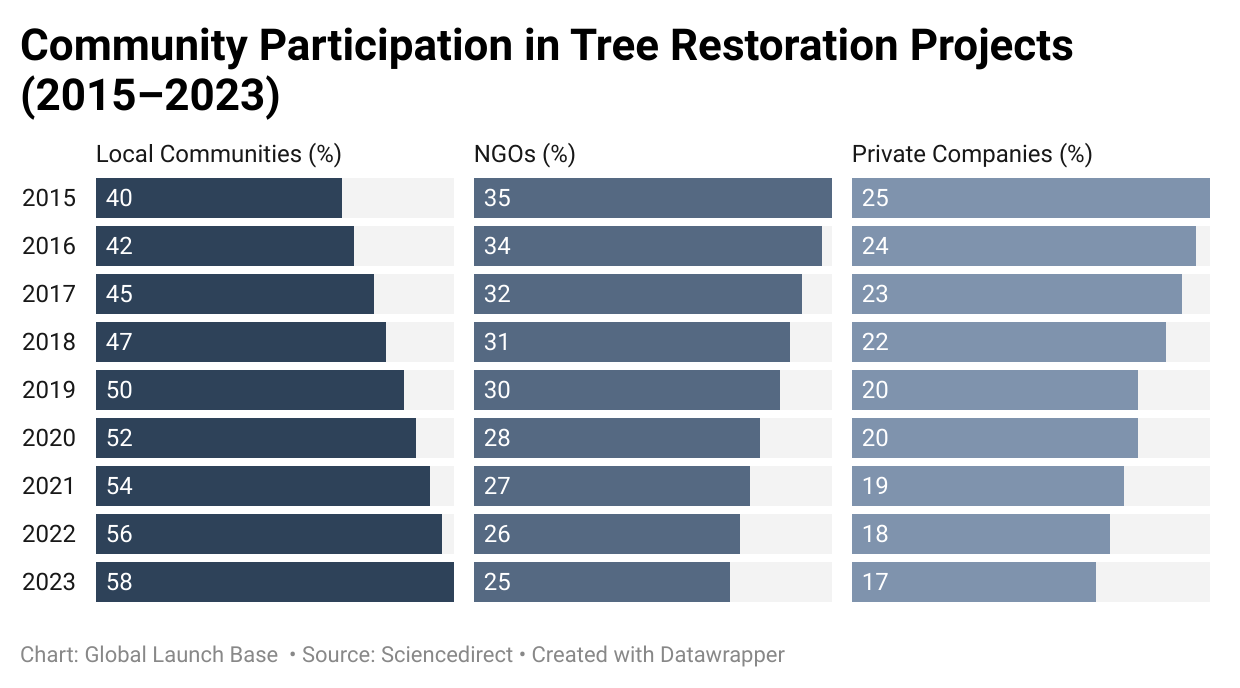
Figure: Community Participation in Tree Restoration Projects (2015–2023)
- Forest Research Institute (FRI)
- Location: Dehradun, Uttarakhand
- Focus: Research and development in forestry and tree species conservation, including rare and endangered species.
- Green India Initiative
- Location: Nationwide
- Focus: Promoting large-scale tree planting and conservation projects, including efforts to restore rare tree species.
- The Nature Conservancy (TNC)
- Location: Global with operations in India
- Focus: Conservation of forests and rare tree species, with various projects aimed at ecosystem restoration and sustainable land management.
- Wildlife Conservation Trust (WCT)
- Location: Mumbai, Maharashtra
- Focus: Wildlife conservation and forest restoration, including the protection and restoration of endangered tree species.
- Indian Council of Forestry Research and Education (ICFRE)
- Location: Dehradun, Uttarakhand
- Focus: Forestry research and the development of conservation strategies for rare and economically important tree species.
- Tree of Life (ToL)
- Location: Bangalore, Karnataka
- Focus: Urban and rural tree planting initiatives, with a focus on native and endangered species.
- SankalpTaru Foundation
- Location: Noida, Uttar Pradesh
- Focus: Tree planting and reforestation projects, including the restoration of native and rare tree species across India.
- Agroforestry Development Centre (AFDC)
- Location: Hyderabad, Telangana
- Focus: Promotion of agroforestry practices, including the cultivation of rare and economically valuable tree species.
- Givaudan Foundation
- Location: Global with projects in India
- Focus: Support for sustainable agriculture and forestry projects, including the restoration of aromatic and rare tree species like Agarwood.
- Centre for Science and Environment (CSE)
- Location: New Delhi, Delhi
- Focus: Environmental research and advocacy, including tree planting and conservation initiatives.
- National Biodiversity Authority (NBA)
- Location: Chennai, Tamil Nadu
- Focus: Conservation of biodiversity, including rare and endemic tree species, through various national and regional projects.
- Bharat Rural Livelihood Foundation (BRLF)
- Location: New Delhi, Delhi
- Focus: Rural development and livelihood projects, including agroforestry and tree restoration efforts.
- Isha Foundation
- Location: Coimbatore, Tamil Nadu
- Focus: Environmental and social initiatives, including large-scale tree planting and reforestation projects.
- Pratham NGO
- Location: Mumbai, Maharashtra
- Focus: Education and environment initiatives, including community-based tree planting and conservation efforts.
- TreeSisters
- Location: Global with a focus on India
- Focus: Empowering women in environmental and reforestation projects, including the restoration of endangered tree species.
Companies in Tree Restoration and Conservation
- Grow-Trees.com
- Location: Mumbai, Maharashtra
- Focus: Specializes in large-scale tree plantation and restoration projects. They work with businesses and individuals to plant native and rare tree species across India.
- Key Initiative: Planting trees in biodiversity hotspots like the Sundarbans and Western Ghats.
- SayTrees Environmental Trust
- Location: Bangalore, Karnataka
- Focus: A private initiative that works on urban afforestation and the restoration of degraded forest areas. They focus on planting indigenous and endangered tree species.
- Key Initiative: Tree planting drives in water-scarce areas and afforestation of urban spaces.
- Afforestt
- Location: Bangalore, Karnataka
- Focus: A private company focused on creating dense, native forests using the Miyawaki method. They specialize in restoring native tree species in urban and rural areas.
- Key Initiative: Creating mini-forests with native species across India to restore ecological balance.
- Kalpavriksh Foundation
- Location: Pune, Maharashtra
- Focus: Primarily involved in environmental conservation, with a strong emphasis on tree conservation, particularly in endangered and critical forest zones.
- Key Initiative: Community-driven tree planting programs focused on protecting rare species.
- Reforest India
- Location: Chennai, Tamil Nadu
- Focus: A company that specializes in reforestation efforts, focusing on rare and native species to restore natural habitats and promote biodiversity.
- Key Initiative: Partnering with corporates for CSR activities aimed at tree conservation.
- Tatva Tree Conservation
- Location: Jaipur, Rajasthan
- Focus: Works on conserving heritage and native tree species through sustainable practices, offering solutions for urban and rural tree restoration projects.
- Key Initiative: Heritage tree conservation projects across Rajasthan and neighboring states.
- Carbon Neutral Company (India Chapter)
- Location: Bangalore, Karnataka
- Focus: Specializes in environmental sustainability, including large-scale reforestation projects aimed at carbon offsetting by planting rare and native tree species.
- Key Initiative: Restoration of carbon-depleted lands through tree planting.
- EcoMatcher
- Location: Global with projects in India
- Focus: A technology-driven tree planting company that connects businesses and individuals with tree planting projects around the world, including India, with a focus on native tree species.
- Key Initiative: Tracking individual trees through blockchain to ensure transparency in tree conservation efforts.
4. Challenges in Restoring Rare Tree Species
Restoring rare and hard-to-grow tree species in India is a complex process that faces several challenges, including land use conflicts, lack of awareness, and illegal logging.
a. Deforestation and Land Use Changes
India’s rapidly growing population has led to increased pressure on land, resulting in widespread deforestation. Urbanization, agricultural expansion, and infrastructure development have led to the degradation of natural habitats. To successfully restore rare tree species, it is essential to implement policies that protect forest land and promote reforestation on degraded lands.
b. Illegal Logging and Poaching
Many rare tree species, like Sandalwood and Red Sanders, are targets of illegal logging due to their high economic value. Effective law enforcement, along with community-based protection initiatives, is critical for the success of restoration projects. Governments need to strengthen laws that protect endangered species and ensure that local communities are involved in conservation efforts.
c. Climatic and Soil Requirements
Many rare tree species have specific climatic and soil requirements that make them difficult to cultivate on a large scale. For example, Sandalwood trees require well-drained soil and thrive in semi-arid conditions. Restoration projects must consider these ecological factors and employ scientific research to identify suitable regions for reforestation.
d. Lack of Awareness and Education
Public awareness about the importance of rare tree species is still limited. Conservation efforts need to focus on educating local communities and policymakers about the ecological and economic benefits of restoring rare trees. Collaborative efforts between government agencies, NGOs, universities, and local communities are essential to raise awareness and ensure long-term success.
Conclusion
Restoring rare and hard-to-grow tree species in India is a vital step toward preserving the country’s ecological balance. From mitigating climate change to supporting rural economies, the benefits of tree restoration are far-reaching. While challenges such as illegal logging and land use conflicts persist, innovative restoration techniques and community-based conservation efforts offer hope for the future.
By restoring India’s forests, especially with rare and native species, the country can protect its biodiversity, enhance ecosystem services, and promote sustainable development for future generations.
About Global Launch Base:
Global Launch Base helps international startups expand in India. Our services include market research, validation through surveys, developing a network, building partnerships, fundraising, and strategy revenue growth. Get in touch to learn more about us.
Contact Info:
Website: www.globallaunchbase.com
LinkedIn: https://www.linkedin.com/company/globallaunchbase/
Email: info@globallaunchbase.com