The Last-Mile Problem in AgriTech: Why Great Technology Still Fails in the Field
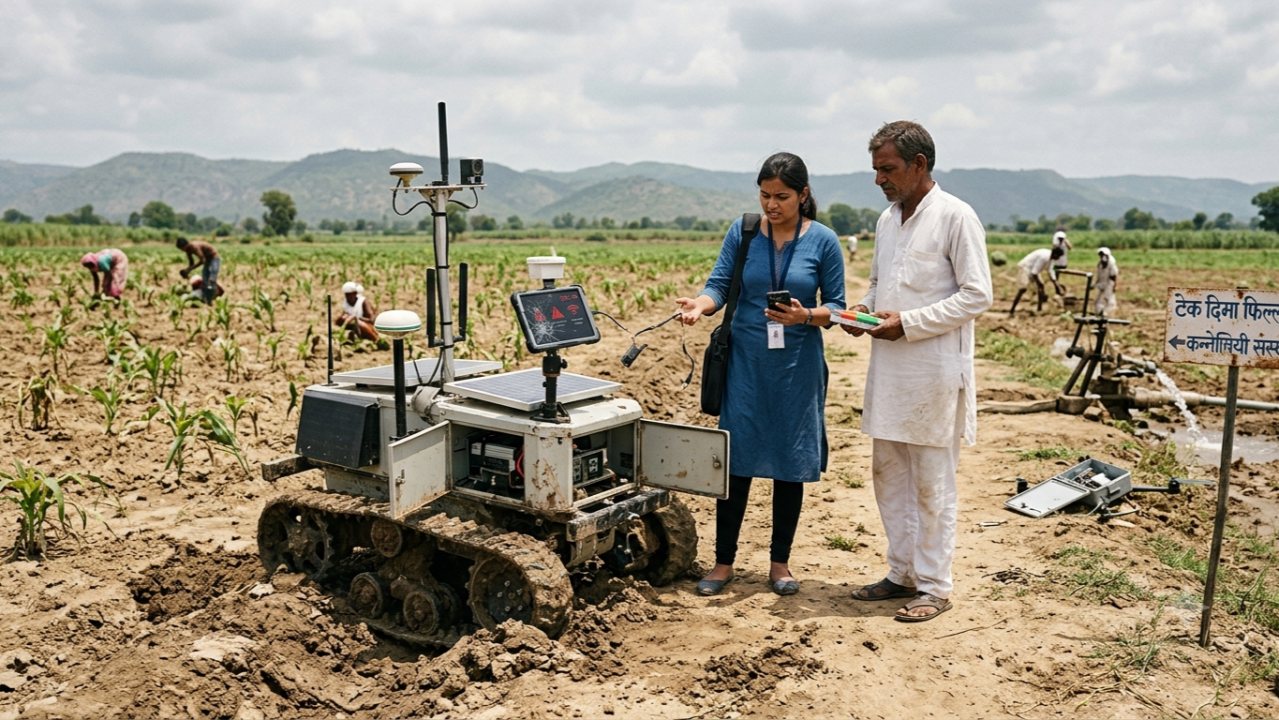
Across the world, AgriTech startups are building increasingly sophisticated solutions for agriculture.
Artificial intelligence can detect crop diseases. Sensors can monitor soil moisture in real time. Drones can map farms and identify stress before it becomes visible. Satellite platforms can predict yields. Autonomous machines can reduce labour requirements. Digital platforms can connect farmers directly with markets, banks, insurers, and input suppliers.
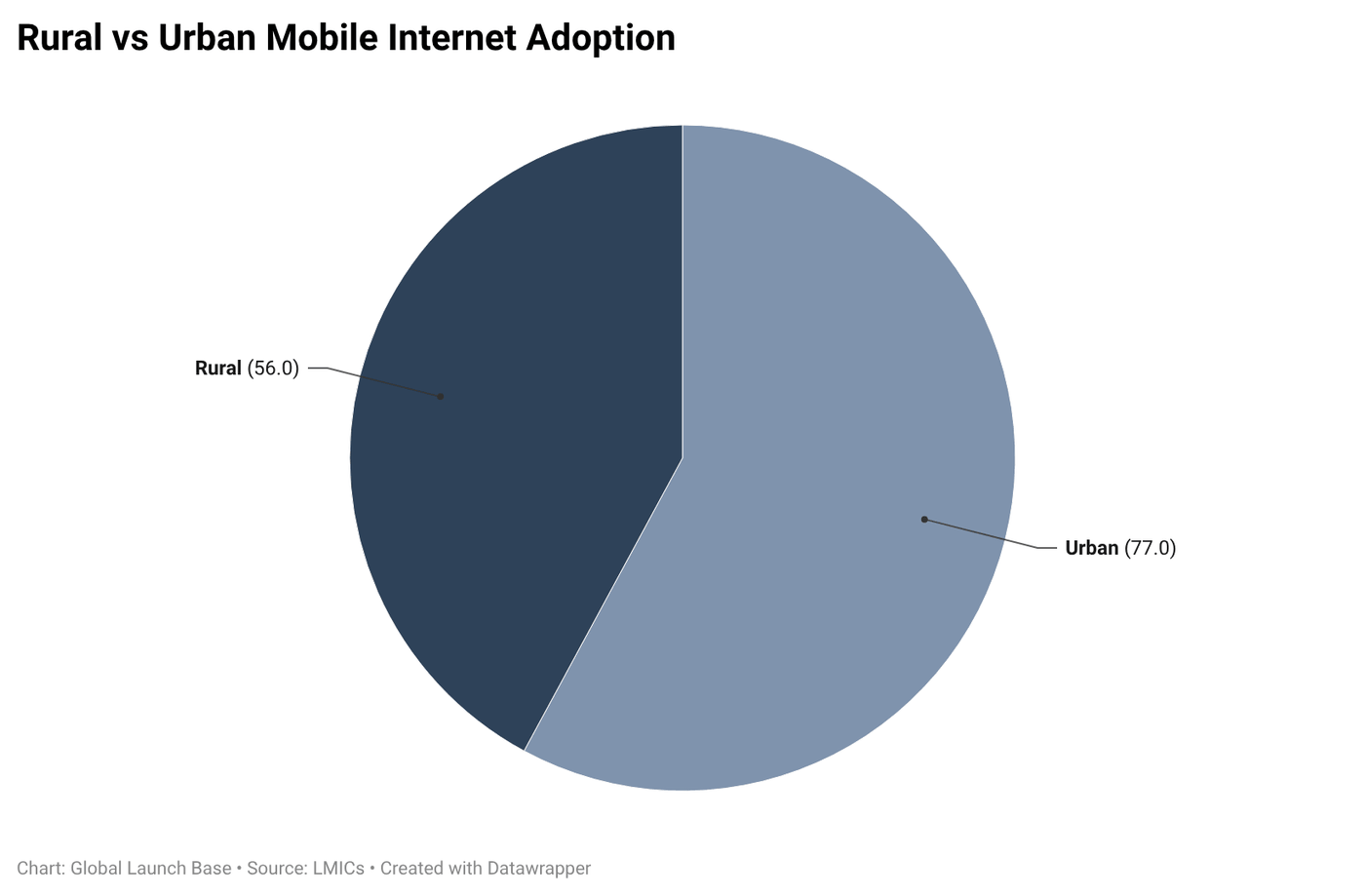
The technology is no longer the biggest limitation.
The bigger question is:
Can the technology actually work in the field?
A solution may perform perfectly in a controlled pilot, win awards, attract investors, and demonstrate impressive technical results. Yet when it reaches a real farm, adoption can stall.
The farmer may not have reliable internet.
The equipment may be too expensive.
The nearest technician may be 100 kilometres away.
The software may not support the local language.
The technology may require a level of digital literacy that was never considered during product development.
Or the farmer may simply ask a question that the technology cannot answer:
“What will this do for my income?”
This is the last-mile problem in AgriTech.
And it is one of the biggest reasons why great agricultural technology continues to struggle when moving from pilot projects to real-world adoption.
The AgriTech adoption gap
The global AgriTech ecosystem has produced no shortage of innovation.
The challenge is converting innovation into consistent, repeatable value for farmers.
There is a significant difference between:
A technology that works
and
A technology that farmers can successfully use, afford, maintain, trust, and integrate into their existing operations.
That difference is where many AgriTech businesses fail.
A startup may prove that a sensor can measure soil moisture accurately. But that does not automatically mean a farmer will install it.
A company may demonstrate that artificial intelligence can identify disease with high accuracy. But the farmer still needs access to a smartphone, connectivity, training, and a clear recommendation about what action to take next.
A drone may collect high-quality farm data. But someone still needs to interpret that data and convert it into an affordable, practical decision.
Agricultural innovation does not create impact simply because the technology exists.
Impact happens when the technology fits into the economic, operational, social, and physical reality of farming.
The electricity problem: When smart technology has no power
One of the most overlooked barriers to AgriTech adoption is also one of the most basic:
Electricity.
Many modern agricultural technologies depend on a reliable power supply.
Smart irrigation systems need electricity to operate pumps and controllers. Sensors need power to collect and transmit data. Cold-storage facilities require continuous energy. Automated machinery needs charging infrastructure. Drones need to recharge. Digital devices need to remain operational. Even a simple farm office or internet-connected monitoring system depends on reliable electricity.
But agricultural operations do not always have access to stable power.
Power cuts, voltage fluctuations, unreliable grid connections, and the high cost of diesel backup can make technology difficult to operate consistently.
This creates a fundamental contradiction.
A company may develop a highly sophisticated smart irrigation system.
But if the farm experiences frequent power interruptions, the system may not function as intended.
A farm may install a cold-storage facility.
But if electricity is unavailable for several hours, the economic value of the facility can be compromised.
A sensor network may collect valuable real-time data.
But if the gateway loses power, the data transmission stops.
The problem is particularly important in rural and remote areas, where the electricity infrastructure may not be designed for increasingly technology-intensive agricultural operations.
The result is that electricity is no longer just an infrastructure issue.
It becomes a technology adoption issue.
The energy requirement of modern agriculture is increasing
Agriculture is becoming increasingly digital and automated.
This means that farms are gradually adding more energy-dependent systems:
- Automated irrigation pumps
- Fertigation systems
- Weather stations
- IoT sensors
- Farm cameras
- Drones and charging stations
- Cold storage
- Electric farm machinery
- Processing equipment
- Internet connectivity systems
- Artificial intelligence and edge-computing devices
Each individual system may have a relatively small energy requirement.
But together, they create a much larger demand for reliable electricity.
This means that the future of AgriTech cannot be separated from the future of rural energy infrastructure.
A technology company entering a new market must therefore ask an important question:
Does the farm have the energy infrastructure required to operate this technology reliably?
If the answer is no, the solution may need to include energy as part of the deployment model.
This could involve:
- Solar-powered systems
- Battery storage
- Low-power sensors
- Energy-efficient equipment
- Hybrid solar-grid systems
- Backup power systems
- Community-level energy infrastructure
The most successful AgriTech solutions may increasingly be those designed around the energy realities of the farm.
In other words, the question is no longer simply:
“Can this technology work?”
It is:
“Can this technology continue working when the electricity goes out?”
That is a much more important question for real-world adoption.
1. The pilot is not the market
One of the biggest mistakes in AgriTech is confusing a successful pilot with market validation.
A pilot environment is often highly supportive.
The startup may have:
- Technical experts on-site
- Dedicated funding
- Government or institutional support
- Researchers helping with implementation
- Farmers selected specifically for participation
- Free or subsidised equipment
- Close monitoring
- Direct access to the technology provider
Under these conditions, almost any promising technology can appear successful.
But what happens when the pilot ends?
The technical team leaves.
The subsidy disappears.
The farmer has to pay.
The equipment requires maintenance.
The internet connection becomes unreliable.
The software needs an update.
The farmer encounters a problem on a Sunday.
And suddenly, the technology is no longer operating in a carefully managed innovation environment.
It is operating on a farm.
This is where the real test begins.
A successful pilot should not only answer:
“Does the technology work?”
It should also answer:
“Can this technology continue working when the startup is no longer standing next to the farmer?”
That is a much more difficult question.
2. Farmers do not buy technology. They buy outcomes.
AgriTech companies often describe their products through technical specifications.
The platform uses artificial intelligence.
The sensor has high accuracy.
The system collects real-time data.
The drone uses advanced imaging.
The algorithm provides predictive insights.
But farmers generally do not purchase technical specifications.
They purchase outcomes.
They want to know:
- Will this increase my yield?
- Will it reduce water usage?
- Will it reduce labour costs?
- Will it help me detect disease earlier?
- Will it reduce crop losses?
- Will it improve the price I receive?
- How quickly will I recover my investment?
This is particularly important in agriculture because farm economics are often extremely sensitive.
A smallholder farmer cannot always justify a technology investment based on future potential.
The value proposition must be clear.
If a technology costs ₹50,000 but produces uncertain benefits, adoption becomes difficult.
If the same technology can demonstrate that it saves ₹30,000 in input costs or prevents ₹1 lakh in crop losses, the conversation changes.
The question is not whether farmers are resistant to technology.
The question is whether the technology is delivering visible, measurable, and economically relevant value.
3. Infrastructure is part of the product
Many AgriTech companies treat infrastructure as someone else's problem.
The product is designed first.
The infrastructure is considered later.
But in agriculture, infrastructure is often inseparable from the technology itself.
A smart irrigation system may depend on:
- Reliable electricity
- Internet connectivity
- Water pressure
- Pumps
- Sensors
- Mobile applications
- Technical maintenance
If any one of these elements fails, the entire system may fail.
This means that the actual product is not just the software, sensor, or machine.
The actual product is:
Technology + Infrastructure + Installation + Training + Maintenance + Support.
This is why AgriTech solutions often require a different approach from conventional software startups.
A software application can potentially scale globally with minimal physical infrastructure.
An agricultural technology product usually cannot.
It must operate in real soil, under real weather conditions, with real machinery, real workers, real electricity constraints, and real economic limitations.
The field is not a laboratory.
4. The last mile is often a people problem
Technology adoption is frequently discussed as a technical challenge.
But many of the biggest barriers are human.
Farmers may not trust the technology.
They may have previously purchased equipment that failed.
They may be uncertain about data privacy.
They may prefer advice from a local agricultural expert.
They may not want to change a farming practice that has worked for their family for decades.
This does not mean farmers are anti-innovation.
In many cases, farmers are among the most practical innovators in the world.
They experiment constantly.
They adapt to weather, markets, labour shortages, pests, disease, and changing input prices.
But they are also highly aware of risk.
A failed technology experiment can mean a failed crop.
And a failed crop can mean a serious financial loss.
Trust therefore becomes one of the most important components of AgriTech adoption.
A farmer may adopt a new technology because:
- A trusted farmer recommended it
- A local cooperative supports it
- A respected agronomist explains it
- A nearby demonstration farm is using it
- The company provides local support
- The technology has already delivered visible results in similar conditions
The path to adoption often begins with trust long before it begins with a sales pitch.
5. The language gap is also a technology gap
A solution may be technically excellent but practically unusable if it is designed only for a global audience.
India alone has hundreds of languages and dialects.
Agricultural knowledge is often deeply local.
The crop, soil, climate, farming practices, and market systems can vary significantly from one region to another.
A farmer in Punjab may have very different needs from a farmer in Karnataka.
A farmer growing rice may have completely different workflows from a farmer growing areca nut, coffee, pepper, or horticultural crops.
If a technology platform provides generic recommendations without local context, its usefulness may quickly decline.
The interface is only one part of localisation.
True localisation may require:
- Local languages
- Local crop data
- Local weather conditions
- Local agronomic practices
- Local market prices
- Local units of measurement
- Local support teams
- Local examples
The last mile is not solved by simply translating an app.
It is solved by making the entire experience relevant to the user.
6. The maintenance problem nobody wants to discuss
AgriTech companies often focus heavily on selling the product.
But agriculture has a much longer relationship with technology.
A machine is not a one-time sale.
A sensor is not a one-time installation.
A farm management platform is not a one-time download.
Technology needs to work across seasons.
It must survive heat, rain, dust, humidity, insects, power fluctuations, and physical damage.
When something breaks, the farmer needs help.
This creates a major challenge for technology companies entering new markets.
A European startup may have excellent engineering capabilities but no local service network.
The company may be able to sell its product in India.
But can it repair the product in Karnataka?
Can it provide support in the local language?
Can it maintain spare parts?
Can it train local technicians?
Can it respond quickly during the growing season?
These questions are not operational details.
They are part of the business model.
A technology that cannot be maintained is not a scalable technology.
7. The distribution problem
Many AgriTech companies assume that the best way to reach farmers is through direct sales.
But agriculture is rarely a simple direct-to-consumer market.
Farmers often interact with a complex ecosystem that includes:
- Input dealers
- Cooperatives
- Farmer Producer Organisations
- Agricultural universities
- Government departments
- Banks
- Equipment dealers
- Agronomists
- Local distributors
- Large farms
- Contract farming companies
These organisations can become important distribution partners.
For an international AgriTech startup, building every local relationship from zero can be expensive and slow.
This is where local partners become critical.
A startup may have the technology.
A local partner may have:
- Market knowledge
- Farmer relationships
- Distribution capability
- Regulatory understanding
- Local language skills
- Installation capacity
- After-sales support
Together, they can solve problems that neither organisation could solve independently.
The future of AgriTech expansion may therefore depend less on “entering a market” and more on building local ecosystems.
8. Why European AgriTech startups face a particular challenge
European AgriTech startups often bring advanced technologies to emerging markets.
They may have strong capabilities in:
- Artificial intelligence
- Robotics
- Precision agriculture
- Automation
- Carbon measurement
- Satellite data
- Smart irrigation
- Farm management software
But the operating environment can be very different.
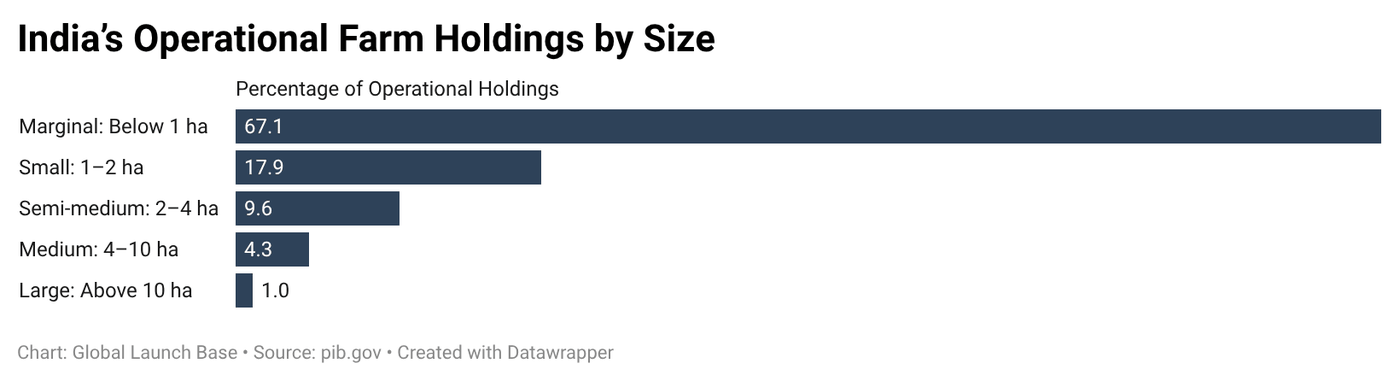
A product developed for large, highly mechanised European farms may not work directly in a region dominated by small and fragmented farms.
A solution designed for stable connectivity may struggle in remote rural areas.
A product priced for European farm economics may be unaffordable in emerging markets.
This does not mean European technology cannot succeed.
It means the technology may need to be adapted.
The winning question is not:
“How do we sell our European product in India?”
It is:
“How should this technology be redesigned for the Indian operating environment?”
That could mean:
- Smaller hardware units
- Pay-per-use models
- Local manufacturing
- Shared equipment models
- Local service partners
- Regional language support
- Crop-specific adaptation
- Integration with existing infrastructure
Market entry should not be treated as a sales exercise.
It should be treated as a product adaptation exercise.
9. The importance of real-world pilot environments
One of the most effective ways to solve the last-mile problem is to test technology in real operating conditions before attempting large-scale commercial expansion.
This requires more than a demonstration plot.
A serious pilot environment should provide access to:
- Real farms
- Real farmers
- Real crops
- Local infrastructure
- Operational challenges
- Weather variability
- Existing farm machinery
- Data collection systems
- Technical support
This is the role that innovation hubs and real-world test environments can play.
For example, a location such as Aré Guḍi in Karnataka can serve as more than a demonstration farm.
It can become a bridge between international technology developers and Indian agricultural realities.
A startup can test:
- Whether its hardware survives local conditions
- Whether farmers understand the product
- Whether the technology delivers measurable value
- Whether the installation process is practical
- Whether the technology can integrate with existing systems
- Whether the business model makes economic sense
Most importantly, startups can discover problems before scaling them.
This is critical.
Because scaling a product that has not solved the last mile does not create impact.
It simply creates a larger last-mile problem.
10. The future is not technology versus farmers
The future of agriculture will not be built by replacing farmers with technology.
It will be built by making technology useful to farmers.
The most successful AgriTech companies will likely be those that understand a simple principle:
Agriculture is not a technology industry with farms as customers.
It is a complex ecosystem where technology must fit into existing economic, social, environmental, and operational systems.
The winners will not necessarily have the most advanced technology.
They may be the companies that can answer the most practical questions:
- Who installs it?
- Who trains the farmer?
- Who maintains it?
- Who pays for it?
- Who owns the data?
- What happens when connectivity fails?
- What happens when the machine breaks?
- What happens after the pilot ends?
- What happens during the next harvest?
These questions may not sound as exciting as artificial intelligence or autonomous robotics.
But they determine whether innovation creates real impact.
Conclusion: The future of AgriTech will be won on the ground
The next major breakthrough in AgriTech may not be a new sensor, algorithm, robot, or platform.
It may be a better model for delivering existing technology to the people who need it.
The last mile is where innovation meets reality.
It is where technology encounters affordability, infrastructure, trust, language, maintenance, behaviour, and local economics.
And this is precisely why the last mile is so difficult.
But it is also where the greatest opportunity exists.
The companies that solve this challenge will do more than sell technology.
They will build systems of adoption.
They will create local partnerships.
They will invest in trust.
They will design for real conditions rather than ideal conditions.
They will measure success not by the number of pilots launched, but by the number of farmers who continue using the technology after the pilot ends.
Because the future of AgriTech will not be determined by how impressive a technology looks in a laboratory.
It will be determined by what happens when the technology reaches the field.
Great technology can start the journey.
But only a solved last mile can complete it.