Turning Agri-Waste into Opportunity_ The Role of Pyrolysis Units in Emerging Markets
Agriculture remains the backbone of emerging economies, employing millions and providing essential food and raw materials. Yet, these countries face a persistent challenge: how to manage agricultural residues sustainably. Crop stubble, husks, shells, and other organic waste often go unused, leading to environmental problems like air pollution from open burning and soil degradation. Pyrolysis units offer a transformative solution, converting agri-waste into valuable biochar while generating renewable energy and fostering economic growth.
What is Biochar?
Biochar is a carbon-rich material produced through pyrolysis, a process that heats organic biomass in a low-oxygen environment. Agricultural residues—such as rice husks, sugarcane bagasse, or coconut shells—can be transformed into biochar, along with by-products like syngas and bio-oil. The resulting biochar is highly porous and stable, making it a powerful soil amendment. Its use improves soil fertility, water retention, and microbial activity, while also contributing to carbon sequestration.
Pyrolysis Units: Catalysts for Sustainable Development
Pyrolysis units are specialized systems designed to convert biomass into biochar efficiently. These units vary in scale—from small mobile systems suitable for farms to large industrial plants. Mobile units, in particular, are ideal for rural areas, enabling decentralized processing of agricultural waste.
In addition to producing biochar, pyrolysis units generate renewable energy, reducing reliance on traditional fuels and offering rural communities a clean source of power. By turning waste into resources, pyrolysis units create both environmental and economic value.
Benefits of Biochar in Emerging Markets
- Waste Management: Transforming crop residues into biochar reduces open burning, mitigating air pollution and greenhouse gas emissions.
- Soil Health: Biochar enhances soil structure, fertility, and moisture retention—critical for smallholder farmers struggling with declining soil productivity.
- Climate Mitigation: Biochar acts as a long-term carbon sink, helping emerging economies meet sustainability targets.
- Economic Growth: Biochar production creates jobs in processing, distribution, and soil application, offering new income streams for rural communities.
Companies like Takachar in India have pioneered on-site pyrolysis solutions, enabling farmers to convert residues into biochar locally. Similarly, NetZero is expanding biochar production in tropical countries to sequester millions of tons of CO₂.
Biochar Production and Environmental Impact Data
Parameter | Global / India | Value | Notes / Source |
|---|---|---|---|
Average Carbon Content in Biochar | Global | 60–80% | Depends on feedstock and pyrolysis temperature (FAO) |
CO₂ Sequestration Potential per Ton of Biochar | Global | 2.0–3.5 tons CO₂ | Biochar can store carbon long-term in soil (IPCC, 2022) |
Crop Residue Conversion Efficiency | India | 30–50% | Percent of residue converted into biochar (Takachar India) |
Water Retention Improvement | India | +20–30% | Soil amendment effect for smallholder farms (ResearchGate) |
Fertilizer Reduction Potential | India | 10–20% | Biochar can reduce synthetic fertilizer use (ScienceDirect) |
Pyrolysis Unit Operational Data
Parameter | Small-scale Mobile Unit | Large Industrial Unit | Notes / Source |
|---|---|---|---|
Processing Capacity | 500–1,500 kg/day | 5–20 tons/day | Varies by unit type and feedstock (Takachar) |
Energy Output (Syngas + Bio-oil) | 20–50 kWh/day | 500–1,500 kWh/day | Can offset local energy needs |
Feedstock Types | Crop residues, husks, shells | Crop residues, forestry waste, manure | Flexibility depends on unit design |
Operational Cost | ~$10–20 / ton biomass | ~$50–70 / ton biomass | Includes labor, maintenance, and fuel |
Economic & Social Impact Data
Parameter | India / Emerging Markets | Value / Notes |
|---|---|---|
Average Income for Smallholder Farmers from Biochar | India | $50–100 per hectare per season |
Employment Opportunities per 100 tons of Biochar Produced | India | 5–8 jobs |
Reduction in Crop Residue Open Burning | India | 70–80% |
Estimated Carbon Credit Value | Global | $20–40 per ton CO₂ |
Adoption and Usage Trends
Parameter | India / Global | Value |
|---|---|---|
Biochar Adoption Rate Among Farmers | India | 5–10% smallholders currently, expected 25–30% by 2030 |
Mobile Pyrolysis Units Penetration | India | 1–2 units per 10,000 ha of farmland |
By-products Utilization Rate | Global | 50–70% |
Market Outlook
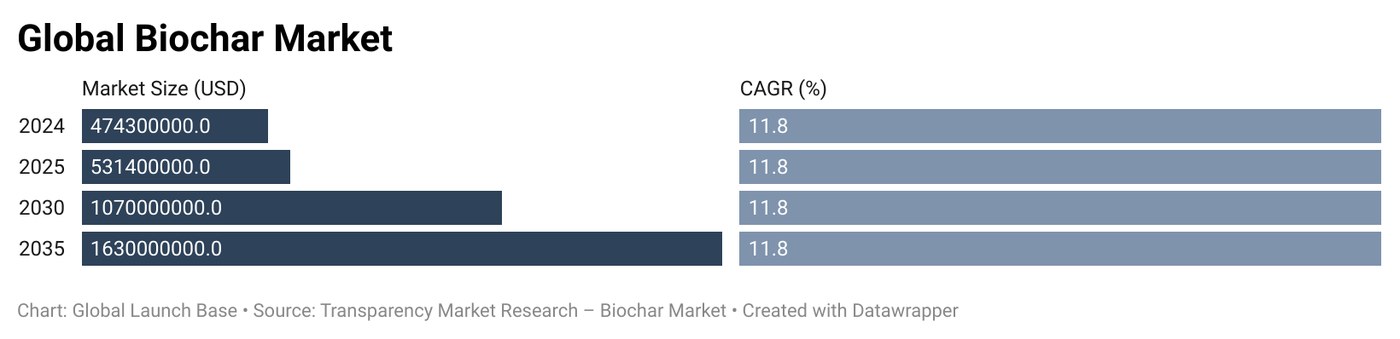
The global biochar market is growing rapidly. In 2024, it was valued at approximately $474 million and is projected to reach $1.6 billion by 2035, growing at a CAGR of 11.8%. The growth is driven by rising demand for sustainable agriculture, carbon sequestration, and eco-friendly soil amendments.
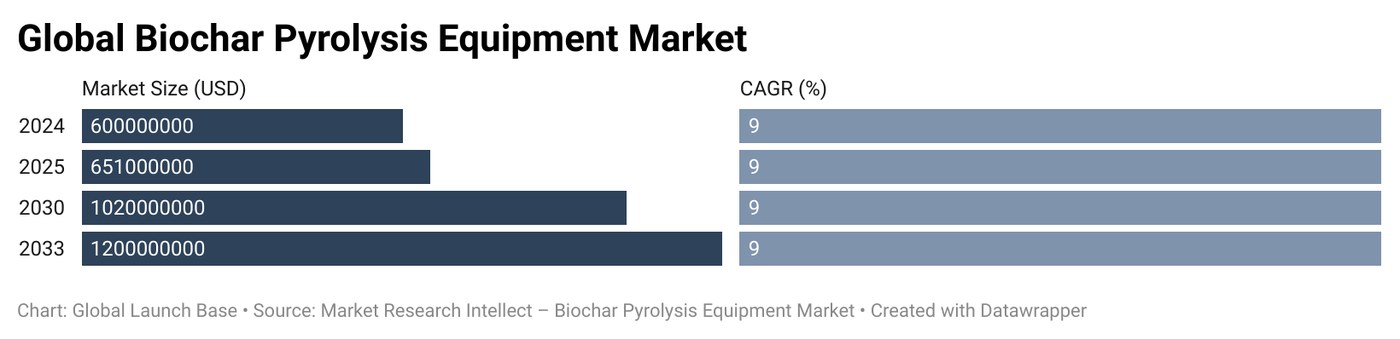
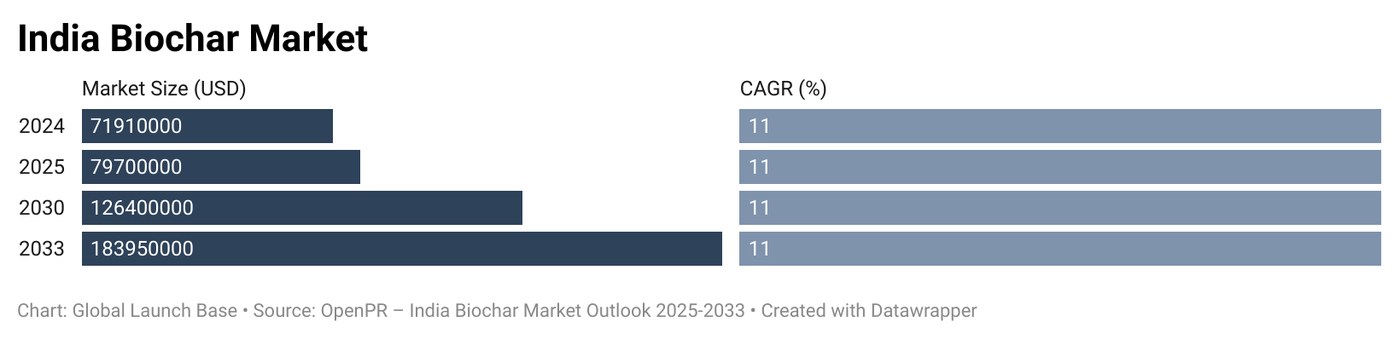
In India, the biochar pyrolysis equipment market is expected to reach $64.3 million by 2025, with a CAGR of 13.9% from 2025 to 2033. Government incentives, coupled with a growing focus on sustainable farming practices, are fueling this expansion.
Challenges and Considerations
While promising, biochar adoption faces challenges in emerging markets:
- High Initial Costs: Small farmers may struggle to afford pyrolysis units without subsidies or cooperative models.
- Awareness and Training: Farmers need guidance on biochar application rates, soil compatibility, and handling by-products.
- Logistics: Collecting and transporting residues efficiently requires coordinated supply chains.
Addressing these challenges through public-private partnerships, training programs, and mobile pyrolysis solutions is essential for scaling impact.
Conclusion
Converting agricultural waste into biochar through pyrolysis is more than a technological innovation—it is a pathway to sustainable development. Emerging markets can simultaneously tackle environmental issues, improve soil health, sequester carbon, and create economic opportunities. By embracing pyrolysis technology, these countries can transform agri-waste from a problem into a profitable, environmentally friendly resource, fostering resilience and sustainability for the future.