Why ConservationTech Needs B2G Revenue, Not Tokens_ A Framework for India Market Entry
Why Conservation Tech Needs B2G Revenue, Not Tokens: A Framework for India Market Entry
India’s climate and conservation sector is entering a phase where the biggest opportunities are no longer in consumer apps, speculative token ecosystems, or voluntary participation models. The real scale lies in public infrastructure, state-led environmental programs, and institutional climate finance.
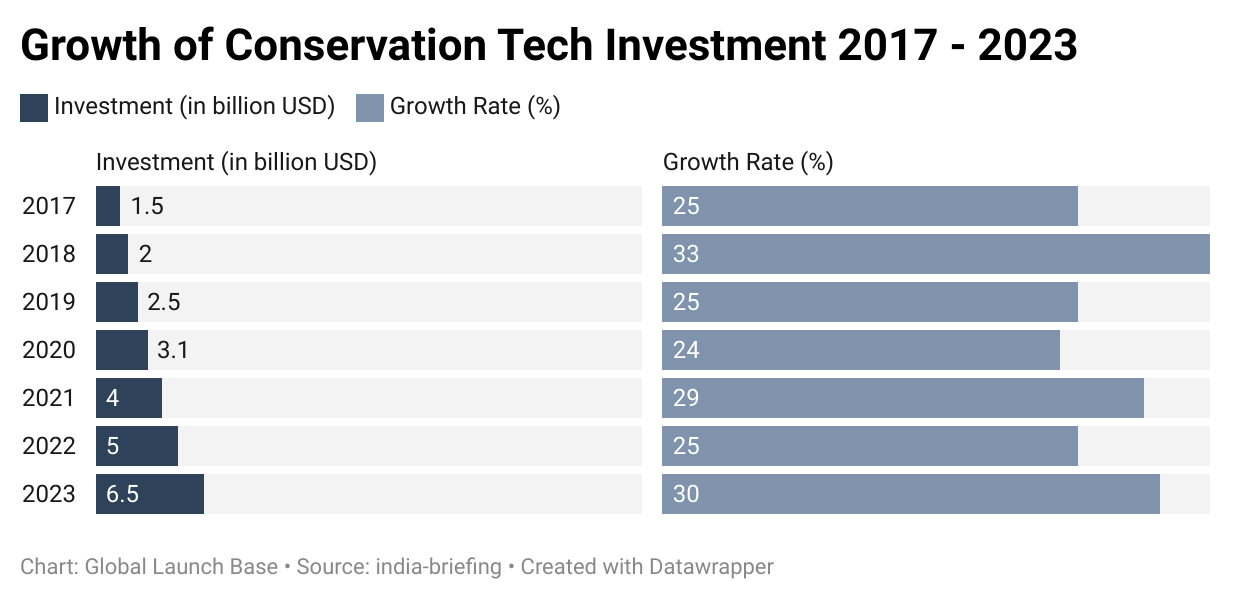
For foreign ConservationTech companies entering India, this creates a critical strategic reality:
Consumer-funded environmental platforms may generate visibility, but long-term survival in India depends on B2G (Business-to-Government) revenue.
This shift matters for companies working in:
- Satellite monitoring
- Forest intelligence
- Air quality systems
- Biodiversity tracking
- Carbon MRV platforms
- Water analytics
- Climate-risk infrastructure
- Environmental compliance systems
Companies such as PlanetWatch, Ambios, and Space-TS often begin with consumer engagement, token economics, or decentralized participation models. But India’s environmental economy behaves differently from Europe or Web3-first markets.
In India, environmental spending is increasingly routed through:
- Central government programs
- State forest departments
- Climate adaptation funds
- Agricultural transition schemes
- Geospatial infrastructure programs
- Public procurement systems
The companies that understand this early can build durable revenue. Those that rely only on token communities or consumer subscriptions often struggle to scale beyond pilots.
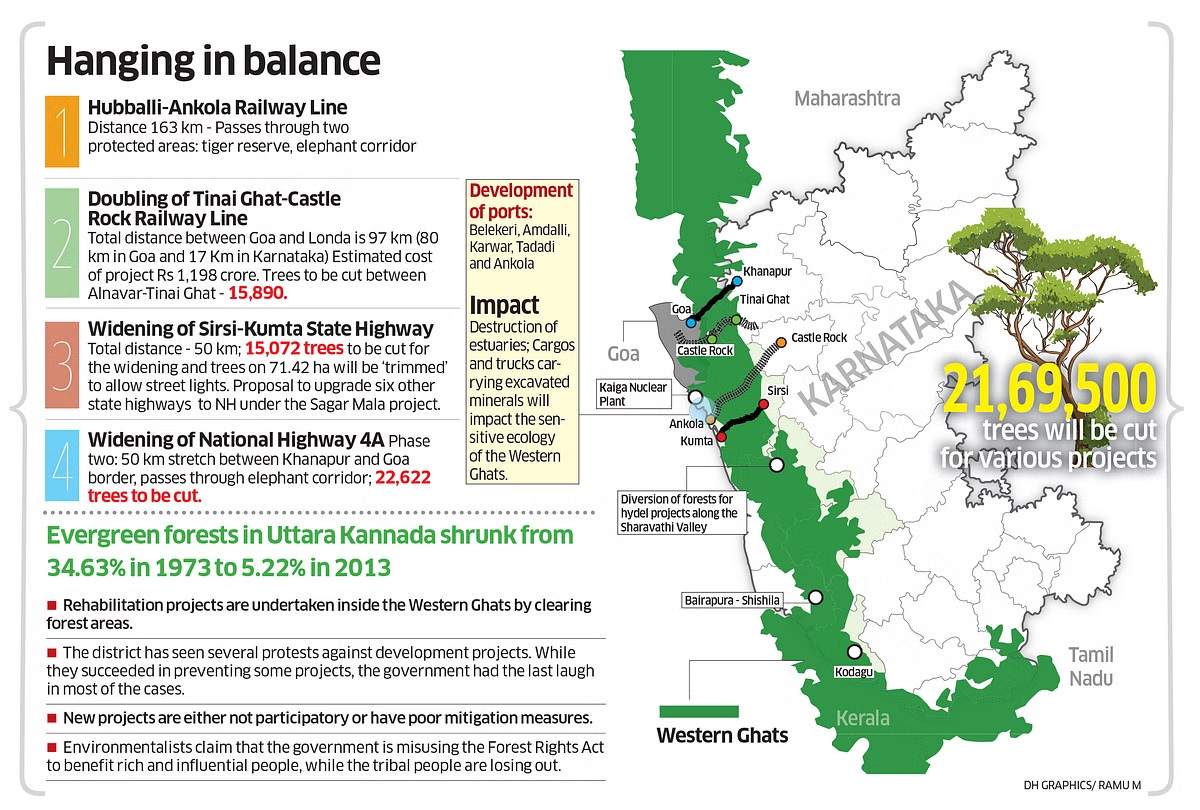
Figure: Western Ghat - Source Deccan Herald
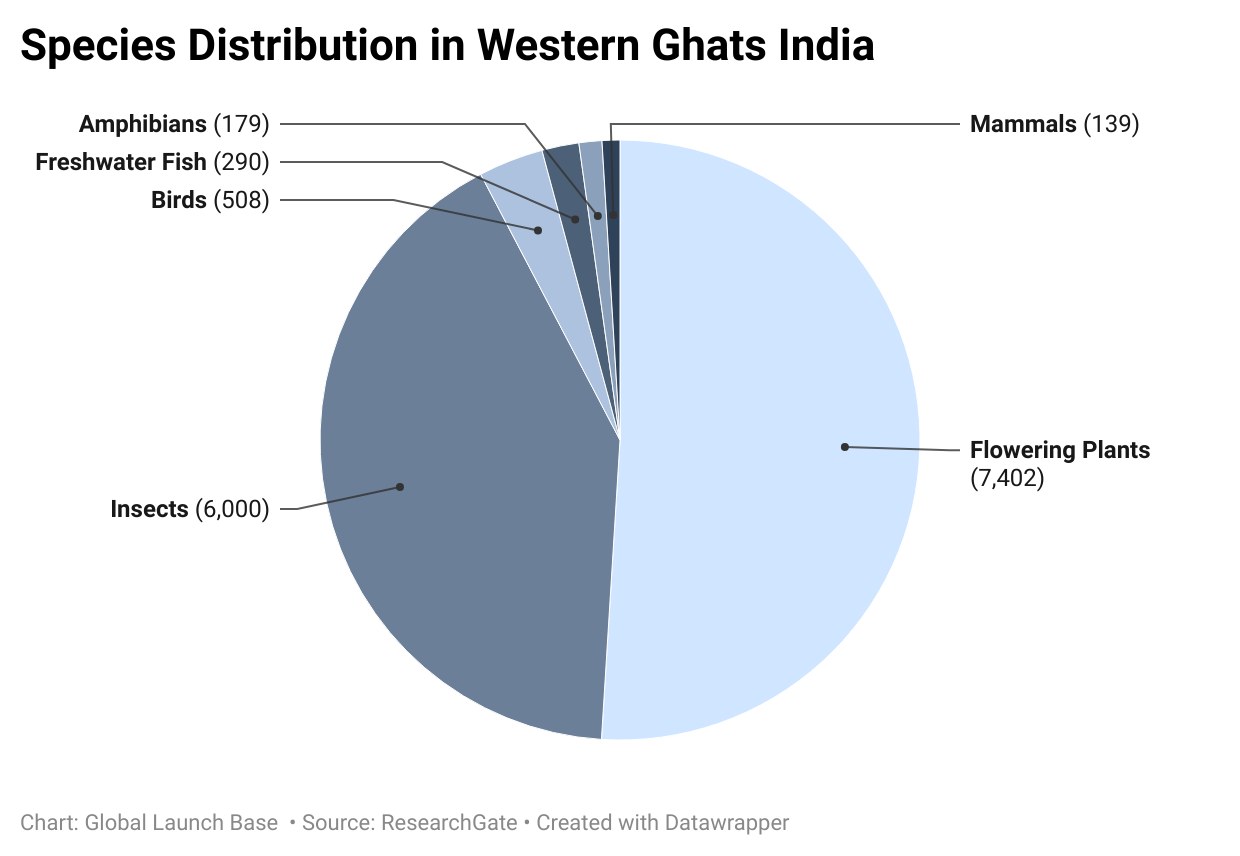
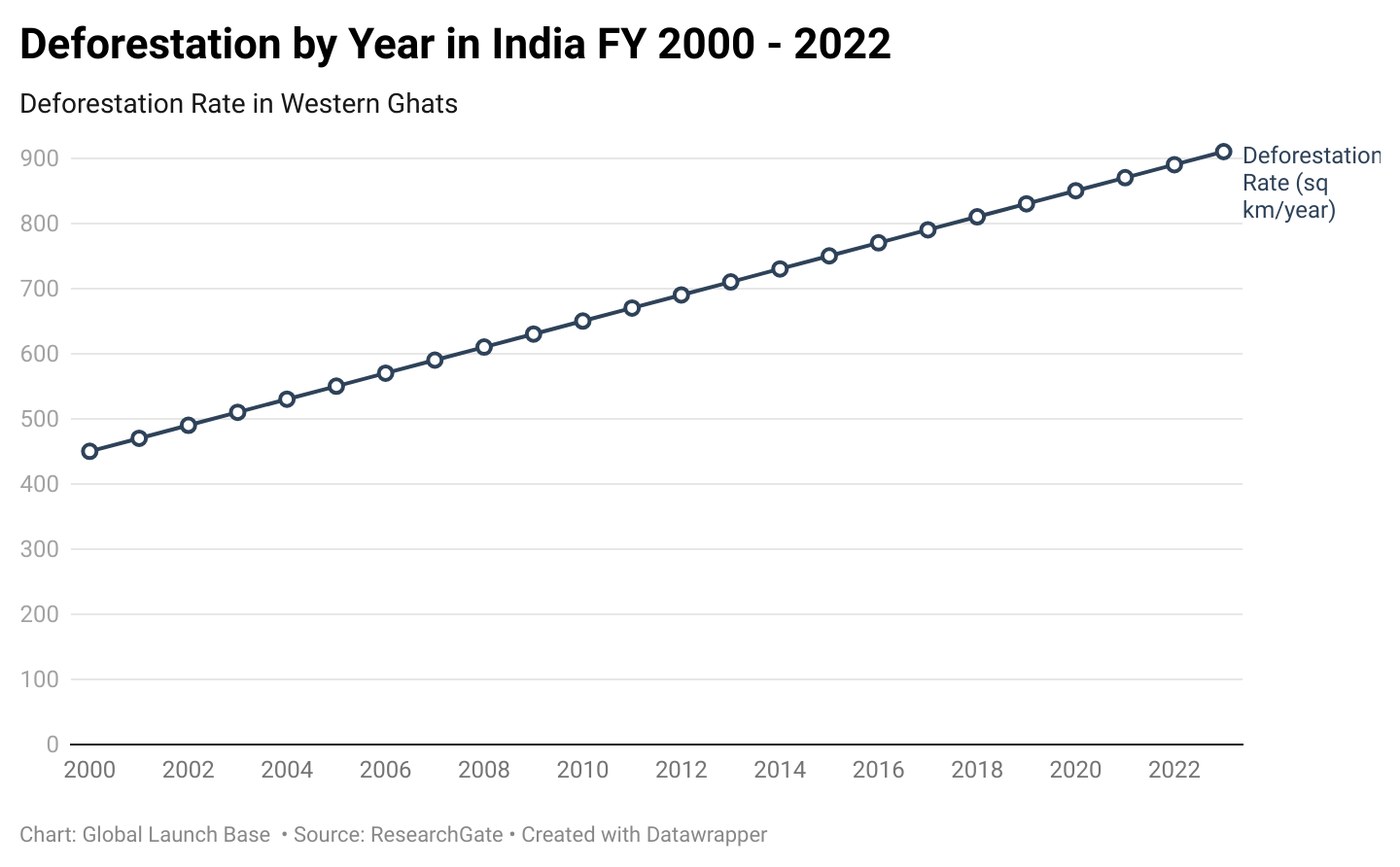
The Western Ghats, a UNESCO World Heritage site, stretch over 1,600 kilometers along the western coast of India, encompassing six states. This biodiversity hotspot is home to a plethora of endemic species and plays a critical role in regulating the regional climate. However, the Western Ghats face numerous threats from human activities such as deforestation, mining, and agricultural expansion. In response, a variety of conservation efforts have been initiated to preserve this ecological treasure.
India’s Conservation Economy Is Government-Led
India already has one of the world’s largest publicly controlled environmental financing systems.
The biggest example is the Compensatory Afforestation Fund Management and Planning Authority (CAMPA) framework under the Ministry of Environment, Forest and Climate Change. The CAMPA corpus has crossed ₹50,000 crore and is distributed to states for afforestation, forest regeneration, wildlife management, forest infrastructure, and monitoring systems.
This matters because modern conservation programs increasingly require:
- Satellite imagery
- GIS dashboards
- Drone mapping
- Forest boundary intelligence
- Fire-risk detection
- Biodiversity data systems
- Real-time monitoring tools
That creates direct opportunity for ConservationTech vendors.
Unlike many Western markets where conservation startups chase consumer participation, India’s largest environmental customer is often the state itself.
Why Token Models Struggle in India
Token-driven conservation platforms usually depend on:
- Retail participation
- Carbon speculation
- Citizen incentives
- Community reward systems
- Crypto-based environmental engagement
These models face several problems in India.
1. Regulatory Uncertainty
India’s crypto environment remains volatile. Taxation rules, exchange policies, and regulatory frameworks have shifted multiple times over recent years. This makes token-led conservation economics difficult to scale institutionally.
Government agencies and public-sector buyers generally avoid systems dependent on speculative token infrastructure.
2. Low Consumer Monetization in Conservation
Indian consumers may strongly support sustainability in principle, but direct willingness to pay for conservation data platforms remains limited outside premium urban niches.
Mass adoption requires either:
- Government integration
- Enterprise compliance usage
- Agricultural productivity linkage
- Infrastructure integration
Pure consumer climate apps rarely sustain meaningful recurring revenue.
3. Environmental Procurement Is Institutional
India’s environmental spending is usually controlled by:
- Forest departments
- Municipal corporations
- Agricultural missions
- Pollution control boards
- Disaster management authorities
- Infrastructure ministries
That means procurement decisions are institutional rather than community-funded.
The B2G Advantage
B2G is slower initially, but once integrated, it creates long-duration revenue visibility.
Government environmental contracts often include:
- Multi-year maintenance
- Statewide deployments
- Annual monitoring cycles
- Hardware replacement
- Data subscriptions
- GIS integration layers
- Compliance reporting
This creates predictable revenue compared to speculative token cycles.
For ConservationTech firms, the goal should not be:
“Can we onboard millions of users?”
The better question is:
“Can we become embedded infrastructure for environmental governance?”
The GeM and Tender Opportunity
India’s public procurement ecosystem is becoming increasingly digitized through platforms such as the Government e-Marketplace (GeM).
Environmental and geospatial tenders increasingly appear for:
- Remote sensing
- Forest surveys
- GIS software
- Climate analytics
- Air-quality monitoring
- Smart agriculture
- Water-resource management
Meanwhile, organizations under the Indian Space Research Organisation and the National Remote Sensing Centre have expanded geospatial accessibility through programs connected to Bhuvan.
This creates a strong precedent:
India is already comfortable using satellite intelligence for public planning.
Foreign innovators entering India should therefore align with government workflows rather than trying to replace them.
PM-PRANAM and Climate-Linked Agriculture
Programs such as the PM-PRANAM initiative are also reshaping agricultural-environment spending.
The scheme incentivizes states to reduce chemical fertilizer dependency and improve sustainable agriculture outcomes.
This opens demand for:
- Soil intelligence systems
- Regenerative agriculture monitoring
- Satellite crop analytics
- Carbon measurement systems
- Water-efficiency platforms
For ConservationTech firms, agriculture and ecology are becoming increasingly interconnected in India’s policy environment.
NABARD and Climate Finance
National Bank for Agriculture and Rural Development (NABARD) has significantly expanded climate adaptation and rural sustainability financing.
This includes:
- Watershed development
- Climate-resilient agriculture
- Forestry-linked livelihoods
- Carbon and ecosystem resilience projects
Unlike speculative climate startups, these programs are backed by institutional finance structures.
That means ConservationTech firms with measurable outcomes stand a stronger chance of long-term adoption.
B2B Data Licensing: The Middle Path
Not every company will immediately win government contracts.
An alternative entry path is B2B environmental intelligence licensing.
Potential buyers include:
- Infrastructure developers
- ESG reporting firms
- Agri-enterprises
- Insurance companies
- Renewable energy developers
- Plantation groups
- Carbon project operators
Examples include:
- Forest-loss alerts
- Flood-risk intelligence
- Soil degradation mapping
- Heat-risk analysis
- Water-stress forecasting
This model is often more stable than consumer subscriptions while being faster to scale than B2G procurement.
The 36-Month Revenue Stability Comparison
A useful framework for ConservationTech founders entering India is to compare three funding paths across a 36-month horizon.
1. Token Sale Model
Characteristics:
- Fast initial spikes
- High volatility
- Community-driven
- Regulatory uncertainty
- Difficult institutional adoption
Revenue pattern:
Strong launch cycle followed by instability and dependence on market sentiment.
2. B2G Contract Model
Characteristics:
- Slow onboarding
- Long procurement cycles
- High documentation requirements
- Stable multi-year contracts
- Strong credibility effects
Revenue pattern:
Low first-year revenue, then consistent and predictable scaling after government integration.
3. B2B Data Licensing
Characteristics:
- Faster commercial cycles
- Easier pilots
- Mid-sized recurring revenue
- Strong scalability potential
Revenue pattern:
Moderate but relatively stable growth with diversified customers.
If visualized on a 36-month chart:
- Token revenue resembles spikes and crashes
- B2G appears flat initially but steadily compounds
- B2B licensing grows gradually with moderate volatility
The India Entry Mistake Many Foreign Startups Make
Many international climatetech founders assume India behaves like:
- Europe’s grant ecosystem
- North America’s VC-led SaaS market
- Web3 community economies
But India’s environmental economy is heavily operational and state-linked.
Technology adoption often succeeds when:
- It solves administrative pain points
- It reduces monitoring costs
- It improves compliance visibility
- It supports state implementation targets
- It aligns with existing public programs
This is why distribution partnerships matter.
The Distribution Partner Equation
Foreign innovators rarely scale in India alone.
The strongest India-entry structures usually combine:
- Foreign IP and technology
- Indian implementation partners
- Local compliance capability
- Government relationship networks
- Regional deployment teams
A good India partner helps navigate:
- Tender systems
- State-level procurement
- Localization
- Pilot deployment
- Public-sector reporting
- Operational scaling
This becomes especially important in conservation projects that involve:
- Forest departments
- Rural communities
- Land records
- Agricultural agencies
- Multi-state coordination
At Global Launch Base, this model is increasingly relevant for foreign innovators exploring India entry across agriculture, conservation, and environmental intelligence sectors.
Conservation Infrastructure Will Define the Next Decade
India’s next environmental phase will not be built only through activism or consumer participation.
It will be built through infrastructure:
- Monitoring systems
- Satellite intelligence
- Ecological compliance platforms
- Climate-risk analytics
- Forest governance technology
- Agricultural sustainability systems
This creates a major opportunity for global ConservationTech companies — but only if they adapt their revenue logic to India’s institutional reality.
The winners in India’s conservation economy will likely not be the companies with the loudest token communities.
They will be the companies that become embedded into the operational machinery of environmental governance.
As part of this broader exploration, we’ve also explored satellite-based forest-loss alerting for a Karnataka boundary at Aré Guḍi — a small example of how geospatial conservation infrastructure can move from concept to practical implementation in India.