Why India Could Become the World’s Best Testing Ground for ClimateTech
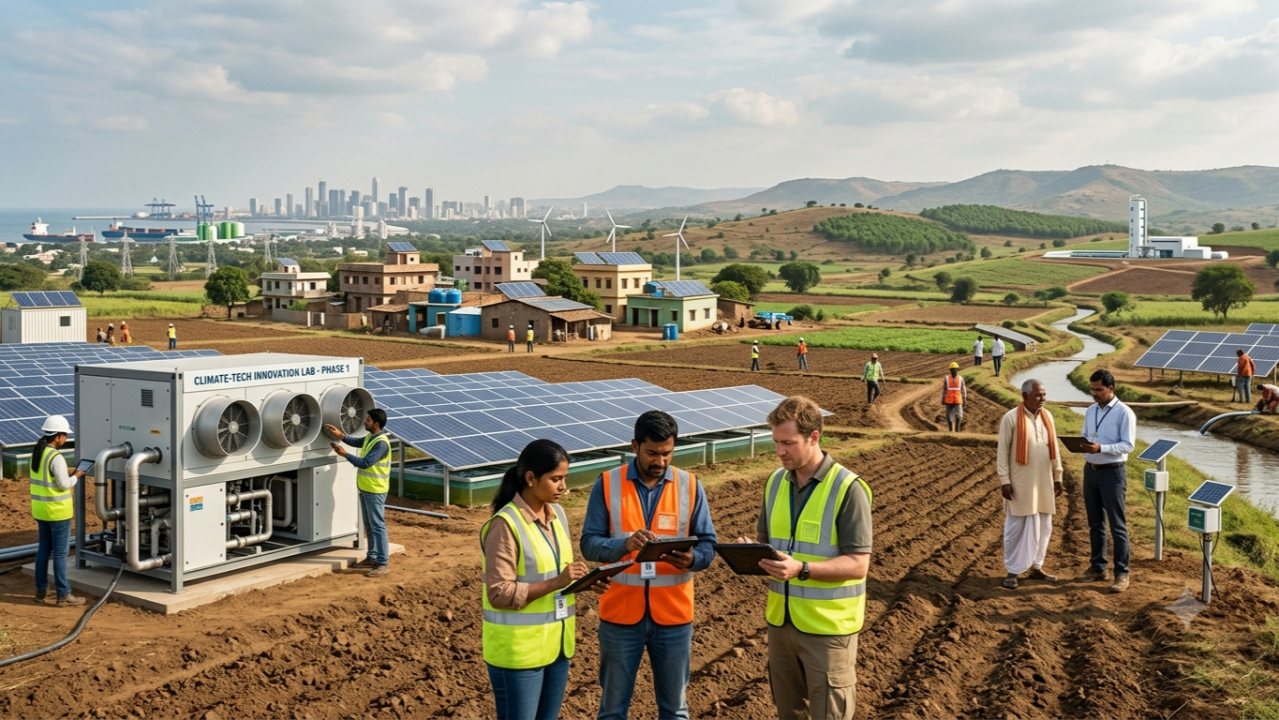
Climate technology is entering a new phase.
For years, the biggest question was whether climate solutions could be invented. Today, the harder question is whether they can work outside controlled environments — across unreliable infrastructure, extreme weather, diverse markets, complex regulations, and real-world affordability constraints.
This is where India becomes increasingly important.
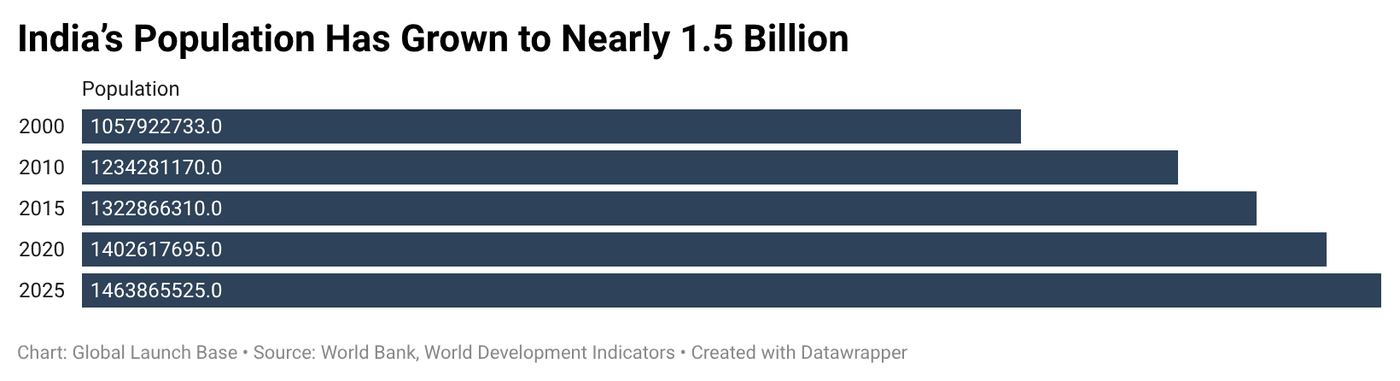
With more than 1.4 billion people, hundreds of millions of farmers, rapidly growing cities, diverse climatic zones, expanding digital infrastructure, and enormous pressure to decarbonise while continuing to grow, India offers something few other markets can match:
Scale, diversity, urgency and complexity — all in one testing environment.
For ClimateTech companies, India is not simply another market to enter. It could become one of the most demanding and valuable real-world laboratories on the planet.
The Difference Between a Pilot and a Real-World Test
Many ClimateTech solutions perform well in controlled pilot environments.
A sensor works on a demonstration farm.
A battery performs well under laboratory conditions.
A water-management system works when electricity is stable.
A carbon-monitoring platform works when farmers have reliable connectivity and data access.
But climate technologies do not ultimately operate in laboratories.
They operate in:
- Villages with intermittent electricity
- Farms with limited connectivity
- Cities with extreme heat
- Regions affected by floods and droughts
- Supply chains with fragmented infrastructure
- Markets where affordability determines adoption
- Communities with different languages, skills and priorities
India brings these conditions together at extraordinary scale.
A technology that succeeds in India is not automatically ready for every market. But a technology that has been properly adapted, tested and proven in India may emerge significantly stronger, more resilient and more commercially relevant.
1. India Offers Climate Diversity Within a Single Country
One of India's greatest advantages as a ClimateTech testing ground is its geographical and climatic diversity.
The country includes:
- Himalayan regions
- Arid deserts
- Tropical coastlines
- Monsoon-heavy agricultural zones
- Semi-arid regions
- Dense megacities
- Forest ecosystems
- Flood-prone river basins
This means a single technology can potentially be tested across multiple climate conditions without having to build completely separate international operations.
For example, a water-management solution could be tested in:
- A drought-prone region in western India
- A flood-affected area in eastern India
- A groundwater-stressed agricultural region in the south
Similarly, cooling technologies can be evaluated under different combinations of humidity, heat intensity, urban density and energy availability.
India therefore provides something extremely valuable to ClimateTech companies:
A portfolio of climate conditions within one national market.
2. India's Problems Are Large Enough to Test Commercial Viability
ClimateTech does not need only technical validation.
It needs economic validation.
Can the solution reduce costs?
Can customers afford it?
Can it generate a return on investment?
Can it survive real-world maintenance challenges?
Can it scale beyond a single grant-funded pilot?
India offers the opportunity to answer these questions quickly because the underlying problems are enormous.
Consider just a few areas:
| Climate Challenge | Scale of Opportunity |
|---|---|
| Water stress | Agriculture, cities and industry |
| Extreme heat | Urban infrastructure and workplaces |
| Agricultural emissions | Millions of farms and livestock systems |
| Renewable energy integration | Rapidly growing energy demand |
| Waste management | Urban and rural waste streams |
| Flooding | Cities, infrastructure and agriculture |
| Air pollution | Transport, industry and urban systems |
| Soil degradation | Agricultural productivity and carbon storage |
A ClimateTech company that solves a problem for a small number of customers in a developed market may be addressing a niche.
In India, the same problem could represent a national-scale opportunity.
That scale creates a powerful testing question:
Does this solution work when the market is large, price-sensitive and operationally complex?
3. India Tests Affordability — Not Just Performance
One of the biggest differences between India and many developed markets is the importance of affordability.
A technology can be environmentally effective and technically impressive but still fail if the economics do not work.
This is particularly important in ClimateTech.
Many solutions require:
- High upfront capital
- New infrastructure
- Regular maintenance
- Skilled operators
- Data systems
- Financing mechanisms
India forces companies to examine the entire cost structure.
Can a solar-powered irrigation system reduce the farmer's costs?
Can an energy-efficiency technology pay for itself?
Can a water-monitoring system create enough value to justify subscription fees?
Can a carbon solution generate a meaningful income stream?
Can the system operate without expensive foreign technicians?
These are not theoretical questions.
They are commercial survival questions.
India's cost sensitivity can therefore become a competitive advantage for ClimateTech innovators. It pushes companies to develop solutions that are not only sustainable, but also:
- More efficient
- More modular
- Easier to repair
- Less dependent on expensive infrastructure
- More financially accessible
A solution that becomes commercially viable in India may have significantly stronger economics when introduced into other emerging markets.
4. India's Digital Infrastructure Can Accelerate Climate Innovation
India's digital transformation creates another major advantage.
The country has built large-scale digital infrastructure connecting citizens, businesses, financial systems and public services.
This creates new possibilities for ClimateTech.
Climate solutions can increasingly combine:
- IoT sensors
- Satellite imagery
- Artificial intelligence
- Digital payments
- Mobile applications
- Remote monitoring
- Digital identity systems
- Geospatial data
For example, a smallholder farmer could potentially access a system that combines:
- Satellite-based crop monitoring
- Local weather information
- Soil and irrigation data
- AI-based recommendations
- Digital payments
- Insurance or financing
The opportunity is not simply to introduce one piece of hardware.
The real opportunity is to create integrated climate systems.
India's digital ecosystem makes it possible to test how these systems work at scale.
However, technology alone is not enough.
The most successful ClimateTech solutions will likely be those that combine digital systems with physical infrastructure and local human networks.
5. India's Agriculture Sector Is a Massive Climate Innovation Laboratory
Agriculture may be one of the most important reasons why India could become a global ClimateTech testing ground.
India has millions of farmers operating across different:
- Crops
- Soil types
- Weather conditions
- Farm sizes
- Irrigation systems
- Income levels
- Supply chains
This creates a highly complex environment for testing agricultural ClimateTech.
Potential areas include:
Precision Agriculture
Sensors, satellite imagery and AI can help improve:
- Water efficiency
- Fertiliser use
- Pest management
- Yield forecasting
Climate-Resilient Crops
New varieties can be tested for:
- Heat tolerance
- Drought resistance
- Salinity resistance
- Disease resilience
Carbon and Soil Technologies
India provides significant potential for testing:
- Biochar
- Regenerative agriculture
- Agroforestry
- Soil-carbon measurement
- Agricultural waste conversion
Renewable-Powered Farming
Solar energy can support:
- Irrigation
- Cold storage
- Processing
- Farm operations
The complexity of Indian agriculture makes it a difficult market.
But that difficulty is precisely what makes it valuable.
A solution that only works on large, highly mechanised farms may not be globally scalable.
A solution that can work across India's fragmented agricultural landscape may have much broader potential.
6. India Can Test ClimateTech at the “Last Mile”
Many ClimateTech solutions fail not because the underlying technology is bad, but because the final delivery system is weak.
This is the last-mile problem.
A company may have:
- Excellent hardware
- Strong software
- Accurate analytics
- A compelling climate impact story
But the solution can still fail if:
- Farmers do not understand how to use it
- There is no local service provider
- Spare parts are unavailable
- Internet connectivity is weak
- Electricity is unreliable
- The business model is too complicated
India offers an important opportunity to solve these problems.
The country has a vast network of:
- Local entrepreneurs
- Agricultural dealers
- Cooperatives
- NGOs
- Farmer-producer organisations
- Government programmes
- Technology integrators
This makes it possible to test not just whether the technology works, but whether the entire delivery ecosystem works.
That distinction is crucial.
The future of ClimateTech will not be determined only by the best technology.
It will be determined by the technology that can actually reach users.
7. India's Energy Transition Creates a Huge Testing Environment
India's energy demand is expected to grow significantly as the country urbanises and industrialises.
This creates an enormous need for:
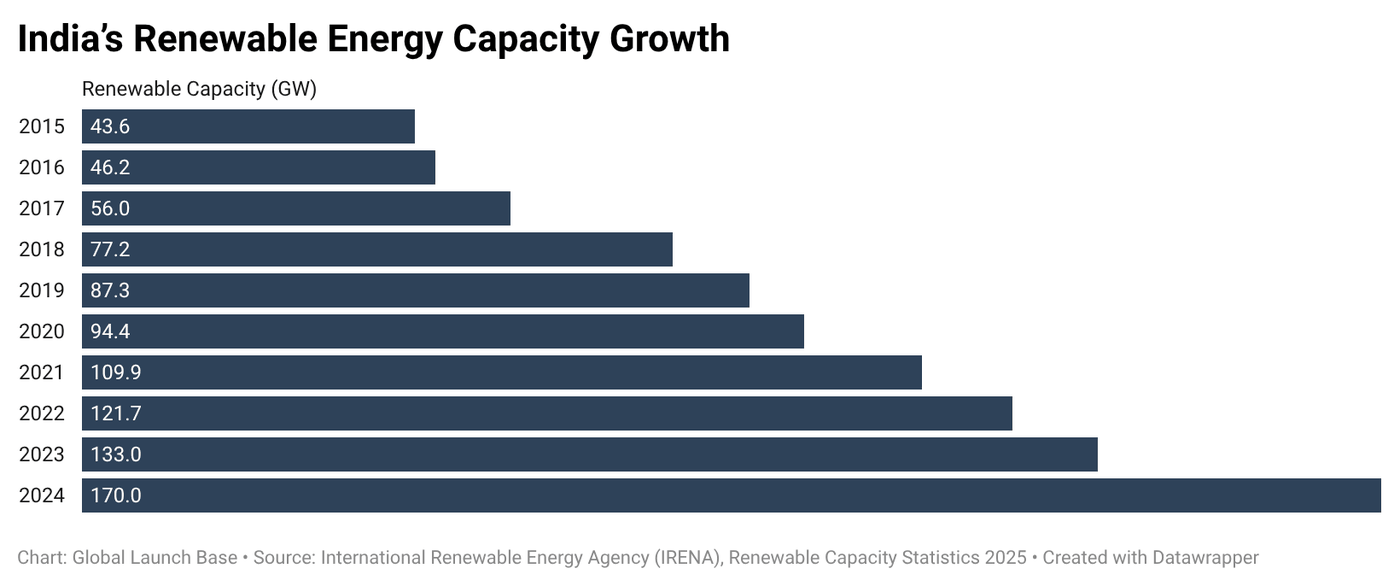
- Renewable energy
- Energy storage
- Grid management
- Distributed power
- Energy efficiency
- Electric mobility
- Green hydrogen
- Smart energy systems
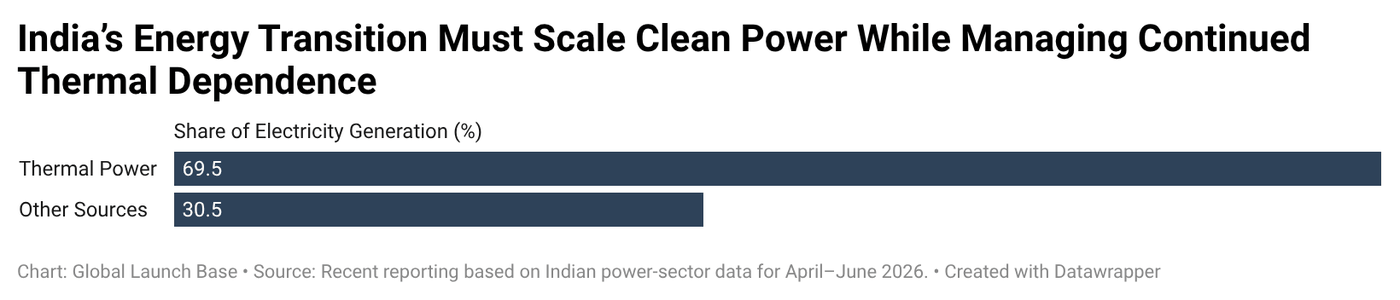
The challenge is particularly complex because India must pursue decarbonisation while continuing to expand access to affordable energy.
This creates a unique testing environment for technologies that can help balance:
Economic growth + energy access + emissions reduction.
ClimateTech companies can test:
- Battery storage in different climatic conditions
- Solar systems in rural areas
- Microgrids for remote communities
- Energy-management software
- Industrial decarbonisation solutions
- Electric mobility systems
The scale of India's energy transition means that successful technologies could potentially move from pilot projects to large commercial deployments.
8. Cities Provide a Real-Time Climate Stress Test
India's cities are already experiencing the effects of climate change.
Extreme heat, flooding, air pollution and water stress are becoming increasingly important urban challenges.
This creates an urgent need for solutions in:
- Cooling
- Water management
- Waste management
- Public transport
- Building efficiency
- Urban planning
- Air-quality monitoring
The country's cities also represent different levels of development.
A ClimateTech company can therefore test solutions in:
- Megacities
- Industrial cities
- Tier-2 cities
- Fast-growing towns
This is important because the future of climate adaptation will not be limited to wealthy global cities.
Many of the world's fastest-growing urban areas will be in emerging economies.
Solutions designed for India's urban realities could therefore become highly relevant across Asia, Africa and Latin America.
9. India Forces ClimateTech to Think Beyond Hardware
One of the biggest lessons India can teach ClimateTech companies is that technology is only one part of the solution.
A successful deployment may require:
- Local partnerships
- Financing
- Training
- Government engagement
- Behavioural change
- Maintenance networks
- Data systems
- Distribution partnerships
This is particularly relevant for European ClimateTech startups.
Many European companies have strong technology but limited experience with:
- Fragmented markets
- Informal distribution networks
- Rural deployment
- Price-sensitive customers
- Multi-level government systems
India can become a valuable market for developing this operational capability.
Instead of asking:
“Can we sell our existing product in India?”
Companies should ask:
“What does India teach us about making our product globally deployable?”
That is a fundamentally different approach.
10. India Could Become a Bridge to Other Emerging Markets
India's importance extends beyond its own domestic market.
Many of the challenges faced in India also exist across:
- Southeast Asia
- Africa
- Latin America
- The Middle East
These include:
- Water scarcity
- Agricultural vulnerability
- Extreme heat
- Energy access
- Waste management
- Urbanisation
- Infrastructure gaps
India can therefore serve as a bridge between developed-world innovation and emerging-market deployment.
A ClimateTech startup that learns how to:
- Reduce costs
- Localise technology
- Build partnerships
- Train users
- Operate with infrastructure constraints
may become better prepared for international expansion.
India can function as a form of global deployment school.
The Biggest Challenge: India Is Not an Easy Market
The opportunity is enormous.
But India should not be treated as a simple testing market.
A technology company entering India may encounter:
- Complex regulations
- State-level differences
- Fragmented distribution
- Language diversity
- Procurement delays
- Price sensitivity
- Infrastructure constraints
- Long sales cycles
- Difficult after-sales service
A European solution cannot simply be copied and pasted into India.
Successful companies will need to adapt:
- Product design
- Pricing
- Distribution
- Partnerships
- User experience
- Financing
- Training
The companies that approach India only as a sales market may struggle.
The companies that approach India as a co-development environment may discover much greater potential.
The Future: From Pilot Projects to “ClimateTech Living Labs”
The next stage of ClimateTech innovation may involve the development of permanent real-world testing environments.
These could include:
- Smart farms
- Climate-resilient villages
- Industrial decarbonisation zones
- Urban innovation districts
- Renewable-energy communities
- Water-stressed agricultural regions
These environments can connect:
Startups + farmers + researchers + investors + governments + corporates.
Instead of running isolated pilots, ClimateTech companies could test complete systems in real-world conditions.
For example, an agricultural innovation hub could combine:
- Smart irrigation
- Weather monitoring
- AI-based farm analytics
- Renewable energy
- Soil monitoring
- Biochar
- Waste-to-energy systems
- Carbon measurement
The result would be more than a product demonstration.
It would be a living laboratory for climate solutions.
This type of model could become especially powerful in India because the country combines large-scale climate challenges with a growing innovation ecosystem.
The Strategic Opportunity for Global ClimateTech Companies
For global ClimateTech companies, India should not be viewed only as a market of 1.4 billion consumers.
It should be viewed as a testing environment for the next generation of climate solutions.
India can help companies answer some of the most important questions in ClimateTech:
- Can the technology operate in extreme conditions?
- Can the business model work at low cost?
- Can the product reach fragmented users?
- Can it operate with infrastructure constraints?
- Can it be maintained locally?
- Can it generate measurable climate impact?
- Can it scale beyond a pilot?
- Can the solution be adapted for other emerging markets?
These questions are increasingly important as the global ClimateTech sector moves from experimentation to deployment.
Conclusion: The Hardest Market May Produce the Strongest Solutions
The best testing ground is not necessarily the easiest market.
It may be the market that exposes the most weaknesses.
India offers ClimateTech companies a unique combination of:
- Climate diversity
- Massive market scale
- Infrastructure challenges
- Affordability pressure
- Digital innovation
- Agricultural complexity
- Urban climate stress
- Growing demand for sustainable solutions
This makes India difficult.
But it also makes India extraordinarily valuable.
A ClimateTech solution that succeeds in India has been tested against many of the challenges that define the future of global climate innovation.
The question is no longer whether India can adopt global ClimateTech.
The more interesting question is whether India could help build, improve and validate the ClimateTech solutions that the rest of the world will eventually need.
Because the future of climate innovation will not be determined by technology that works only under ideal conditions.
It will be determined by technology that works in the real world.
And few places offer a more demanding — or more valuable — real-world test than India.